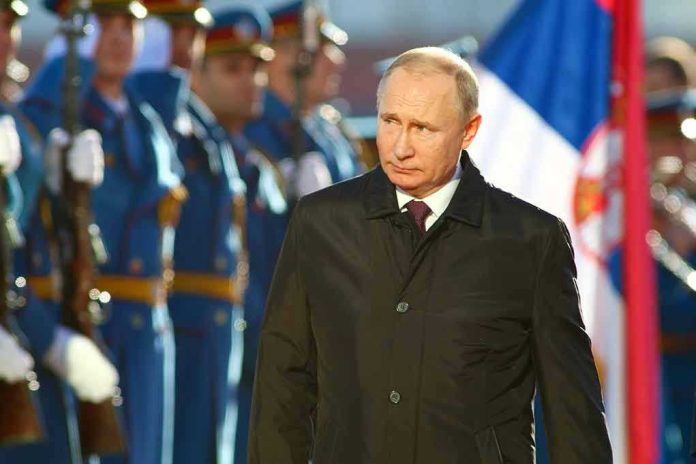
Trump’s envoy Steve Witkoff continues high-stakes diplomatic meetings with Putin in Moscow, but multiple rounds of negotiations throughout 2025 have failed to break the deadlock as Putin appears to be stalling while Russian forces advance on Ukrainian territory.
Story Highlights
- Trump envoy Steve Witkoff held multiple meetings with Putin in 2025, including recent December talks in Moscow
- Key disagreements persist on land swaps and Ukrainian military force caps despite months of negotiations
- Trump threatens severe tariffs on nations buying Russian oil if peace deadline not met
- Western analysts assess Putin is stalling for time while Russian forces continue territorial advances
Trump’s Direct Diplomatic Approach
President Trump deployed special envoy Steve Witkoff for sustained diplomatic engagement with Putin throughout 2025, marking a departure from traditional diplomatic channels. Witkoff conducted multiple lengthy meetings with Putin, including a four-and-a-half-hour session in St. Petersburg in April and recent December talks in Moscow.
Trump’s frustration with the “senseless war” drives his aggressive timeline approach, combining direct negotiation with economic pressure tactics.
The Trump administration’s dual strategy employs both diplomatic engagement and threatened economic coercion. Trump initially set a 50-day deadline, later compressed to specific dates, threatening “severe tariffs” on nations purchasing Russian oil if Russia fails to comply.
However, Trump later showed flexibility, stating “The deadline for me is when it’s over,” suggesting adjustment to negotiation realities while maintaining pressure.
Persistent Negotiation Obstacles
Despite multiple diplomatic rounds, fundamental disagreements block progress on critical issues. Recent Florida negotiations between Ukrainian and U.S. officials preceding the December Moscow meeting revealed agreement on some matters but continued disputes over land swap arrangements and caps on Ukrainian military force size. These core disagreements reflect broader tensions between Russian territorial ambitions and Ukrainian sovereignty concerns.
Western analysts express skepticism about Putin’s genuine commitment to negotiated settlement, assessing that Russia is “stalling for time and avoiding serious negotiations while Russian forces push to capture more Ukraine land.”
The Kremlin’s public emphasis on military strength, including announcements of new hypersonic missiles, suggests confidence in Russia’s battlefield position rather than urgency to negotiate meaningful compromises.
Economic Pressure and Global Implications
Trump’s threatened tariffs on nations buying Russian oil target major importers including China and India, potentially disrupting global energy markets. This economic pressure tactic aims to isolate Russia financially while forcing allied compliance with American peace objectives.
However, Trump himself expressed skepticism about sanctions effectiveness, noting Russians are “pretty good at avoiding sanctions” and describing them as “wily characters.”
The diplomatic stalemate raises concerns about escalating conflict and broader NATO confrontation. Western analysts warn of “clear signs that the Kremlin is preparing for a broader confrontation with NATO,” including military build-up along Russia’s western flank.
Trump’s approach faces the challenge of achieving breakthrough negotiations while Putin maintains military initiative and shows little genuine willingness to compromise on territorial gains or strategic objectives.
Sources:
Trump’s Envoy Meets Putin in Moscow Ahead of Russia-Ukraine Peace Deadline
Trump Envoy Heads to Moscow for More Ukraine Peace Talks with Putin
Trump Envoy Meets with Putin in St. Petersburg for Ukraine Talks
US Envoy Meets Putin for Talks as Trump Urges Russia to Get Moving on Ukraine