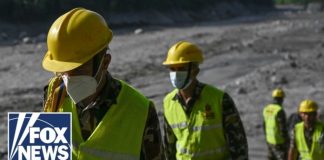
Nepal’s officials started burying unidentified flood victims after collecting DNA, as the death toll surged and thousands remained missing.
Story Snapshot
- Authorities reported hundreds dead and more than two thousand missing after the August 26 floods.
- Officials began temporary burials with DNA sampling to allow later identification and exhumation.
- Chitwan district selected Devghat for burials and logged grave locations to protect chain of custody.
- Limited morgue space and fast decomposition forced rapid, documented interments to reduce health risks.
Confirmed Toll And Ongoing Search Operations
Nepal’s disaster count rose quickly in recent days, reflecting the scale and speed of the floods. Police reported 469 dead by August 28, with numbers climbing as rescue teams reached cut-off valleys. By August 30, media citing Nepal’s disaster ministry said the death toll neared 800 and missing persons exceeded 2,500, showing a still-moving picture as searches continued. Officials stressed that totals would change as teams recovered bodies and verified identities across remote mountain districts.
Rescue workers, police, and local volunteers pushed into landslide zones and riverbeds. Crews focused on retrieving bodies before heavy rain and debris flows carried remains farther downstream. Authorities warned that river conditions and damaged roads slowed recovery. Families lined up to report missing loved ones, giving photos, dental records, and personal items to help with matching. The aim was to pair what families know with what teams find, then confirm with fingerprints, dental checks, and DNA when needed.
Why Temporary Burials Started In Chitwan
Chitwan officials faced a backlog of remains and a morgue built for far fewer bodies. Local reports said the district morgue could hold around 50, while far more bodies arrived after four days of heat and rain. District leaders said decomposition raised public-health risks, including contamination of water and air near recovery sites. That is why the Chitwan District Security Committee authorized temporary burials, but only after DNA sampling and documentation, to balance safety with the right to later identify and claim the dead.
Authorities chose an open public site in Devghat, within Bharatpur Metropolitan City-1, for the burials. Officials recorded each location, placed identification markers above and below ground, and logged positions for possible exhumation later. The plan aligned with international disaster victim identification practices that call for unique IDs, careful chain of custody, and cataloged burial sites when storage and lab capacity are overwhelmed. The steps were designed to prevent the loss of identity, even if final rites must wait.
How DNA, IDs, And Records Protect Families’ Rights
Nepal’s process used DNA sampling as a backstop when visual recognition and personal effects did not give a sure match. Interpol’s disaster victim identification model supports this kind of tiered approach, where teams compare what families provide with what investigators collect, and confirm with DNA if needed. In Chitwan, officials said they would preserve DNA from unidentified victims and number every remains set, which keeps a link between the grave, the sample, and the eventual name match.
Reporters on the ground described a formal routine at the burial site. Rescue teams documented each body, noted where it was found, and coordinated with police for logging and transport. India sent a forensic team to help process DNA, adding lab capacity during the crush of cases. These measures lower the risk that families are left without answers. They also allow authorities to release remains later for proper funeral rites, which matters deeply across communities in Nepal’s diverse religious and cultural landscape.
Numbers Are Evolving And Communities Are Strained
Counts shifted across several days as crews opened roads and rivers receded. An early government figure listed 95 dead and 484 missing on August 26, then 469 dead by August 28, with the toll climbing further by August 30. This is a normal pattern in large disasters, not a sign of confusion; each new access point brings new recovery and updates to lists. Still, the swings are painful for families who wait, and they strain officials trying to direct aid and communicate clearly.
Chitwan’s Devghat forest is being used for mass burials after the August 26 flash floods in Nepal. Authorities have buried 96 unidentified bodies and are collecting DNA samples to help families identify victims later.
VOICEOVER: Suha Nisviya S A
PRODUCER: Lavanya R
VIDEO… pic.twitter.com/mdctZGRgl3— The Federal (@TheFederal_News) August 31, 2026
Local leaders faced pressure from many sides. Some demanded faster returns of bodies for funeral rites. Others warned about disease risks and called for quick management of remains. Authorities tried to meet both needs by using temporary burial with strong records. That choice can feel harsh, but it aims to protect health today and truth tomorrow. As more identifications are made, families should gain the chance to reclaim loved ones with names, not numbers, and to grieve with dignity.
Sources:
youtube.com, khaleejtimes.com, thejournal.ie, usnews.com, english.news.cn, aljazeera.com, humanitarianlibrary.org