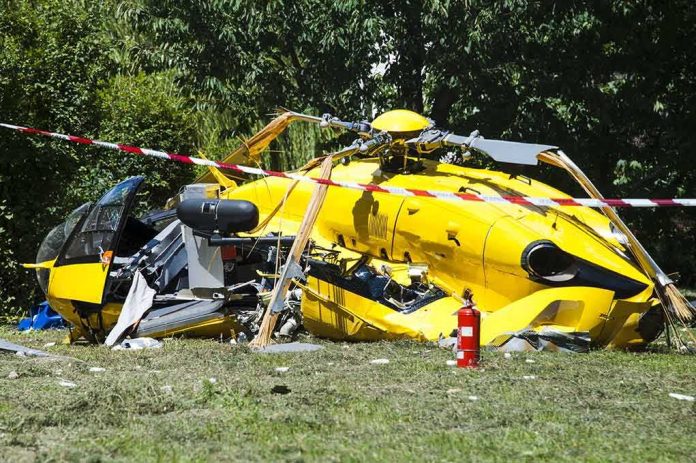
Three people died when NBC4’s NewsChopper4 crashed in Los Angeles while covering a deadly bus collision, putting a spotlight on long-known gaps in helicopter safety and oversight.
Story Highlights
- NBC4 and Telemundo 52 confirmed their news helicopter was involved in a fatal crash.
- Three people were killed, including the reporter and pilot, and at least one person was hospitalized.
- The crash happened near the site of a separate fatal bus collision as crews covered the scene.
- National Transportation Safety Board findings in other cases warn of broader helicopter risk in busy airspace.
What Happened in Chatsworth
On Tuesday evening in Chatsworth, an NBC Los Angeles news helicopter crashed near the site of a deadly bus collision. The Los Angeles Fire Department reported three people killed and at least one person taken to a hospital after the aircraft went down and caught fire. NBC Los Angeles identified the aircraft as NewsChopper4. The crash happened as several outlets covered the separate bus crash in the San Fernando Valley, which had already drawn first responders and media.
NBC4 and Telemundo 52 issued a joint statement the next day. The stations confirmed a helicopter providing aerial news coverage for both outlets was involved in a fatal accident and offered condolences to the victims’ families and colleagues. The statement did not address the cause. It focused on loss and support for staff. That language aligned with early response norms after fatal aviation events, when facts are still being gathered by investigators.
Victims and Early Identifications
Local and national outlets reported that the victims included the reporter and the pilot aboard the helicopter, as well as a person on the ground. Coverage described the helicopter as belonging to KNBC in Los Angeles and said the aircraft crashed and burst into flames near the earlier bus collision site. City leaders called it a heartbreaking night and noted the toll across both incidents. Officials did not release a cause and warned that investigations take time.
Follow-up reporting named aerial journalist Eliana Moreno and pilot George Marciniw as the two people aboard who died. Reports also said a third person on the ground was killed. The helicopter was identified as NewsChopper4 and was operated by Angel City Air under contract for the stations. These details came as stations shared tributes and as the community reacted to the loss.
Why Helicopter Safety Keeps Coming Up
National Transportation Safety Board work in recent years has flagged risks when helicopters and other aircraft mix in crowded airspace. In findings after a major collision near Washington, D.C., investigators criticized the Federal Aviation Administration’s airspace design and oversight and called helicopter-aircraft proximity an intolerable risk. They cited a history of close calls and urged stronger reviews and routing to lower collision hazards.
Investigators and experts also point to patterns across helicopter crashes. They often cite a mix of weather, maintenance, route design, pilot choices, and organizational pressure to get the shot. A former National Transportation Safety Board member told Public Broadcasting Service that the machine itself can be reliable, but lapses in training, monitoring, and decision-making drive many tragedies. That view pushes newsrooms and operators to weigh speed against risk when flying over live breaking scenes.
Public Trust and the Cost of Coverage
Families want answers after any crash, but they often wait months for a final report. In that window, people across the political spectrum ask whether government systems work. They see the same agencies blamed in past failures still in charge of safety today. After the 2025 Washington collision, the National Transportation Safety Board said about one third of the Federal Aviation Administration’s responses to its safety fixes were unacceptable. That critique fuels doubts about follow-through and urgency.
🚨 #BREAKING LOS ANGELES UPDATED: NTSB Details Helicopter Crash That Killed 3 in Chatsworth
NewsChopper4 crashed shortly before 7 p.m. Tuesday in Chatsworth while reporter Eliana Moreno and pilot George Marciniw were covering a deadly SUV-versus-Metro bus collision. A third… https://t.co/1bRdV2PBvw pic.twitter.com/OYpgfBWevy
— Victoria (@VictoriaMunroee) September 16, 2026
At the same time, live aerial footage remains part of many stations’ business model. Viewers expect fast updates, traffic maps, fire lines, and chase coverage from the sky. That pressure can shape choices in the air and on the ground. Past cases, like the Phoenix news helicopter collision, showed how “see-and-avoid” can break down when pilots are reporting and maneuvering near other aircraft. That history adds weight to calls for tighter routes, better separation, and clearer roles during live coverage.
What to Watch Next
The National Transportation Safety Board and the Federal Aviation Administration typically secure the scene, examine the wreckage, pull air traffic recordings, and interview witnesses. They publish a brief early note if facts are clear, and a full report later. In this case, expect questions about routing, crowding near the bus crash site, workload in the cockpit, maintenance records, and any organizational pressures that shaped the flight. Those answers will show whether known risks were addressed or ignored.
Sources:
nypost.com, thenews.com.pk, abc30.com, nbclosangeles.com, pbs.org, cnn.com, flightsafety.org