The Postal Service has frozen a new ballot-tracking computer system after court orders blocked Trump’s mail-voting rule, leaving Election Mail under old practices that many conservatives view as weak on safeguards.
Story Snapshot
- Postmaster General David Steiner said USPS stopped work due to an injunction.
- A memo reportedly told staff it is “business as usual” for 2026 Election Mail.
- The Supreme Court left lower-court blocks in place against the rule.
- The administration defends the rule as modest and lawful changes.
USPS Confirms Work Halt After Court Blocks
Postmaster General David Steiner said the United States Postal Service stopped work on a computer system tied to President Trump’s mail-ballot rule because a federal court injunction is in place. Steiner stated, “There’s an injunction so we’re not doing anything,” confirming that development has paused. The Supreme Court declined to let the Postal Service enforce the rule for this election cycle, so the stoppage keeps the status quo for mailed ballots. That means states will send and receive Election Mail without the added federal safeguards this tool was meant to support.
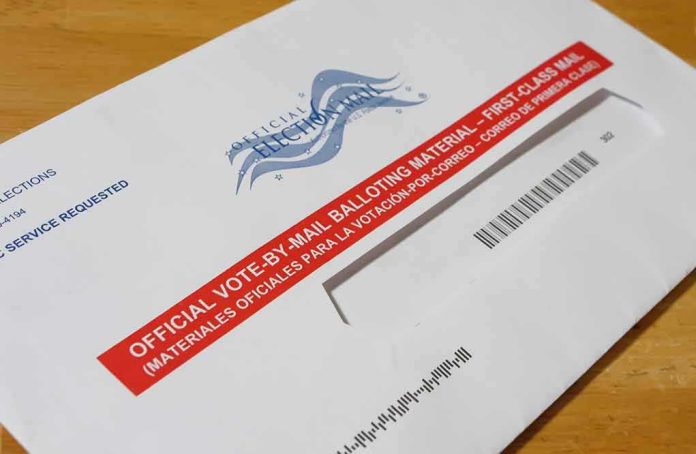
A contemporaneous internal message, reported by multiple outlets, said the Postal Service would not enforce the new mail-ballot requirements for the 2026 federal election and that “it is business as usual” for Election Mail. This reflects the direct effect of the court orders as agencies avoid changes close to an election. The practical outcome is that the Postal Service will handle ballot envelopes and tracking under the older methods, even though the proposed system aimed to add more visibility and standard formats for ballots.
What The Blocked Rule Sought To Do
The administration framed the rule as a set of modest, lawful steps to set uniform envelope design and addressee standards and to improve data flow for ballot mail. Trump’s solicitor general, John Sauer, argued that states using the federal mails must follow the Postal Service’s rulemaking on envelope design and address information, which Congress has long allowed for mail operations. Supporters said the system would help track Election Mail and aid law enforcement visibility, rather than limit legal voting. The courts have not accepted that view for this election.
Several rulings kept the rule on hold, with judges saying the Postal Service likely exceeded its role by affecting how states run elections. The Supreme Court let the block stand, which locked in the pause for November. As a result, the Postal Service publicly acknowledged the halt and signaled no new requirements would apply this year. For voters and election offices, that means no new barcode, design, or data mandates tied to the federal system, despite months of planning and debate over the changes.
Why This Matters For Election Integrity
Conservative readers care about one simple standard: every legal vote counts, and illegal ballots do not. Uniform ballot envelopes, scan-friendly designs, and better tracking could help meet that standard. The blocked system’s goal was to bring order to how ballots move through the mail and to give clearer tracking data. The court orders now keep the older patchwork in place, where practices vary widely by state and local office, and where Postal Service visibility into ballots is uneven or delayed.
The Supreme Court’s refusal to lift the block means no federal-level upgrade before the midterms, even as some states expand mail voting under different rules. The administration says the proposed steps were modest and within Postal Service authority. Opponents convinced courts that the rule intruded on state control of elections. Whichever view you hold, the immediate impact is less standardization and fewer tools to flag problems in real time, including delayed postmarks or misrouted ballot envelopes.
What Voters And Officials Should Watch Now
Election officials will rely on long-standing methods to move ballots, confirm delivery, and resolve issues. Voters who choose mail should request ballots early, follow envelope instructions exactly, and return them with enough time for local deadlines. States will again lean on their own mixes of barcodes, tracking pages, and hotline support. Without the blocked federal system, any surge in mail volume could stress local processes and make it harder to spot glitches quickly, especially in close races decided by late-arriving mail.
The system built to gatekeep mail-in voting just got frozen – and its own chief seems relieved.
Postmaster General David Steiner confirmed to the AP that USPS has halted work on the computer system central to Trump's mail-voting restrictions, days after the Supreme Court rejected…— Top Stories (@TopStories77) September 18, 2026
The administration maintains the rule was a legal housekeeping measure meant to protect the vote, not restrict it. The courts’ decision keeps it sidelined for now. After November, the legal fight could continue. For conservatives who want strong, simple guardrails, the lesson is clear: reforms must be built to survive courtroom scrutiny, launched in time for testing, and explained so plainly that media spin cannot twist them. Election integrity needs rules that work, data that proves it, and timing that sticks.
Sources:
washingtontimes.com, newser.com, wvnews.com, apnews.com