Sixteen people were pulled alive from the Pacific after a mayday call, and the urgent search for others still has not stopped.
Story Highlights
- U.S. Coast Guard rescued 16 people after a mayday call off Baja California
- Search continues for additional people believed missing near 140 miles west of Ensenada
- One survivor was treated for injuries consistent with shark bites, officials said
- U.S. and Mexican forces used aircraft and ships to sweep a wide area
Rescue Triggered By Predawn Mayday And Rapid Airlift To San Diego
U.S. Coast Guard crews responded before dawn Friday after a mayday call said a vessel was sinking off Mexico’s Baja California coast. Air crews and surface teams reached people in the water and pulled 16 survivors to safety. Medical flights took them to San Diego for treatment the same day. The Associated Press reported one person showed wounds consistent with shark bites, and two were listed in critical condition after rescue operations. Authorities said the search continued into the weekend.
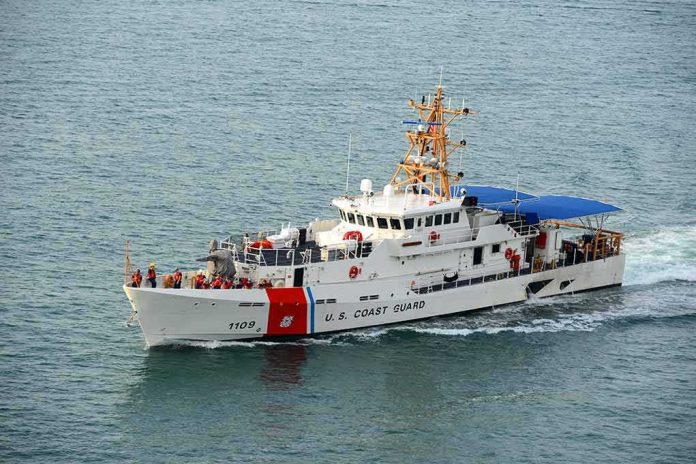
Coast Guard officials said they received the distress call at about 1:00 a.m. and began searching an area roughly 140 miles west of Ensenada. Petty Officer Chris Sappey described the location as far offshore, where conditions can be harsh and water temperatures sap strength fast. The Philadelphia Inquirer reported that responders included two helicopters, a fixed-wing aircraft, a Coast Guard cutter, and a United States Navy combat ship. Mexican naval forces in Ensenada launched their own search-and-rescue mission to support the hunt.
Ongoing Search Effort And What Authorities Do Not Yet Know
Officials said they believed more people were missing after the 16 rescues, and they kept searching across the drift zone Friday into Saturday. Early reports suggested 27 people may have been aboard, based on survivor accounts, but the Coast Guard later said it did not have a confirmed total. The vessel had already sunk when crews arrived, and officials had not identified its type or recovered it for evidence. The cause of the capsizing also remained unclear based on public reports.
The Associated Press said the incident occurred outside United States territorial waters, which brought in cross-border coordination and information-sharing with Mexican authorities. That setup is common for long-range rescues in the Pacific. It can also slow public updates, since each country follows its own release rules. Even so, the mix of helicopters, planes, and ships suggests an intensive effort to cover the likely drift paths from the last known position.
Why This Area Sees Repeated Sea Tragedies And Rising Risks
Reporters noted the region has seen deadly sea crossings tied to migration and smuggling over recent years, though officials have not publicly confirmed that link for this case. A San Diego Union-Tribune review found maritime smuggling attempts in Southern California surged from 2017 to 2023, with at least 23 deaths reported in that span. In 2021, a captain received an 18-year sentence after a panga broke apart near Point Loma, killing three people, following a multiagency investigation.
Baja California Boat Capsizing Leaves 11 Missing After 16 Rescued https://t.co/6KguDQjEYE
— DarrenH (@darrenHEYCEL) October 18, 2026
The pattern highlights a basic reality that both sides of the border know well. Offshore trips in small or overloaded boats turn deadly when weather shifts, engines fail, or navigation goes wrong at night. People in the water face exposure, exhaustion, and marine life. That is why responders stress calling for help early and wearing life jackets. Friday’s mayday likely saved lives by speeding the search, even though teams still face a vast ocean to cover.
Sources:
military.com, nbcsandiego.com, yahoo.com, mdjonline.com