Detectives say a husband’s tale about immigration agents vanished the moment burned remains were identified as his missing wife.
Story Snapshot
- Burned remains found in El Dorado County were identified as Jasmine Gill.
- The discovery came days before she was reported missing, breaking the timeline.
- Deputies say the husband had blamed immigration agents; officials denied any operation there.
- Detectives obtained a murder warrant and arrested Gurinder Singh Gill.
How the case flipped from missing person to homicide
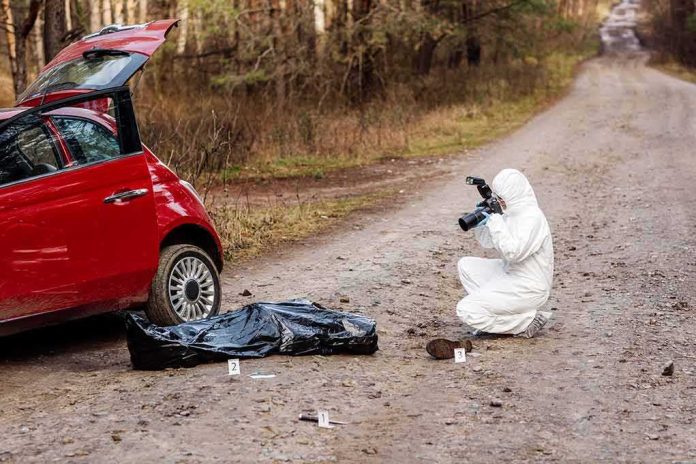
On October 1, 2026, authorities found burned human remains in El Dorado County. Investigators later confirmed the remains were those of 30-year-old Jasmine Gill, a Sacramento County woman reported missing on October 4. That date gap mattered. It undercut any story that she disappeared after the find. Detectives built a homicide case, not just a missing-person file. The focus shifted from “where is she?” to “who killed her?” as identification work linked the remains to Jasmine.
The timeline grew starker as public records stacked up. The Sacramento Bee reported Jasmine was last seen alive September 30, the day before the remains were found. The county’s media release locked in the dates: remains on October 1; missing report on October 4. That sequence, confirmed across outlets, shaped the next steps. It framed a narrow window for harm and pushed detectives to press for a suspect tied to her daily life and movement.
The husband’s account, and the rebuttal from immigration officials
During early interviews, deputies say Gurinder Singh Gill claimed that United States Immigration and Customs Enforcement agents took Jasmine while she checked the mail at their home. Detectives contacted immigration officials. Immigration and Customs Enforcement said it had no enforcement activity at that address at the time, rejecting the scenario Gill described. The claim fell apart against both the agency’s statement and the already-discovered remains. That contradiction became a key thread in the case narrative.
Authorities say the evidence led beyond the broken story. The Sacramento County Sheriff’s Office reported that homicide detectives obtained a murder arrest warrant for Gill. Deputies arrested him on October 14, and he was booked into the main jail on a murder charge. Local court coverage reported his arraignment followed. That sequence shows a standard progression: establish identity, test the timeline, stress-check alibis, then move when probable cause clears the bar for a warrant.
What investigators say helped identify the remains
Investigators traced the remains to Jasmine through items found at the scene. A sheriff’s spokesperson said jewelry recovered with the remains helped confirm the identification. That kind of personal property can connect a body to a missing person fast, while labs work in the background. In many burn cases, jewelry offers an early link while science fills in the rest. Reporters described that bridge between the scene and Jasmine’s file.
Gurinder Singh Gill, 28, has been charged with the murder in the death of his wife 30yr old, Jasmine Gill, after her burned remains were identified in El Dorado County, California. The husband told investigators that his wife had been taken into custody by ICE. You won’t hear… pic.twitter.com/mHMJZUAoat
— Micki way (@mickitiki) October 20, 2026
Detectives also searched locations tied to Gill. Local coverage reported warrants executed at two residences connected to him after the remains were identified. That step signals a hunt for clothing, digital data, vehicle traces, or fire evidence that could place a suspect at a disposal site. It also shows a pivot from intake interviews to targeted, physical proof that can stand in court and sync with the known timeline.
Why the dates and evidence path matter
The October 1 discovery anchors the case. It sets the earliest known moment Jasmine could no longer communicate with family or friends, and it pre-dates the missing-person call by three days. The reported last-seen date of September 30 tightens the window even more. That window challenges any later-sudden abduction claim at the mailbox, which immigration officials say did not happen there. In law-and-order terms, the calendar is evidence. It narrows opportunity and checks stories against facts.
Prosecutors still must prove the charge beyond a reasonable doubt. Public reports have not detailed the cause or manner of death. They have not disclosed the specific forensic links used in the warrant. That is normal at this stage of a homicide case. The central record is clear on the core points: the remains were Jasmine’s; the dates conflict with the husband’s account; immigration officials rebutted his claim; detectives secured a murder warrant; and the husband was arrested and arraigned.
The common pattern, and a clear takeaway
This case tracks a common pattern in intimate-partner homicides. A missing-person report becomes a homicide probe once remains are identified. The identity comes first. Then the timeline, then the method, and finally the link to a suspect. Here, that link followed the collapse of an outside-force story and a calendar that did not bend. The plain reading matches common sense and conservative values: facts first, institutions checked, and a warrant only when evidence supports it.
Sources:
thegatewaypundit.com, people.com, sacbee.com, local12.com, fox40.com