
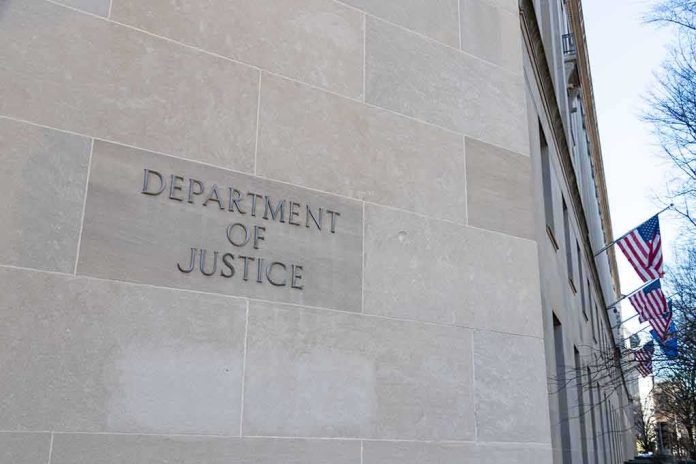
A House Judiciary report says Fairfax County ignored 1,670 federal detainer requests, putting public safety at risk.
Story Snapshot
- House Judiciary staff report cites 1,670 unfulfilled federal detainers in Fairfax County from 2023–2025.
- Immigration and Customs Enforcement records reported elsewhere align with a large detainer volume.
- County policy says civil detainers do not authorize holding inmates after local release eligibility.
- Fairfax Sheriff’s Office denies ever “declining” detainers and says federal agents must make arrests.
Committee Report Flags Large-Scale Nonexecution of Detainers
House Judiciary Committee staff released an interim report on October 20, 2026, alleging Fairfax County failed to act on at least 1,670 Immigration and Customs Enforcement detainer requests between 2023 and 2025. The report frames these as releases into the community despite federal requests to hold or notify. The Committee also sought documents and communications to verify detainer handling and coordination with prosecutors, signaling deeper oversight and data collection on local decisions that affect federal enforcement.
Separate reporting said federal immigration records showed more than 1,150 detainers lodged between October 2022 and February 2025 at the Fairfax County Adult Detention Center. That reporting said the jail released more than 1,000 deportable noncitizens during that time, which tracks with the Committee’s broader claim of widespread nonexecution. While the numbers come from different snapshots, both point in the same direction: a pattern of detainers not resulting in custody transfers to federal agents.
Fairfax Policy Limits Holding on Civil Requests Without a Judge’s Order
Fairfax County’s written policy says a civil detainer request from Immigration and Customs Enforcement “does not create” an obligation or legal authority for local officers to keep someone after they are otherwise eligible for release. The Sheriff ended a past agreement to hold inmates up to 48 hours beyond release without a criminal judicial order. The policy also says booking deputies will notify federal agents when an inmate with a detainer is scheduled for release, shifting execution responsibility to federal officers.
The Sheriff’s Office publicly denies that it “declines” detainers. A spokesperson has said the office notifies federal agents whenever an undocumented person is booked and has never blocked an arrest at the jail. In one disputed case, an Immigration and Customs Enforcement official said Fairfax refused to honor a detainer. The Sheriff’s Office replied that no detainer or warrant was communicated during the roughly three hours of custody, so staff lacked authority to hold the person longer.
Competing Narratives Create Confusion and Risk
Committee staff describe detainers that did not lead to custody transfers as ignored or unfulfilled, warning of public safety risks tied to sanctuary-style rules. Fairfax leaders cite constitutional limits and court rulings that treat detainers as requests, not commands, and stress the danger of unlawful holds. The Committee’s letter to Sheriff Stacey Kincaid pressed for underlying records, including counts of declined detainers since 2018 and communications with the Commonwealth’s Attorney, to test each side’s claims.
One immigration policy expert argued that “declining” can include failing to share timely release information, even if a jail does not reject the paperwork. That view supports the Committee’s concern that process choices can frustrate federal arrests. Still, the public record does not yet show a case-level file for all 1,670 instances. Without timestamps, identifiers, and dispositions, readers cannot see how many releases stemmed from policy, timing, duplicate notices, or gaps in federal response.
What It Means for Families, Safety, and the Rule of Law
Families want dangerous offenders off the streets. Federal immigration agents need jails to give reliable notice and hold, when lawful, so handoffs happen before release. Fairfax policy narrows when local officers can keep someone past a court-ordered release, which can leave a short window for federal arrests. The Committee’s finding raises a clear question: did county choices let deportable offenders walk, or did legal limits and timing drive the outcomes? That answer lives in the records.
RADICAL POLITICIANS IN FAIRFAX ARE FAILING THE AMERICAN PEOPLE.
A new House Judiciary Committee report reveals that Fairfax County ignored at least 1,670 ICE detainers between 2023 and 2025.
Instead of cooperating with us, they RELEASED these illegal aliens back onto Virginia…
— U.S. Immigration and Customs Enforcement (@ICEgov) October 20, 2026
President Trump’s administration has pushed cooperation between local jails and federal immigration officers. Congress is now spotlighting where that chain breaks. If Fairfax’s policy undercuts lawful federal arrests, lawmakers can tighten rules, demand timely notice, and fund joint teams at release points. If records show federal agents missed windows, then Immigration and Customs Enforcement must surge staffing and refine alerts. Either way, the priority is simple: protect communities while respecting constitutional limits and due process.
Sources:
foxnews.com, washingtonexaminer.com, wjla.com, fairfaxcounty.gov, dcnewsnow.com, judiciary.house.gov, alxnow.com