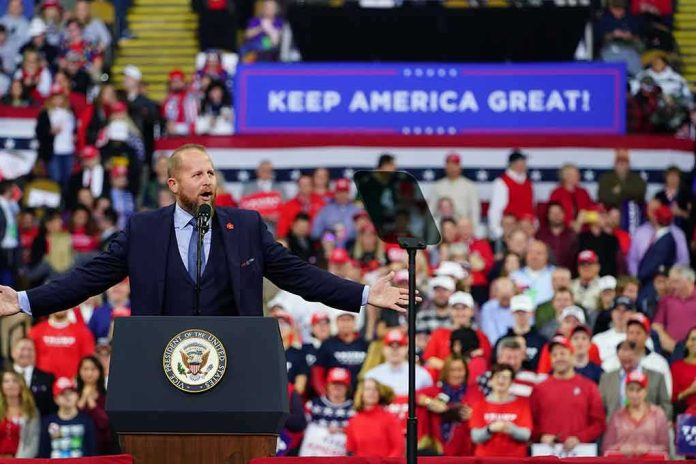
At a South Carolina rally, boxing icon Evander Holyfield told the crowd he was “so happy” Donald Trump is president — a rare, high-profile nod that highlights how celebrity praise can shape political moments even when it stops short of a formal endorsement.
Story Highlights
- Evander Holyfield praised President Trump onstage in South Carolina and thanked him for past support in boxing.
- The remarks came at a campaign rally at T. Ed Garrison Arena near Clemson on October 21, 2026.
- Holyfield said he was “so happy for him to be our president,” signaling approval without a formal endorsement.
- Research shows celebrity praise can draw attention but does not always change votes.
What Holyfield Said Onstage
Evander Holyfield joined President Trump onstage at a rally near Clemson, South Carolina, and thanked him in front of the crowd. Holyfield said he had “a great relationship with him in boxing,” and that Trump “gave me that opportunity.” He closed by saying he was “so happy for him to be our president.” The comments drew cheers and positioned Holyfield as a friendly face at a political event without using the word “endorse”.
Local and national outlets reported the appearance and quoted Holyfield’s remarks. Coverage described Trump inviting Holyfield to speak at the T. Ed Garrison Arena in Pendleton on October 21, 2026. The rally supported Republican Senate candidate Darline Graham and served as a high-energy stop during a busy campaign push. The setting made Holyfield’s words carry extra weight because they came at a political event with cameras rolling and voters watching.
Why The Setting Matters
Campaign stages often blur the line between praise and endorsement. When a famous athlete thanks a sitting president and expresses happiness about his leadership, many people read that as support. Still, Holyfield did not tell people how to vote. The signal was admiration tied to past dealings in boxing and respect for the office. That difference matters for how campaigns report celebrity support and how voters read the message.
Trump events often showcase figures from sports and entertainment to spark attention and energy. Supporters see this as a sign of strength and broad appeal. Critics see spectacle that distracts from prices, border policy, or health care. Both sides agree on one thing: Washington feels far from daily life. A moment like this can stir pride for some and doubt for others, but it lands because many Americans think the political class is not listening to them.
How Celebrity Praise Typically Plays With Voters
Research on celebrity political influence is mixed. Some studies find these moments raise awareness and shape attitudes but do not always change actions at the ballot box. One oft-cited study found celebrity nods can even backfire with certain groups, especially when fans feel pushed rather than respected. In plain terms, a famous name can grab attention, but it rarely decides a race on its own.
https://twitter.com/WETV69/status/2113008859287871642
That helps explain why campaigns still book star guests. The goal is to boost turnout, earn free media, and frame the story. Holyfield’s appearance did that. It reminded older voters of Trump’s long ties to boxing, casinos, and big events. It also underscored a theme that crosses party lines: many believe elites run the show while regular people struggle to keep up. A trusted sports figure thanking a president can feel like a small answer to that gap — or proof that politics is show business.
The Bottom Line
Holyfield’s short speech was simple, direct, and positive. He thanked Trump for past help in boxing and said he was happy Trump is president. The moment became a headline because it happened on a campaign stage, with a sitting president, days before voters make choices that shape policy and pocketbooks. It was not a formal endorsement, but it was a clear signal of support in a setting designed to matter.
Sources:
news.meaww.com, apnews.com, themirror.com, washingtonexaminer.com