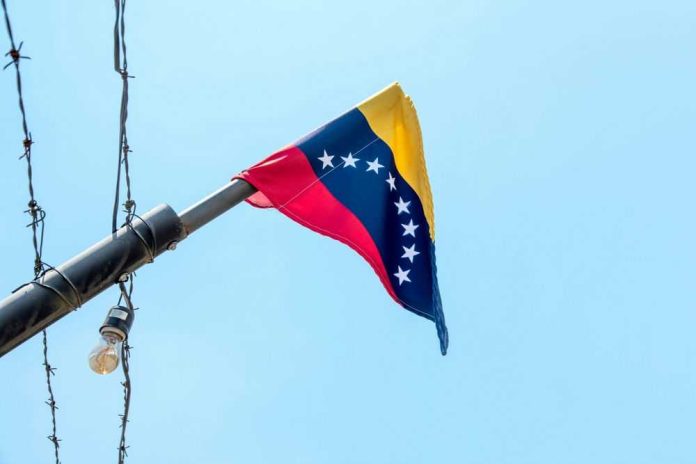
Four U.S. officials say Washington fed intelligence and drones into a Venezuelan strike that left scores dead near the Colombia border — a rare team-up that raises hard questions about power, legality, and who pays the price on the ground.
Story Snapshot
- U.S. officials said America supplied intelligence and drones for a Venezuelan attack on an ELN site.
- A nongovernmental group reported 20 to 23 people killed; counts vary across outlets.
- Reports identified the target as an ELN hub tied to cocaine distribution, based on local accounts.
- Neither government issued a full public record on authorization, casualties, or civilian harm.
What Reportedly Happened In Apure
Reports from multiple outlets state that Venezuelan forces struck a site in rural Apure, near Colombia. Four unnamed U.S. officials told The New York Times that the United States provided intelligence and drones for the operation. Coverage describes the location as an installation linked to the National Liberation Army, known as the ELN. Initial accounts place the strike around late October. No formal joint statement has laid out the chain of command, mission authorization, or who operated any aircraft involved.
Fundaredes, a Venezuelan nongovernmental group, first flagged the attack. Its coordinators gathered information from survivors and residents. Their reports counted at least 20 deaths, with later tallies rising to 23, and described wounded people moving toward Colombia. Several outlets repeated those figures as they evolved. The differences across stories show why casualty counts after remote strikes often shift during the first days as bodies are identified and families speak up.
Why This Location Matters
Apure sits on key trafficking and logistics routes used by the ELN. Research groups and regional monitors have long tied the border zone to guerrilla finance, smuggling, and drug transport. Those reports describe the ELN’s presence in Apure as strategic for safe haven and illicit business, sometimes with tolerance from local state elements. The strike’s placement in this corridor fits with an operation aimed at disrupting a supply chain, even if full forensic proof of the site’s exact role has not been released.
Several outlets, citing interviews with locals and survivors gathered by Fundaredes, said the site functioned as an ELN base and a cocaine distribution point. That claim supports the stated anti-narcotics rationale for the attack. At the same time, the public record lacks seized drugs, lab results, or official imagery. Without those materials, outside observers cannot verify the precise function of the compound. This gap keeps pressure on both governments to show their work if they want broad public trust.
Conflicting Death Tolls And Civilian-Risk Concerns
Casualty numbers range from 19 to 23 deaths across the reporting. An early count cited 19 killed, while Fundaredes later reported 23 based on field accounts. The group also warned that not everyone killed may have been an ELN fighter, noting the presence of relatives, suppliers, or others at the site. Such claims, if confirmed, would heighten civilian-harm concerns and could fuel backlash in border communities that already distrust security forces.
Neither Washington nor Caracas has published a full legal or operational record. The available stories do not describe rules for target selection, steps to protect civilians, or any after-action review. The lack of an official narrative leaves the public leaning on anonymous sources and a nongovernmental group. That vacuum feeds familiar worries from both left and right about secrecy, accountability, and whether elites make choices that ordinary people must bear without answers.
How The U.S. Role Fits A Larger Pattern
The described American support goes beyond words and into operational help. It suggests real-time intelligence sharing and drone use on foreign soil alongside a partner government. That level of cooperation, if confirmed, marks a notable step in America’s regional counter-narcotics playbook. Yet it also revives long-running debates about remote strikes, civilian safety, and transparency when the United States assists foreign militaries in murky conflict zones near borders.
For many readers, this story hits already raw nerves. Conservatives see a chance to hit cartels hard but demand clear wins, limits, and respect for sovereignty. Liberals push for accountability, civilian protection, and public proof when lethal force is used. Both sides share a deeper fear: decisions are being made in the dark, far from public view, while border families live with the fallout. Publishing verifiable facts would help calm that anger and earn trust.
What To Watch Next
Watch for official acknowledgments from either capital on the mission’s date, the nature of U.S. support, and who operated the drones. Look for a casualty list with identities and status, plus any civilian-harm assessment. Satellite images, hospital logs, or morgue records could help settle core disputes. Clear answers would show whether this was a clean strike on a criminal hub or a risky attack that mixed fighters with noncombatants in a fragile border zone.
If the governments want public backing, they should release a basic record. That includes the legal basis, targeting logic, and steps taken to protect civilians during planning and execution. The region has seen too many secret wars and too few hard facts. Sunlight will not solve the cartel crisis on its own. But it will help Americans and Venezuelans judge whether those wielding power are acting in their name, with care, and within the law.
Sources:
pjmedia.com, english.elpais.com, faz.net, nytimes.com, latinamericadailybriefing.substack.com, sociedadmedia.com, hamerintel.com