Washington Dulles International Airport has spent nearly half a century as a monument to mid-century optimism that outgrew its own ambitions, and on July 29, 2026, President Trump stood in the Oval Office and put a number on fixing it: $22.5 billion.
Key Points
- President Trump and Transportation Secretary Sean Duffy unveiled a sweeping reconstruction plan for Washington Dulles International Airport, developed with United Airlines and the Metropolitan Washington Airports Authority.
- The plan replaces the aging C and D concourses, adds more than 5 million square feet of new or renovated space, eliminates the airport’s slow-moving people movers, and builds a 32,000-space parking garage.
- Officials say the project will be financed through airport bonds and airline contributions rather than federal appropriations.
- The headline $22 billion to $22.5 billion figure describes projected investment; the airport authority’s board has since approved a $19.9 billion funding package, a distinction worth understanding before judging the project’s true scale.
- Viral social posts labeling the event as remarks “at Donald J. Trump International Airport” misdescribe both the venue and the subject — the announcement happened in the White House and concerned Dulles.
What Was Announced, and Where
The U.S. Department of Transportation’s own briefing describes the event plainly: President Trump, Secretary Duffy, United Airlines, and the Metropolitan Washington Airports Authority unveiled renderings and a construction plan for Dulles from the Oval Office. Reuters, the Associated Press, NBC News, and ABC News each covered the same announcement independently, describing a $22 billion to $22.5 billion plan to rebuild the airport’s aging infrastructure. That redundancy across outlets with no institutional relationship to one another is what makes the core facts of the day solid ground rather than a single source’s account.
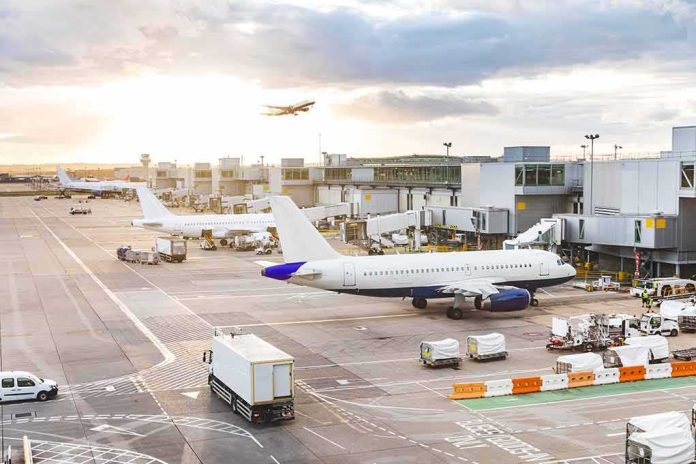
The substance goes well beyond a ceremonial photo opportunity. The plan calls for demolishing and replacing the C and D concourses, adding more than five million square feet of new or renovated terminal space, retiring the airport’s notoriously sluggish people-mover system in favor of a new passenger train, and constructing a 32,000-space parking garage linked to the terminal by glass bridges. Officials have described that garage as potentially the largest of its kind anywhere, though no independent engineering benchmark was supplied to confirm the superlative — a detail that matters less to the project’s substance than to its marketing.
Why Dulles, and Why Now
Dulles opened in 1962, its original terminal a celebrated Eero Saarinen design that the new plan preserves rather than replaces — a nod to architectural history inside an otherwise wholesale reconstruction. The concourses now slated for demolition were added decades later as stopgaps, and United Airlines’ own leadership has called the current terminal infrastructure effectively temporary, built on the assumption it would someday be superseded. That assumption finally has a construction date attached to it. The administration and its partners have pointed to independent passenger-satisfaction rankings placing Dulles near the bottom among large U.S. airports as the practical justification for urgency, framing the project as overdue rather than discretionary.
How the Project Is Supposed to Be Paid For
The financing structure is the part of this story that separates a genuine infrastructure commitment from a mere press event, and here the sourcing is specific enough to take seriously. The DOT briefing describes a collaboration among the department, the Metropolitan Washington Airports Authority, and United Airlines, with the Associated Press reporting that the airport authority and participating airlines — not the federal treasury — will carry the financing. NBC News reported directly that the project is expected to require no federal dollars, relying instead on airport-generated bonds and airline contributions. That structure is not unusual for major U.S. airport work; passenger facility charges, bond issuance against future airport revenue, and airline capital contributions have financed large terminal projects at airports from Denver to LaGuardia for decades. What makes the Dulles case notable is simply the size of the number attached to it.
From Headline Figure to Approved Funding
Here a useful distinction emerges, one that any reader following the project over the coming years should keep straight. The $22 billion to $22.5 billion figure announced in July described projected total investment — the scope of the undertaking as conceived. Subsequent reporting indicates the airport authority’s board has since approved a $19.9 billion funding package to actually carry the work forward. That gap between an announced investment figure and a board-approved financing package is standard in large public infrastructure programs, where early estimates get refined as bond structuring, engineering, and procurement proceed. It is not evidence of a broken promise; it is simply how megaprojects move from announcement to execution, and readers tracking the project’s progress should expect further refinement of both cost and scope as construction documents replace renderings.
WATCH LIVE: Trump gives remarks at Donald J. Trump International Airport
https://t.co/uOufBb742v— Fox News (@FoxNews) November 8, 2026
Clearing Up the Venue
Some social media posts circulating around the announcement described Trump as giving remarks “at Donald J. Trump International Airport,” a name that does not correspond to any existing facility tied to this project. The corroborated reporting is consistent on this point: the announcement took place in the White House Oval Office, and its subject was Washington Dulles International Airport, a facility named for former Secretary of State John Foster Dulles since its 1962 opening. The mismatch appears to be a captioning or labeling error attached to clips of the event rather than a separate occurrence, and readers encountering that phrasing elsewhere should treat it as a mislabel of the Dulles announcement rather than a distinct news event.
What the Timeline Means Going Forward
Officials involved in the announcement said construction could begin as early as spring 2027, compressing what had previously been discussed as a multi-decade phased renovation into a far shorter window. Whether that schedule holds will depend on permitting, bond issuance, and construction logistics that have not yet been tested publicly — the ordinary friction points of any airport project built around a live facility handling tens of millions of passengers a year. What is already established, on the strength of consistent reporting from the Department of Transportation itself and multiple independent news organizations, is that a specific, financed, and architecturally defined plan to replace Dulles’s aging concourses now exists where none existed before. That is the durable fact of July 29, 2026, regardless of how later cost figures settle.
Sources:
facebook.com, reuters.com, pbs.org, washingtonexaminer.com, northstarmeetingsgroup.com