
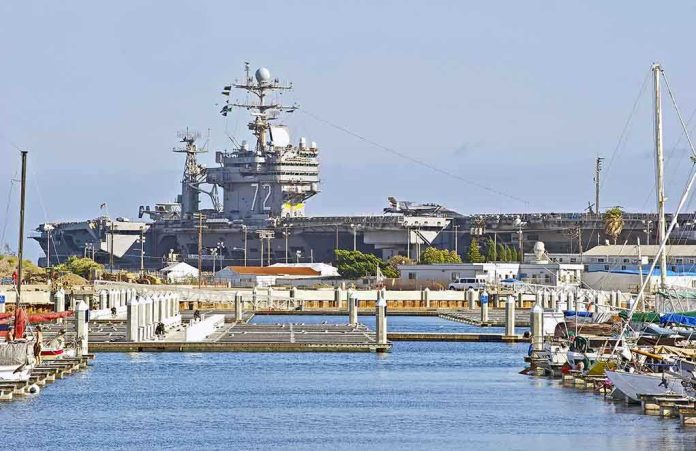
A 100,000-ton U.S. aircraft carrier is slated for more than a year of major repairs that could sideline it through late 2027, tightening an already stretched fleet.
Story Snapshot
- Navy budget materials schedule USS Abraham Lincoln for a long repair in Bremerton starting August 1, 2026.
- The work, funded at about $192.6 million in fiscal year 2026, is planned to run to December 1, 2027.
- Government watchdogs say shipyard limits are causing lost carrier days and rising maintenance backlogs.
- Only two public shipyards can dry-dock carriers, creating bottlenecks that affect readiness.
What The Navy Scheduled And When
Public Navy budget records list USS Abraham Lincoln (CVN-72) for a Planned Incremental Availability at Puget Sound Naval Shipyard in Bremerton, Washington, beginning August 1, 2026. The fiscal year 2026 funding line totals about $192.6 million, with a planned end date of December 1, 2027. That timeline points to at least 16 months in a maintenance period that requires dry dock time and pier-side work. These records set expectations for crew moves, yard staffing, and fleet planning.
Carrier maintenance availabilities are not unusual, but they demand precise timing. Government Accountability Office reports note that aircraft carriers typically require dry-dock work about every nine years. That work happens at only two public shipyards that can handle the size and needs of a nuclear carrier: Bremerton, Washington, and Norfolk, Virginia. This limited capacity means schedules must be locked in early, and even small slips can ripple across the fleet.
Why This Matters For Readiness
Extended yard periods remove a powerful ship from operations. While USS Abraham Lincoln is in maintenance, the Navy must assign other carriers to cover training, deterrence patrols, and crisis response. Watchdog reviews have tied delayed maintenance to lost operational days for carriers, as well as growing backlogs. Those findings reflect aging yard infrastructure, workforce gaps, and competing demands on limited dry docks. The result is a tighter rotation that strains ships, sailors, and budgets.
When one carrier stays in the yard longer, another often stays at sea longer. That strain can raise costs later and wear out gear faster. The United States has invested in modernizing public shipyards under the Shipyard Infrastructure Optimization Program, but upgrades take years. In the meantime, planners balance near-term deployments with long-term upkeep. The scheduled Bremerton work for USS Abraham Lincoln fits this pattern, even as the Navy works to expand capacity and reduce delays.
Past Yard Work Shows The Pattern
USS Abraham Lincoln has undergone major yard periods before, including a Planned Incremental Availability completed by the Navy’s Puget Sound Naval Shipyard and Intermediate Maintenance Facility detachment in San Diego in April 2021. That availability accounted for about 230,000 man-days of work. The ship has also completed earlier dry-dock periods in Bremerton. These histories show that long, complex overhauls are routine for a ship of this size and age, and they require large skilled teams.
Operation Epic FAILURE: Acting Navy Secretary Hung Cao reports Iranian attacks caused severe destruction at Fifth Fleet HQs and Naval Support Activity Bahrain, leaving the USS Abraham Lincoln crew without docking options, challenging Navy capabilities with the Strait of Hormuz.
— MontananMan (@ManMontanan) September 11, 2026
Local and industry reporting in the Pacific Northwest has also tracked how Bremerton is preparing for larger and more frequent carrier work. Plans for new or upgraded dry docks reflect the Navy’s need to handle current and next-generation carriers on the West Coast. These projects aim to reduce chokepoints that have dogged schedules for years. Until that new capacity arrives, the Navy will keep routing carriers like USS Abraham Lincoln through Bremerton for scheduled work.
What It Signals About The Bigger System
This scheduled availability highlights a broader issue that frustrates people across the political spectrum: the system often moves too slowly and costs too much, even for core national defense needs. Government Accountability Office assessments point to billions in backlogged work across public shipyards and tens of thousands of labor days deferred on carriers. That backlog reflects policy choices made over decades, not one budget cycle. Clearing it will take steady funding and firm oversight.
The stakes are simple. Ships that do not get timely repairs break more often and cost more later. Crews pay the price in longer deployments and tougher conditions. Taxpayers pay more for late fixes than early ones. The planned Bremerton work for USS Abraham Lincoln is a necessary investment to keep the ship safe and lethal. It also reminds us that a strong fleet depends on healthy shipyards, clear plans, and honest accounting of time and money.
Sources:
19fortyfive.com, en.wikipedia.org, mediated.wiki, navsea.navy.mil, gao.gov, dair.nps.edu