
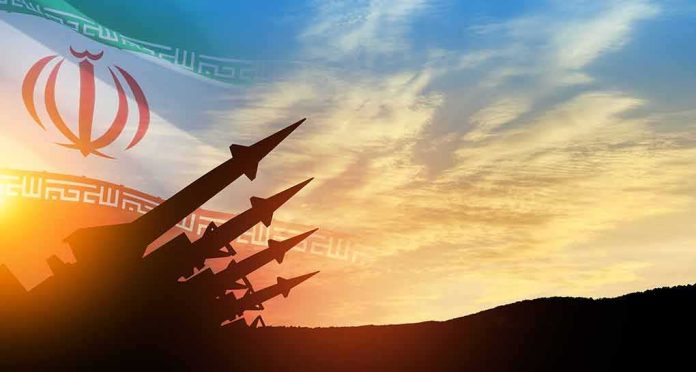
Iran’s missile and drone barrage forced Kuwait’s air defenses into action, pulling a U.S.–Iran fight straight over a U.S. ally’s skies.
Story Snapshot
- Kuwait says Iranian attacks violated its sovereignty and endangered civilians and vital facilities.
- Iranian and affiliated outlets framed strikes as retaliation aimed at U.S.-used sites on Kuwaiti soil.
- Kuwait’s military reported intercepting hostile missiles and drones in its airspace.
- No U.S. confirmation of damage at named facilities has been released so far.
What Kuwait Says Happened Inside Its Airspace
Kuwait’s government condemned what it called Iranian attacks on its territory and airspace. Officials said the strikes violated sovereignty and international law, including the United Nations Charter, and threatened national security and stability. The cabinet and foreign ministry affirmed Kuwait’s inherent right to self-defense under Article 51 of the United Nations Charter. Statements also warned that civilian lives and vital facilities were put at risk, reinforcing the view that the country itself—not only foreign forces—was under threat.
Kuwait’s army reported that air defenses were intercepting hostile missiles and drones. Officials said explosion sounds came from intercepts, not confirmed hits on targets, which signals an active defense posture and some measure of success. Those details match earlier regional reporting that described Kuwait’s defenses engaging incoming threats during broader Iranian strikes across allied states. The focus on interception underscores a core point: even when the intended target is disputed, Kuwaiti skies were the battlefield.
How Tehran Frames The Targets
Iran’s Islamic Revolutionary Guard Corps and aligned outlets described the launches as retaliation for U.S. strikes and claimed they targeted U.S.-linked sites in Kuwait. Reports cited specific bases, including Ahmad al-Jaber and Ali al-Salem, and described aircraft shelters, satellite systems, and storage facilities as among the targets. This framing aims to cast the action as a military-on-military response. It also shifts blame onto Washington by pointing to operations “from American bases on Kuwaiti soil” as the trigger.
Independent confirmation of damage to U.S. facilities in Kuwait has not appeared in the sources provided. No U.S. military statement in this set verifies hits or losses at the named bases. That leaves a clear split: Iran claims it struck U.S. assets, while Kuwait emphasizes that its territory and sovereignty were violated. Kuwait’s interception reports show an attack wave reached its airspace, but they do not prove which targets were programmed or whether any were hit.
Why This Matters To Americans Across The Spectrum
The episode highlights how U.S. wars often land on partner nations first. When Iran and the United States trade blows, Gulf states that host U.S. forces become the front line. Kuwait’s statements show the cost of that reality: fear for civilians, disrupted daily life, and the burden on local defenses. Many Americans on the right and left see a pattern here. Decisions made far away expose allies and U.S. troops to risk, while Washington’s public answers can be slow and thin.
PLASTICGIRL REPORTING | Sept 3
The board is HOT.1. IRAN JUST SPIKED Trump: we hit them “very hard.” Ready again “anytime we want.” Iran says a U.S. strike hit a WEDDING. 4 dead, including kids. Tehran fired on Kuwait and the UAE this morning. Brent $97+. Six months in. Not… pic.twitter.com/J0SUrkP3lf
— PlasticGirlReporting™️©️ (@PlasticGirl1776) September 3, 2026
Voters frustrated by endless conflict and opaque briefings will note the information gaps. Iran’s claims are detailed but adversarial. Kuwait’s reports are firm on sovereignty but not on target specifics. U.S. officials have offered no base damage account in these sources. This fog feeds distrust of elites who manage war, budgets, and energy. Clear answers would help: release radar tracks, battle-damage checks, and debris forensics. Until then, people will see a dangerous cycle with little accountability.
Sources:
iranintl.com, aa.com.tr, bbc.com, malaymail.com, wsj.com