A London judge sentenced Russell Brand to more than 10 years in prison after a jury found him guilty of one rape and three sexual assaults.
Story Snapshot
- A Southwark Crown Court jury convicted Brand on one rape and three sexual-assault counts after a weeks-long trial.
- The judge imposed a sentence of 10 years and 6 months, citing the gravity of the offences.
- Prosecutors described Brand as a “sexual predator,” while he denied all non-consensual conduct.
- The case highlights how older allegations can still lead to convictions under United Kingdom law.
Jury Verdict And Judge’s Sentence
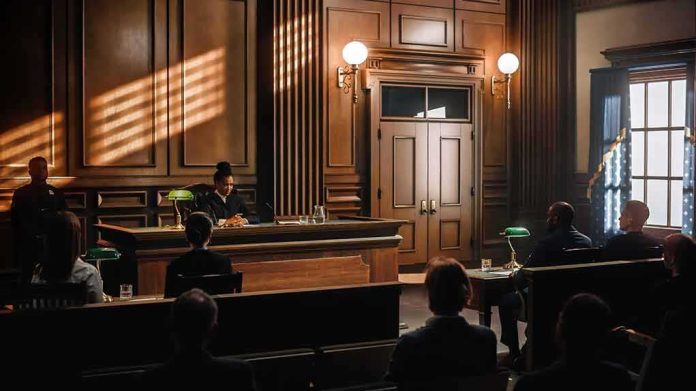
Southwark Crown Court in London returned guilty verdicts against Russell Brand on four counts: one rape and three sexual assaults. Jurors reached their decision after hearing several weeks of evidence. The Crown Prosecution Service reported the offences occurred between 2004 and 2009 and involved four women. Multiple outlets confirmed the split outcome, with acquittals on other charges and convictions on these four counts. The judge then imposed a prison term of 10 years and 6 months, signaling a serious view of the conduct.
British and American media noted that the case followed a multi-week trial, not a quick plea or administrative action. NBC News reported the jury found Brand guilty of rape and sexual assault after about four weeks of testimony and argument. The British Broadcasting Corporation live coverage recorded the court’s warning that a “custodial sentence of some length” would follow any convictions, which aligned with the final sentence announced in court. The Los Angeles Times likewise summarized the mixed verdict and the final set of convictions.
What Prosecutors And Defense Said
The prosecution called Brand a “sexual predator” at the outset and argued the pattern fit non-consensual conduct during the height of his fame. Prosecutors said the women’s accounts, taken together, showed a repeated disregard for consent. Brand rejected those claims throughout. He told police he had been promiscuous but never engaged in non-consensual sex. He testified that consent was “fundamental” to him and denied raping the complainant tied to the rape count. Defense counsel also argued some memories were flawed or reshaped by later media coverage.
The jury weighed both sides and convicted on four counts, while acquitting him on others. That split result shows the panel sorted each charge on its own terms. United Kingdom criminal trials require the Crown to prove guilt beyond a reasonable doubt. The Crown Prosecution Service statement thanked the women and framed the verdict as accountability for past offences. The sentence now places Brand among high-profile figures who faced serious prison time after late-reported crimes reached court and met the burden of proof.
How Older Allegations Reached A Verdict
United Kingdom law allows “non-recent” sexual offences to be charged when evidence supports them. The national statistics office has reported that delays in reporting are common and that many sexual-offence cases face attrition before trial. This case is a reminder that while many reports never lead to prosecution, some do, and some end in conviction. Here, investigators and prosecutors built a case that a jury accepted on four counts tied to events between 2004 and 2009.
UK cops have obviously had the Islamic Jizz enema. Was the woman who threw her drink on him arrested? Because that’s assault. The guy who flipped the table? Wilful damage.
It’s clear that the lefties and Muslims in Britain can break laws with impunity, right in front of the…
— BALLISTIC BARBARIAN (@Mugwom) November 9, 2026
For readers sorting claims from noise, two truths stand out. First, a jury convicted Brand on specific counts after a contested trial, and a judge imposed a decade-plus sentence. Second, Brand continues to deny all non-consensual acts. Those facts can sit side by side in a system that presumes innocence until proof at trial. The constitutional lesson for Americans is simple: process and proof matter, and each charge must rise or fall on evidence, not on celebrity or media storms.
Sources:
nbcnews.com, bbc.com, nytimes.com, cps.gov.uk, latimes.com, aapnews.aap.com.au, lbc.co.uk, independent.co.uk, tandfonline.com