When a teenager is shot steps from a neighborhood park in late afternoon, the essential facts are stark: location, injury, flight, and a community left scanning for a suspect who vanished into the crowd.
The Short Version
- A 14-year-old boy was shot in the leg near 153rd Street and Jamaica Avenue, just outside Rufus King Park in Queens, shortly before 5 p.m.
- He was taken to Jamaica Hospital in stable condition.
- The gunman, described as dressed in all black, fled on foot; no arrest has been made.
- Police have not publicly identified a motive or said whether the teen was specifically targeted.
What Happened, Where, and When
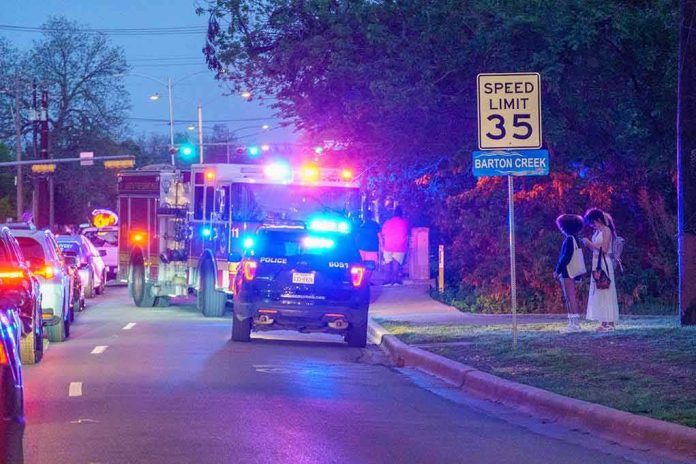
Police and local reporting describe a concise sequence. Shortly before 5 p.m., near the corner of 153rd Street and Jamaica Avenue at the edge of Rufus King Park in Jamaica, Queens, a 14-year-old boy was shot in the leg. Emergency medical services transported the teen to Jamaica Hospital, where he was listed in stable condition. The assailant ran from the scene; investigators had not made an arrest as of the initial reporting window, and they have not publicly stated a motive or whether the victim was targeted. These particulars—time window, intersection, injury site, and suspect flight—form the backbone of the case as it stands.
Both reports align on the fundamentals. The New York Daily News places the response at approximately 4:52 p.m. on 153rd Street and Jamaica Avenue, emphasizing proximity to the park. The New York Post, citing police, notes the shooter’s all-black clothing and the foot pursuit that did not result in an apprehension. Together they offer the early, public-facing incident profile: a single juvenile victim, a lower-extremity wound, stabilization at a nearby trauma center, and an unknown direction of flight for the suspect.
Why Early Details Look the Way They Do
In urban gunfire cases, the first hours of public information almost always pass through law enforcement channels. Crime-beat research shows police are the dominant source of incident facts at this stage—what criminologists call “information subsidies” that structure the initial narrative: location, time, condition, suspect descriptors, and the investigative status. This is not unique to New York; it is the institutional architecture of breaking crime coverage. It explains why we often have the essentials quickly and the interpretive layers—motive, prior contact between parties, or whether an attack was targeted—only after interviews, scene canvasses, and evidence processing mature.
That sourcing pattern also clarifies the limits inherent in first-wave reports. When police are not ready to release a complaint number, a wanted bulletin, or surveillance stills, the public picture narrows to the verified basics. Academic studies across markets repeatedly document this dynamic: law enforcement is the most-cited category in early crime news, with courts and other officialdom a distant second, and community eyewitnesses often surfacing later or not at all if they are unwilling to go on record.
The Scene and Its Surroundings
The intersection of 153rd Street and Jamaica Avenue sits at the gateway to Rufus King Park, a well-trafficked civic space with playgrounds, courts, and footpaths connecting to commercial blocks. Late-afternoon foot traffic is steady—families leaving the park, commuters transitioning to buses and the subway, and merchants closing out daytime business. In such settings, an assailant who moves quickly can blend with pedestrian flow within seconds, especially in monochrome clothing that evades bright-color recall. That helps explain why the suspect’s head-to-toe black description stands out—memorable but nonspecific—while the direction of flight remains “unknown” in first reports.
Hospitals and EMS in southeast Queens routinely coordinate on adolescent trauma, and Jamaica Hospital’s role here fits that pattern. A leg wound with stable vitals is still complex: risk of vascular injury, potential for retained fragments, infection control, and the behavioral health overlay common to youth violence cases, including victim and family support post-discharge. The distinction matters because “stable” is a clinical snapshot, not a guarantee of rapid recovery.
Open Questions Investigators Work Next
When police arrive to a single-victim shooting outdoors, the first priority is medical stabilization and scene integrity. The next steps, usually concurrent, are canvass and capture: locate cameras on adjoining commercial facades, transit fixtures, and any municipal park feeds; identify and separate witnesses; and hunt for physical evidence—projectiles, casings, impact marks—that fix a firing position and trajectory. Even absent a recovered casing (common with revolvers or if casings are picked up), trajectory analysis and wound path can narrow shooter location. The all-black clothing report becomes meaningful if video shows gait, headwear, bag carry, or a distinctive shoe profile. Those often prove decisive later, when combined with neighborhood knowledge.
Two decision points then shape the public’s next look at the case. First, whether and when to release a wanted image; second, whether detectives assess the encounter as targeted. Both influence tips. Public releases tend to come when images are clear enough to trigger accurate identifications and when tactical concerns—alerting a suspect prematurely, compromising a lineup—are outweighed by the benefit of leads.
How This Case Fits a Familiar Pattern
The outline here parallels other adolescent-involved shootings in Queens that began with sparse detail and firmed up as video and interviews accumulated. The pattern is not evidence of unusual opacity; it is the normal cadence of incident-to-arrest work. Studies of crime reporting show why readers routinely see the same scaffolding across outlets: a shared dependence on police statements and logs, which provide the minimal verifiable record under deadline. The result is consistent cross-outlet basics—time, place, injury, no arrest—with variance at the margin on descriptors or phrasing.
It also explains headline choices that foreground a vivid attribute—in this case, the suspect’s all-black clothing. Such details are legitimately newsworthy because they are actionable for a public lookout; they can, however, overshadow the tighter core of facts that actually anchor the case. Responsible coverage returns the emphasis to those anchors: when and where the shot was fired, the condition of the victim, the status of the search, and what police are asking the public to do.
A gunman in an all-black outfit remains at large after shooting a 14-year-old boy in the leg near Rufus King Park in Queens.https://t.co/Oha1Uf1xPf pic.twitter.com/75wnJhgZgL
— Next Stamina (@NextStamina) September 7, 2026
What It Means for Residents and Readers
For people who live and work around Rufus King Park, the immediate takeaways are straightforward. Afternoon hours are not immune to gunfire; situational awareness helps, and so does promptly sharing camera footage with detectives when requested. If the NYPD circulates a wanted flyer or image set, accuracy in community tips—distinctive shoes, a backpack logo, a precise direction of travel—outperforms generalized descriptions. And while the victim’s stable condition is encouraging, the investigative runway often runs longer than public attention spans. Following official updates, rather than rumor, is how neighborhoods actually help cases like this close.
Sources:
qns.com, fox5ny.com, nydailynews.com, nypost.com, queensda.org, facebook.com