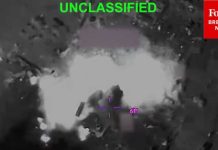
A drone dropping steak, crab legs, and pot into a South Carolina prison is not just a punchline—it’s a warning flare about a justice system that can’t even secure its own walls.
Story Snapshot
- Prison guards at Lee Correctional Institution intercepted a drone-dropped package loaded with luxury food, marijuana, and cigarettes.
- The stunt highlights how criminal networks are exploiting drone technology to bypass weak prison security.
- Years of soft-on-crime policies and bureaucratic mismanagement have left correctional systems vulnerable and demoralized.
- Trump’s renewed focus on law and order pressures states to crack down on contraband pipelines and restore real accountability.
Drone Delivery Exposes Stunning Prison Security Vulnerability
Just weeks before Christmas, guards at Lee Correctional Institution, a South Carolina maximum-security prison, spotted an unexpected “holiday package” in the yard: a drone-dropped bundle stuffed with steak, crab legs, marijuana, cigarettes, and even Old Bay seasoning. The haul read like a high-end surf-and-turf menu, not prison contraband, yet it underscores a serious problem. Criminals now use consumer drones to outmaneuver ground security, exploiting blind spots in facilities already strained by staffing shortages and aging infrastructure.
Lee Correctional has a history of serious security issues, including past riots and violence that exposed chronic understaffing and mismanagement. The drone incident shows that instead of solving those structural problems, officials are now playing technological catch-up against increasingly creative smuggling operations. Each successful drop not only feeds black-market economies behind bars, but also erodes public confidence that corrections leaders can maintain basic order, even after taxpayers pour billions into state justice budgets.
Soft-on-Crime Culture and Bureaucracy Weaken Deterrence
During the Biden years, federal rhetoric prioritized “reimagining” criminal justice while downplaying day-to-day law-and-order realities felt by corrections officers. That tone filtered down through blue-state bureaucracies, where activists pushed decarceration, leniency, and endless “reform” while ignoring dangerous gaps in prison control. Guards watched policies soften, consequences weaken, and inmate contraband markets flourish. Drone smuggling fits this pattern: highly organized, technology-enabled schemes flourishing in an environment where deterrence and discipline have been steadily watered down.
By contrast, Trump’s return to the White House has refocused national attention on public safety, border security, and cracking down on cartels that profit from drugs smuggled into communities and prisons alike. His administration has made clear that protecting Americans starts with securing every link in the chain—from the border to the cell block. When prisons fail to control contraband, criminal organizations gain leverage, inmates gain illicit power, and honest officers bear the risk. The Lee Correctional drone drop illustrates how lax oversight and political neglect create openings those groups eagerly exploit.
Technology Outpaces Policy in the War Over Contraband
Consumer drones have become cheaper, quieter, and easier to fly, turning open prison yards into easy targets for remote smugglers. Guards on the ground are often outmatched by operators flying miles away, using GPS, night vision, and pre-programmed routes to evade detection. Many facilities still rely on fences, towers, and walk-through searches designed for 20th-century threats, not airborne drop-offs that can land contraband directly in inmate hands within seconds. Policy, funding priorities, and training have struggled to keep pace with this rapid technological shift.
Under a law-and-order framework, state and federal leaders are now pressed to harden these weak points before they become normalized. That means radar-style drone detection systems, geofencing around sensitive facilities, and clear criminal penalties for anyone piloting drones to deliver contraband. It also demands serious investment in staffing so officers are not stretched so thin that a single drone flight can go unnoticed until it drops its payload. The intercepted package at Lee provided a lucky break; the bigger question is how many similar flights succeeded without being caught.
Why Contraband Matters for Communities Outside the Fence
Some might shrug off steak, crab legs, and weed as a “victimless” stunt, but contraband inside prisons fuels violence, corruption, and gang power that spill into nearby communities. Black-market goods generate debt, extortion, and turf battles among inmates and outside accomplices. Drugs entering facilities can deepen addiction, compromise rehabilitation, and incentivize staff bribery. Every successful smuggling run reinforces criminal networks that do not stop operating when sentences begin; they simply change tactics, using prisons as command centers instead of deterrents.
For conservatives who value the rule of law and safe communities, the Lee drone incident is a reminder that justice does not end at sentencing—it depends on secure, disciplined institutions that back up court decisions with real consequences. Trump’s broader push for strong borders, tough penalties for traffickers, and support for front-line law enforcement creates political cover for states to crack down on these failures. If leaders act decisively, the image of a drone dropping a luxury meal into a maximum-security prison can serve as a turning point instead of a new normal.