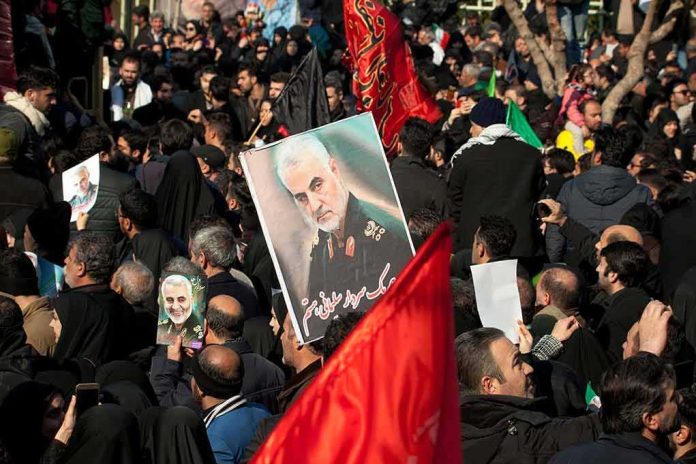
Iranian mourners held “We will kill you” banners aimed at President Trump as officials honored Ayatollah Ali Khamenei, turning a funeral into an open threat against a sitting American president.
Story Highlights
- Chants of “Kill Trump” and threat banners appeared at Khamenei’s Tehran funeral.
- Reports attribute Khamenei’s death to a joint United States–Israel airstrike on February 28, 2026.
- Senior Iranian leaders and numerous foreign delegations attended the multi-day rites.
- Signs referenced an unverified $100 million “bounty,” reported on crowd placards, not in official decrees.
Funeral Rhetoric Targets a U.S. President by Name
Video from Tehran shows mourners chanting “Kill Trump” and unfurling a banner that read, “Hey Trump, we will kill you,” during funeral events for Ali Khamenei. Reporters on the ground described large crowds and aggressive slogans that personalized blame toward the United States and its leader. The scene mixed grief, rage, and clear threats against America. Such rhetoric, even at a funeral, signals the regime’s effort to project revenge and unity to a domestic and regional audience.
Accounts from international outlets said the funeral drew senior Iranian officials and many foreign delegations. Reports cited attendees from countries across the region and beyond, reflecting Iran’s push to frame the moment as a national stand in wartime. Media coverage also noted symbols of vengeance in the procession and highlighted calls to retaliate. This was more than mourning; it was messaging for a public bracing for continued conflict and payback.
Strike Attribution and the War Backdrop
Multiple outlets reported that a joint United States–Israel air operation killed Khamenei on February 28 at his compound, a pivotal moment in the current war. Satellite images and on-site footage showed heavy damage, underscoring the precision and scale of the strike, even as some early official statements hedged before confirmation. The Pentagon reported no American casualties from immediate Iranian retaliation, though cross-border strikes added to the danger across the region.
Media described coffins of Khamenei’s family members presented at the rites, which Iran used to argue that the attack was unjust and cruel. That narrative seeks to rally Iranians and court sympathy abroad. At the same time, President Trump’s public comments about military success have shaped global coverage, reinforcing a deterrence message. These dueling frames—victory versus victimhood—now compete to define the next phase of the conflict.
Parsing the “Bounty” Signs and Crowd Claims
Some placards at the funeral referenced a “$100 million” bounty to kill Trump. Reports tied this claim to signs in the crowd, not to any formal decree or verified funding. No official Iranian document has publicly confirmed such a bounty. Attendance claims from state-linked sources also varied widely, and outside experts called those estimates political messaging. These gaps matter. Threats on posters are alarming, but they differ from state orders that carry legal and financial backing.
You apparently didn't see the banners at the iranian leaders funeral that said "we will kill trump…"
Youre kind of an idiot . They announced it. And we Americans won't stand for it!— Jeremy Russell (@Jremy2023) July 10, 2026
For conservative readers, the takeaway is direct. The chants name our president. The banners promise murder. The United States must treat these threats as real in terms of security, while separating crowd theatrics from proven state policy. The administration should press partners to condemn explicit calls for assassination and keep pressure on Tehran’s network that has a long record of overseas targeting. Clear eyes, strong defenses, and no illusions about the regime’s intent keep Americans safe.
What This Means for Security and Policy at Home
Law enforcement and the United States Secret Service will adapt travel and event plans, because even symbolic threats can inspire lone wolves. The administration must secure borders, vet visas, and monitor foreign operatives. Congress should ensure tough sanctions stay in force and tighten any gaps that fund proxy violence. Energy policy that restores American production reduces Tehran’s leverage. Deterrence rests on strength, but strength also requires discipline, clarity, and facts grounded in what we can verify.
Limits of What We Know Right Now
Newsrooms agreed on core events, including the date of the strike and Khamenei’s death. But some headline-grabbing claims still lack firm documentation, such as the alleged bounty. Crowd size estimates vary and can be inflated by politics. These limits do not change the core security issue: public death threats against an American president appeared in Tehran, on camera, during a state-driven ceremony. That reality demands vigilance without falling for propaganda traps.
Sources:
kunr.org, aljazeera.com, foxnews.com