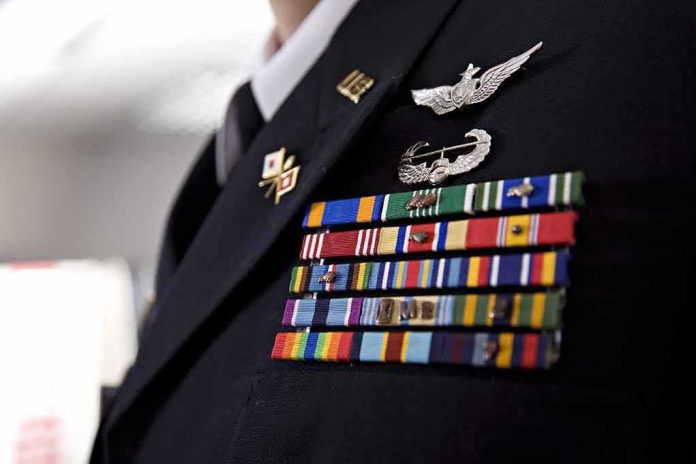
An American soldier earned the Bronze Star for Valor after pulling comrades to safety during Iran’s March 1 attack on a U.S. operations center in Kuwait.
Story Snapshot
- The Army awarded Sgt. 1st Class Oscar M. McGrew a Bronze Star with “V” for bravery at Port of Shuaiba.
- Iran’s strike on the U.S. tactical operations center in Kuwait killed six soldiers and wounded others.
- The “V” device marks combat valor, not routine service or merit.
- Families of the fallen were briefed on the Army’s investigation into the attack.
What The Army Says Happened In Kuwait
U.S. Army officials said Sgt. 1st Class Oscar M. McGrew showed “extraordinary heroism” during a combined drone and missile strike on March 1 at Port of Shuaiba, Kuwait. The Army linked his Bronze Star Medal with the “V” device to actions under enemy fire at the tactical operations center. A named spokesperson described his conduct as reflecting the highest standards of the Army’s noncommissioned officer corps, anchoring the award to that single, violent event.
The March 1 strike marked one of the war’s deadliest moments for U.S. forces. Six American soldiers died in the blast at the operations center, and others suffered severe injuries that continue to affect their lives months later. The attack came as Iran launched a wave of retaliatory strikes across the region in the opening hours of open conflict. Reporting identifies the fallen by name and confirms the location at the Kuwait port complex.
Why The “V” Device Matters
The Bronze Star Medal can mean two very different things: meritorious service or combat valor. The small “V” device on McGrew’s medal signals valor, not routine performance. It tells service members and the public that the deed involved direct combat and personal risk beyond the call of duty. U.S. military guidance and historical practice draw that clear line, so the device answers a common point of confusion about the Bronze Star’s purpose.
Officials and veterans often stress this difference because the medal’s broad use can blur public understanding. In past wars and recent conflicts, the “V” device has served as the quick marker of battlefield courage. For readers who track military news, that detail carries real weight. It says this was not a desk award or a catch‑all citation. It was earned during an enemy strike when seconds and choices decided who lived and who did not.
Losses Felt At Home And On The Force
Defense releases confirm the names and backgrounds of the six soldiers killed at Port of Shuaiba. One of those identified was a senior warrant officer with decades of service. The Department of Defense listed prior decorations and career milestones, underscoring the experience level lost in a single attack. Those facts show the human cost on families and units, and the gap left in training, leadership, and mission readiness.
Soldier awarded Bronze Star with ‘V’ for actions after Iranian drone strike in Kuwait via /r/army https://t.co/rZs0OmJMiX #army #miltwitter
— /r/Army (@rArmyReddit) September 11, 2026
Survivors continue to report long recoveries, from physical wounds to brain injuries and trauma. Some say the medical and administrative systems feel slow and complex when they need care fast. Their stories echo a pattern that crosses party lines: service members do the hard part, then navigate layers of bureaucracy when they come home. That gap feeds the wider belief that the system honors heroism on stage, but struggles to back it up after the cameras leave.
How This Fits The Larger War Picture
The Army completed its review of the Kuwait strike and briefed Gold Star families on its findings. That step is part of a standard process after deadly incidents. It aims to explain what failed, what worked, and what will change. Families and troops often want straight answers on base defense, early warning, and shelter plans. The briefing signals an attempt to learn and to protect people better in the next attack.
The award to McGrew also serves a larger purpose in wartime: it sets a public example of courage that leaders hope others will follow under fire. Even so, many readers see a split between frontline sacrifice and policy decisions in Washington. Conservatives and liberals alike worry about leaders who praise valor but miss big fixes, like base hardening, clear mission goals, and long-term care. The medal honors one soldier’s actions; the system still must meet its duty to all.
Understanding The Stakes For Troops And Taxpayers
Port of Shuaiba is a key logistics node for moving U.S. equipment. That makes it a likely target in any regional fight. The attack showed that drones and missiles can reach vital hubs even far from the front. Protecting these sites is not only about armor and sirens. It is about budgets, training, and accountability that track from the flight line to the loading dock. People want proof that lessons learned become lessons applied before the next alarm sounds.
For now, the record shows a soldier who ran toward danger and helped others live. The Bronze Star with “V” signals that truth in a language the military and veterans understand. As the war continues, citizens will watch for two things: real care for the wounded and real fixes to prevent repeat losses. Honoring courage is the start. Keeping promises to those who serve is the test.
Sources:
taskandpurpose.com, nationalguard.mil, marines.mil