Police say a man charged them with a tree-trimming pole topped by a serrated blade, and an officer shot him dead on a Boyle Heights street.
Story Snapshot
- Officers say they ordered the man to drop the pole; he kept advancing before the shooting.
- The weapon was described as an 8–10 foot pruning pole with a 10–12 inch serrated blade.
- Police responded to reports of a man swinging a pipe and possible mental health issues.
- Investigators are reviewing body-camera video; no officers or bystanders were hurt.
What Police Say Happened on Gillette and Bridge
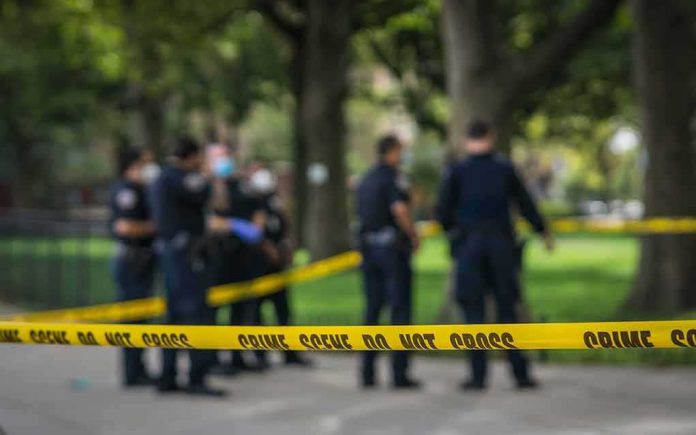
Los Angeles police officers responded Monday morning to Boyle Heights after calls about a man with a metal pipe. Reporters said the call came in around 9:54 a.m. Officers found a man who, they say, held a long pole with a sharp blade. Police said they told him to drop it. They said he did not comply and kept moving toward them. An officer fired and hit the man near Gillette and Bridge streets. No one else was hurt, police said.
Police and local outlets later described the object as a tree-trimming tool. ABC7 reported it was a pruning pole about 8 to 10 feet long with a 10 to 12 inch serrated blade on the end. A video report matched that detail. Police said they took the tool as evidence after the shooting. Early reports used the word “pipe,” but later coverage focused on the bladed pole description from the scene and police statements.
Commands, Movement, and Use of Force
Police said officers tried to create space from the man before shots were fired. According to ABC7, officers attempted to redeploy, but the man kept advancing. That is when an officer fired. The department said the man ignored repeated orders to drop the pole. Officials did not share the exact distance between the man and officers at the moment of the shot. They did not release names of the man or the officers involved.
Officials began a formal review soon after the incident. The department said investigators are examining body-worn camera video and any other available footage. They are also interviewing the officers and any witnesses. The Los Angeles County District Attorney’s Office and the department’s Force Investigation Team are part of that process. Reporting said neighbors were shocked, and detectives canvassed for video. Some local cameras may not have been recording that morning, according to coverage.
Initial Call Mentioned Possible Mental Health Crisis
Dispatch notes described more than a simple street disturbance. ABC7 reported the first call was for a mental health case involving a man swinging a pipe. That detail matters because these calls can unfold fast and unpredictably. Officers often face people who may be distressed or not processing commands. Even in those cases, a bladed pole can be lethal at close range. Police said they issued commands, tried to reposition, and then fired when the man kept moving toward them.
#BREAKING: LA Fire says a suspect was transported to the hospital with a gunshot wound after the LAPD responded to reports of a man armed with a pipe in Boyle Heights Monday morning. https://t.co/bX0OmaLKms pic.twitter.com/P8YD08T4UV
— KTLA (@KTLA) September 7, 2026
Across Los Angeles, police shootings tied to edged weapons and apparent behavioral crises have drawn more attention. A Los Angeles Times analysis found that since 2018, cases with sharp objects made up a large share of police shootings and were often deadly. Other local reporting shows recent spikes in police shootings across the city. These trends frame this Boyle Heights case within a wider challenge: managing dangerous encounters while also trying to de-escalate in real time.
Why This Case Resonates Beyond One Block
People on the left and right both see the system as slow to fix basic public safety and mental health gaps. Families call for help and expect calm, safe care. Officers face split-second choices when someone advances with a weapon. City leaders promise better training and more non-lethal options. Yet street-level crises keep ending in gunfire. This incident reflects a core test for local government: protect the public and the officers while steering troubled people away from deadly outcomes.
What to Watch Next
Expect key facts to arrive through official releases. Body-camera footage, dispatch audio, and investigative summaries often shape final judgments. These records can show the timing of commands, how fast the man moved, and how close he was. They also can confirm whether officers tried other options. Police said the case remains under review. For now, the public record centers on the police account and the recovered pruning pole with a serrated blade from the scene.
Sources:
nypost.com, ktla.com, abc7.com, mynewsla.com, cbsnews.com