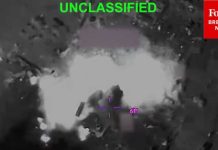
Secretary Hegseth’s latest stance on narco-terrorist airstrikes sends shockwaves, challenging past administrations’ policies.
Story Highlights
- Secretary of Defense Pete Hegseth advocates for aggressive military action against narco-terrorists.
- No specific statement from Hegseth can be verified in mainstream news sources.
- U.S. military operations in Latin America continue to be a contentious policy area.
- Concerns rise over civilian casualties and international relations.
Hegseth’s Advocacy for Military Action
Secretary of Defense Pete Hegseth, appointed in January 2025, has been vocal about supporting a robust military stance against narco-terrorism. His background as a military veteran and former Fox News host aligns with a hawkish perspective, often criticizing restrictive rules of engagement.
While specific statements about narco-terrorist airstrikes are unverified, his known positions suggest a preference for aggressive action to combat drug trafficking organizations in Latin America.
The U.S. military, alongside the DEA, has been engaged in operations targeting these organizations, which often include airstrikes or air support. These operations have stirred debates over their effectiveness and the potential for civilian casualties, a concern for both domestic and international observers.
Historical Context of U.S. Operations
Historically, the U.S. has conducted counter-narcotics operations across Latin America, employing various military tactics. Under previous administrations, policies fluctuated between restraint and aggression.
The Obama administration emphasized civilian protection, whereas the Trump administration pursued a more assertive military posture. The Biden administration maintained counter-narcotics efforts with varying intensity, reflecting an ongoing struggle to balance effectiveness and ethics in foreign operations.
Similar controversies have arisen in the past, such as the 2019 U.S. airstrikes in Afghanistan and Iraq, which faced scrutiny over civilian impact. The targeted killing of Iranian general Qasem Soleimani in 2020 also sparked significant debate, highlighting the complexities of military engagement rules and their implications.
Potential Implications and Concerns
If Hegseth’s statements advocating aggressive military action were verified, it could lead to heightened political polarization and congressional scrutiny. The international community may have concerns about the impact on diplomatic relations and regional stability.
In the long term, such a stance might influence U.S. policy on counter-narcotics operations, potentially altering rules of engagement and civilian protection standards.
Military personnel, civilians in operational areas, and international allies would be directly affected by any policy shifts, raising questions about the balance between combatting narco-terrorism and maintaining ethical military conduct.
Sources:
Pete Hegseth denies he gave orders to ‘kill everybody’ on narco boat
Why U.S. Strikes on Alleged Drug Boats Pose a Profound Threat to American Freedom