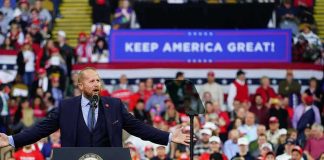

A well-known Kansas pastor who once backed Republicans just launched a Democratic bid to unseat Senator Roger Marshall, betting that pocketbook pain will matter more than party labels.
Story Highlights
- Rev. Adam Hamilton launched a United States Senate campaign as a Democrat in Prairie Village on April 30, 2026.
- Hamilton calls himself an “independent-minded Democrat” and will challenge Senator Roger Marshall.
- He says Kansans’ cost-of-living concerns should come before spending on overseas conflicts.
- He recently changed his party registration from Republican to Democrat after an 18-city listening tour, according to reporting.
Pastor Enters Race With Local Roots And A Cost Focus
Rev. Adam Hamilton, the founding pastor of a large United Methodist church in Leawood, announced his campaign for the United States Senate in Prairie Village on April 30, 2026. He entered the race as a Democrat and set up a direct challenge to Senator Roger Marshall, a Republican seeking another term. Hamilton framed his bid around Kansas identity and service. He highlighted family ties reaching back generations in the state and stressed community work through his church leadership.
Hamilton described himself as an “independent-minded Democrat” and pitched a message centered on everyday costs. He said leaders in Washington send billions overseas while Kansans struggle to pay for gasoline, food, medicine, and housing. He listed food assistance, health care access, and rural hospital closures as priorities his campaign would address. That cost-of-living frame aims to connect across party lines in a state where many voters say the economy is not working for them.
Party Switch And Listening Tour Shape His Pitch
Reporting says Hamilton changed his party registration from Republican to Democrat in April and chose the Democratic line after hearing from Kansans on an 18-city listening tour. He argues that voters want practical problem solving, not culture war talk. By stressing independence, he hopes to win moderates and independents who feel left out by both parties. That approach fits a Kansas pattern where Democrats are most competitive when they look local and measured rather than national and ideological.
Kansas has long favored Republicans in federal races, yet competitive statewide contests sometimes reward candidates who signal moderation. Hamilton’s launch drew quick statewide attention because it answered a key question about who would face Marshall. Coverage framed the match-up as one to watch in a year when control of the Senate is closely fought, even with Republicans holding both chambers of Congress and President Trump in the White House.
Marshall’s Counterattack And The Tension Over Identity
Senator Marshall’s team moved fast to paint Hamilton as a hard-left Democrat. Marshall and allied groups attacked Hamilton’s sermons and views, calling him “radical,” a label meant to undercut Hamilton’s centrist brand. That line of attack is common in red states. It seeks to make the race a simple partisan choice rather than a referendum on prices, hospitals, and local services that Hamilton wants to center.
https://twitter.com/GeorgeMurrayJr1/status/2105448103080014318
The identity twist also carries risk for Hamilton. Reporting on his recent party switch gives Marshall an opening to frame the move as political rather than principled. Hamilton counters that Kansans guided his choice during his listening tour, and that he will work with anyone to deliver results on kitchen-table issues. The clash sets up a clear test: will voters judge more on party labels or on plans to lower costs and keep rural care within reach?
Why This Matters For Frustrated Voters
This race touches a wider mood in Kansas and beyond. Many voters on the right and left feel that Washington works for the well-connected, not for families trying to pay the bills. Hamilton’s message bets that fixing basics like food aid and hospital access can beat partisan branding. Marshall’s strategy bets that Kansas will stick with the Republican label it has trusted for decades in the Senate. Both messages speak to deep doubts about whether the federal government still serves regular people.
What To Watch Next
Fundraising totals will show whether Hamilton’s launch drew real backing. Early polls and ratings shifts will hint at how independents respond to his pitch. Marshall’s response will signal how much he leans on national themes versus local wins. Voters will also look for concrete proposals on costs and care, not only slogans. In a year when many believe elites call the shots, clear results on prices and services could decide this race more than party loyalty.
Sources:
kcur.org, forth.news, thehill.com, yahoo.com, abcnews4.com