An Iran war that was supposed to end fast just got real for American families after Tehran claimed it shot down U.S. jets and a U.S. crew member had to be pulled from the battlefield.
Quick Take
- Iran said it downed two U.S. military aircraft on April 3 as fighting continues across the Persian Gulf region.
- At least one U.S. service member was reported missing and later rescued, underscoring the human cost of the conflict.
- Strike totals and war aims remain murky as U.S. officials cite thousands of targets hit, while Tehran disputes U.S. claims of negotiations.
- Oil prices have surged amid the Strait of Hormuz disruption, adding pressure on American households already wary of high energy costs.
Iran’s shootdown claim puts U.S. losses front and center
Iranian officials said Friday, April 3, that their forces shot down two U.S. military aircraft in separate incidents, including one tied to operations in the Persian Gulf region. Reporting indicated at least one U.S. service member was initially missing before being rescued, highlighting that this conflict is no longer an abstract map-and-briefing war. U.S. authorities have not publicly settled every detail Tehran claims, leaving open questions about the second aircraft.
The rescue detail matters because it signals the kind of combat tempo Americans associate with open-ended entanglements—search and rescue missions, disputed battlefield claims, and the unavoidable risk of escalation. For Trump’s base, that reality collides with a core promise that the country would stop getting pulled into new regime-change style wars. The available reporting confirms a rescue and confirms Iran’s shootdown claim; it does not fully confirm Iran’s claim of two aircraft.
How this war escalated and why the timeline is disputed
The current war traces back through years of regional escalation, including a 2023 Middle East crisis, missile exchanges in 2024, and airstrikes during the June 2025 “Twelve-Day War.” The sharpest turn came on February 28, 2026, when the United States and Israel launched surprise strikes across Iran that reportedly killed Supreme Leader Ali Khamenei and other officials. Iran answered with missiles and drones aimed at Israel, U.S. bases, and U.S.-aligned states, while shutting down the Strait of Hormuz.
Diplomacy has been equally contested. President Trump said some strikes on Iranian power plants were postponed for five days and claimed the U.S. was negotiating with Iran to end the war. Iranian officials denied talks occurred and rejected a reported U.S. peace plan, while adding demands tied to Lebanon as part of any ceasefire package. The conflicting messaging leaves Americans trying to judge whether the fighting is being narrowed—or whether Washington is sliding into a campaign with shifting goals and no clear endpoint.
The scale of strikes and the growing bill for taxpayers
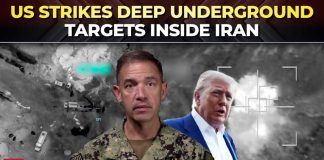
U.S. leaders have described an enormous operational footprint. By late March, Adm. Brad Cooper said the U.S. had struck more than 8,000 Iranian military targets and hit 130 vessels. U.S. Central Command has cited an even larger number—more than 11,000 targets since the war began. Those totals suggest a sustained air and maritime campaign rather than a brief retaliatory operation. When official numbers vary, the public is left to interpret competing counts without a single transparent ledger.
That scale also connects directly to federal spending and oversight. Reporting indicates the Pentagon requested more than $200 billion in additional war funding, a figure that would land on taxpayers already skeptical of Washington’s habit of treating emergencies as blank checks. Even if one accepts the administration’s stated goals of degrading Iran’s military capabilities, Congress and the public still have to weigh what constitutes success, how it will be measured, and what conditions would trigger de-escalation instead of mission creep.
Civilian toll, energy shock, and the constitutional questions voters keep asking
Humanitarian reporting from the conflict is grim and difficult to verify in real time. Iran’s ambassador to the United Nations reported more than 1,500 civilians killed, including deaths tied to a reported strike on an elementary school, and millions displaced. Another estimate cited more than 3,000 people killed in Iran since the war began, while an internet blackout has made outside verification harder. On the U.S. side, reporting cited thirteen U.S. service members killed.
Americans are also feeling the war through energy and markets. Brent crude rising above $114 per barrel and U.S. crude near $100 reflects the Strait of Hormuz disruption and fears of wider regional blowback. For conservatives who have long argued that global instability and Washington’s interventions hit working families hardest, this is the practical test: higher gas and goods, more emergency appropriations, and fewer clear answers about duration. Limited public detail on end-state strategy keeps fueling the base’s divide over involvement.
Sources:
Confrontation between the United States and Iran
Latest analysis: War with Iran