
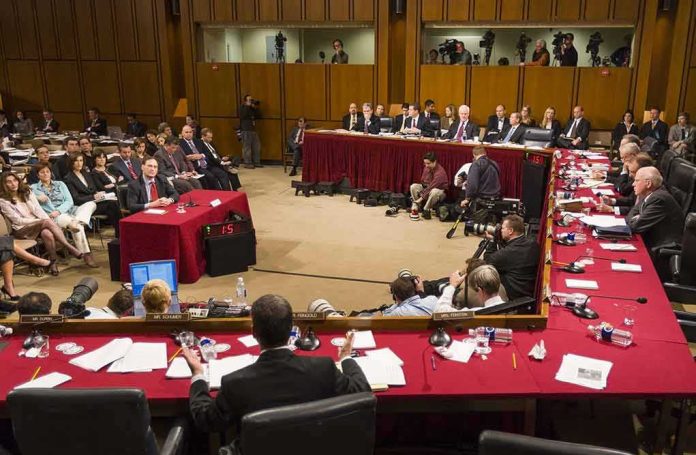
The Senate Ethics Committee cleared Senator Ruben Gallego of misconduct after a high-profile complaint tried to turn ethics rules into another political weapon in Washington.
Story Snapshot
- Senate Ethics Committee dismissed misconduct allegations against Sen. Ruben Gallego after an investigation.
- The bipartisan panel said Gallego did not violate federal law, Senate rules, or standards of conduct.
- The complaint, filed by Rep. Anna Paulina Luna, mixed sexual conduct claims with campaign finance accusations.
- A separate Department of Justice campaign finance probe reportedly remains open, keeping some questions alive.
Ethics Panel Clears Gallego After Political Firestorm
Senator Ruben Gallego, a Democrat from Arizona, has been formally cleared by the Senate Ethics Committee after a complaint accused him of misconduct, including sexual relationships with House staffers and campaign finance violations. The six-member panel, made up of three Republicans and three Democrats, said that after reviewing the evidence, it did not find that Gallego’s actions broke any federal laws, Senate rules, or standards of conduct. The decision came in a June 26 letter that ended months of headlines but not public distrust.
The complaint against Gallego was filed by Representative Anna Paulina Luna, a Republican from Florida, following the scandal that led to former Representative Eric Swalwell’s resignation over sexual misconduct claims. Luna’s filing linked Gallego to allegations that were “sexual in nature” and suggested he had been part of a broader culture of misconduct in Congress. Gallego’s office strongly denied the claims and called them “right-wing conspiracy theories” pushed by a fringe member of Congress, framing the move as partisan rather than based on hard evidence.
What the Ethics Committee Did — And Did Not — Decide
The ethics panel’s letter said plainly that it “did not find evidence” that Gallego violated federal law, Senate rules, or related standards of conduct, and it noted that he fully cooperated with the investigation. That matters, because a Republican-led committee clearing a Democrat suggests at least some lines still hold in Washington’s deeply partisan climate. However, the letter did not release a full report, name witnesses, or share sworn testimony from staffers, so the public cannot see exactly what the committee reviewed or how it weighed each claim.
Some details remain unclear to anyone outside the investigation. The dismissal letter does not state whether the staff relationships were confirmed as consensual or when they took place relative to Gallego’s marital status, leaving those facts unverified in public records. There is also no public list of witnesses or staffer statements, so people must trust a process they cannot inspect. For citizens who already feel that powerful insiders protect their own, the lack of transparency feeds doubts, even when a formal ruling says no rules were broken.
Pattern of Misconduct Allegations in a Distrusted System
This case fits a larger pattern where lawmakers face sexual misconduct or harassment claims that often begin with political rivals and end with ethics dismissals when relationships are judged consensual and no rule breaches are found. Over the last twenty years, at least 53 workplace sexual harassment accusations have been made against 30 members of Congress, with more than 130 total allegations when non-workplace and pre-election claims are counted. Many cases produce discipline or resignations, but many others end like Gallego’s, with committees saying the evidence does not meet their standards.
Outside Washington, the trend is similar. Since 2017, at least 147 state lawmakers across 44 states have faced sexual harassment or misconduct accusations, showing how common these claims have become in modern politics. Advocacy groups and some voters see ethics panels as slow and secretive, while many lawmakers say the process protects against false or weaponized accusations. In this environment, both conservatives and liberals often feel the same thing: complaints are filed to score points, investigations happen behind closed doors, and ordinary people never really learn what is true.
Why Both Sides Feel the System Is Rigged
For many conservatives, Luna’s complaint looked like a needed push to clean up Congress after repeated scandals, only to end in another insider letter saying “nothing to see here.” For many liberals, the fact that a Republican-led committee cleared a Democratic senator will not erase worries that the same system has failed victims in other cases or that campaign money still buys protection. Both sides can point to past examples where lawmakers accused of misconduct kept their jobs, or where others resigned quickly without a full and fair review.
On top of that, a reported Department of Justice investigation into Gallego’s campaign finances remains open, even after the ethics committee’s dismissal. That split outcome sends a mixed message: the Senate says Gallego’s conduct did not violate its rules, but federal prosecutors have not yet closed their books. Until there is a clear public answer, many Americans will see this as another sign that the powerful operate in a gray zone, shielded by lawyers, loopholes, and committees while regular people live with strict rules and few second chances.
Sources:
twitchy.com, npr.org, youtube.com, facebook.com, thehill.com, azcentral.com, cbs.com, cbsnews.com, theguardian.com, 19thnews.org, govinfo.gov, nbcnews.com, usatoday.com