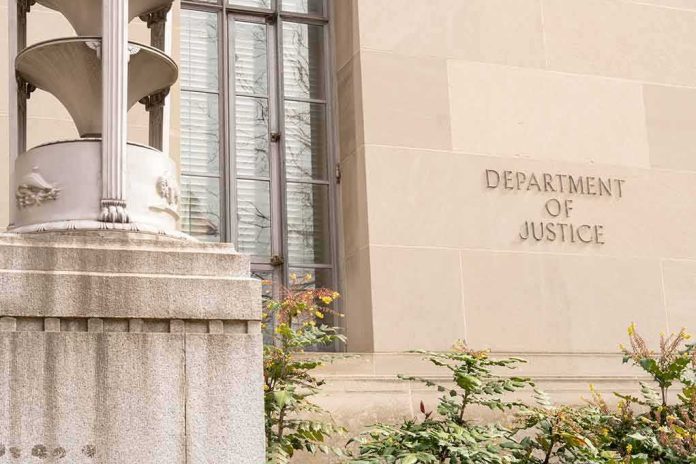
The Trump administration has now sued a dozen states, arguing they broke the law by giving college tuition breaks to students who are in the country illegally while U.S. citizens from out of state pay full price.
Quick Take
- The Department of Justice has sued 12 states, including Colorado, California, Massachusetts, Rhode Island, Minnesota and Illinois, over in-state tuition laws for undocumented students.
- The lawsuits claim these laws violate a federal statute and the Constitution’s Supremacy Clause by favoring illegal immigrants over U.S. citizens.
- Courts have split so far — Illinois lost key protections in court, while a Minnesota judge tossed out the federal government’s challenge.
- Roughly 22 states plus Washington, D.C. still offer some version of these tuition policies, showing how widespread the practice remains.
A Nationwide Legal Campaign
Attorney General Pam Bondi’s Department of Justice has sued seven states over these tuition policies, with additional filings pushing the total to 12 as of late June 2026. Targets include Colorado, California, Massachusetts, Rhode Island, Minnesota and Illinois. Each lawsuit argues that letting undocumented students pay in-state rates, while out-of-state American citizens pay more, breaks federal law and puts illegal immigrants ahead of U.S. citizens.
The Justice Department’s complaint against Colorado calls the state’s approach a case of “placing illegal aliens over American citizens in clear defiance of Congress’s commands”. That lawsuit targets Colorado’s ASSET program, a decade-old law letting more than 6,000 students without legal status pay in-state tuition rates at public colleges and universities.
Legal Theory: Supremacy Clause and Federal Law
The government’s core argument rests on a federal statute that bars states from giving undocumented residents tuition benefits based on state residency unless they offer the same benefit to all U.S. citizens, regardless of what state they live in. The Justice Department says this conflicts directly with that law and is preempted under the Constitution’s Supremacy Clause, which says federal law overrides conflicting state law.
Officials describe the incentive problem bluntly. The lawsuits allege these tuition laws “create incentives for illegal immigration” by rewarding people who broke immigration law with the same discounted tuition rates reserved for legal state residents. Massachusetts and Rhode Island became the latest targets, with complaints filed by the department’s Civil Division challenging both states’ tuition statutes.
Mixed Results in Court
Judges have not ruled uniformly. A federal judge in Illinois gutted key parts of that state’s DREAM Act, stripping away in-state tuition, financial aid and scholarships for students without legal status. Illinois Governor JB Pritzker called it a major legal setback for a program his state had defended for years.
Minnesota went the other way. A federal judge dismissed the Justice Department’s challenge to that state’s law entirely, handing the administration its first defeat in this legal push. With rulings split between wins and losses, the fight over these tuition laws looks likely to keep bouncing between federal courts for months, possibly ending up before appeals judges.
DOJ Sues Colorado For Offering In-State Tuition Aid To Illegal Immigrants
The DOJ's 14th lawsuit challenging in-state tuition for illegal immigrants accuses Colorado of violating federal law — giving illegal aliens benefits denied to out-of-state American citizens. A Texas Dream… pic.twitter.com/slWoVfhPKA
— Colorado Free Press (@ColoFreePress) August 5, 2026
What’s at Stake for States and Students
These tuition laws are not rare exceptions. One count found 25 states plus Washington, D.C. once allowed in-state tuition for undocumented students, a number that has since dropped to 22 states plus D.C. after recent lawsuits and policy reversals. That means the Justice Department isn’t targeting an isolated policy — it’s going after a practice that has spread widely across both blue and red states for years.
For families on both sides of the immigration debate, the fight touches a nerve. Supporters of the tuition laws say they help kids who grew up in America finish school and build a future. Critics say American citizens from other states are stuck paying thousands more for the same classroom seat, a gap that feels unfair no matter which side of the immigration debate someone sits on.
The Justice Department has signaled it plans to keep filing these lawsuits state by state rather than seeking one nationwide ruling. That strategy means more courtroom battles are likely in the coming months, with outcomes depending heavily on which judge hears each case and how that judge interprets the decades-old federal tuition statute at the center of every filing.
Sources:
news.bloomberglaw.com, justice.gov, k12dive.com, insidehighered.com, foxnews.com, highereddive.com