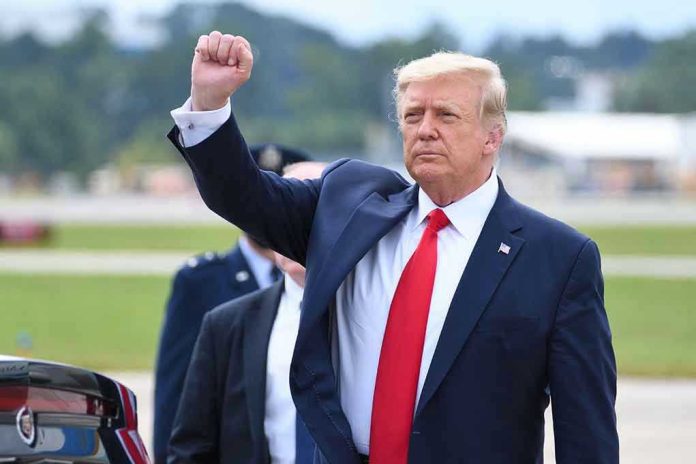
President Trump’s bold proclamation that the US is “locked and loaded” if Iran threatens peaceful protesters has reignited discussions on American interventionism and constitutional values.
Story Highlights
- President Trump warned Iran against harming peaceful protesters, emphasizing US readiness to intervene.
- Iranian protests began over economic issues, escalating to anti-regime demonstrations.
- Tensions between US and Iran rise, with potential implications for global security and policy.
Trump’s Firm Stance on Iran
President Donald Trump issued a stark warning to Iran, declaring that the United States is “locked and loaded” to intervene if Iranian authorities harm peaceful protesters. This statement, made via social media, underscores Trump’s commitment to supporting democratic movements and protecting human rights abroad. The statement came as protests in Iran erupted, initially ignited by economic grievances such as inflation and currency devaluation. Trump’s message highlighted his administration’s firm stance on defending constitutional values, including the right to peaceful assembly.
The Iranian government quickly responded to Trump’s warning, with a top security official cautioning that any US interference would lead to “chaos.” This exchange marks a continuation of the tense relationship between the two nations, exacerbated by US sanctions and Iran’s internal economic struggles. The protests, which began in Tehran, have spread nationwide, reflecting widespread dissatisfaction with the regime’s economic management.
Historical Context and Current Dynamics
The roots of the current unrest in Iran can be traced back to long-standing economic issues, compounded by international sanctions and domestic mismanagement. The protests are reminiscent of previous movements, such as the 2009 Green Movement and the 2019 fuel price demonstrations. Trump’s position aligns with his administration’s “maximum pressure” policy aimed at weakening Iran’s regime by highlighting its vulnerabilities.
The dynamics between the US and Iran are complex, with President Trump leveraging military readiness as a deterrent against Iranian crackdowns. The US maintains a significant strategic advantage, while Iran’s regime prioritizes its survival amid economic turmoil. The protesters, motivated by dire economic conditions, represent a grassroots push for reform or even regime change, further intensifying the geopolitical stakes.
Potential Implications and Future Outlook
The unfolding situation in Iran poses significant short-term and long-term implications. In the short term, the risk of a violent crackdown on protesters is high, which could lead to an international crisis. In the long term, the unrest could either embolden Iranian citizens to demand more substantial reforms or result in a hardened regime response. The outcome of this situation will likely influence US foreign policy strategies, particularly under Trump’s leadership, where a strong emphasis on American constitutional values and global leadership persists.
The broader impacts of these developments extend to global oil markets and international diplomatic relations. As tensions rise, the potential for miscalculation increases, necessitating careful monitoring of the situation. The international community, including US allies, will be closely watching how these events unfold and the US’s role in shaping the future of the region.
Sources:
Trump warns US is ‘locked and loaded’ if Iran kills peaceful protesters