The Presidential Medal of Freedom is as much a mirror of a president’s judgment as it is a laurel for the recipient; President Trump’s decision to honor Rudy Giuliani centers that reality by elevating a record defined by 9/11 leadership and crime-fighting achievements under the umbrella of an award that is, by design, almost entirely discretionary.
At a Glance
- President Trump awarded Rudy Giuliani the Presidential Medal of Freedom, framing him as “America’s Mayor” and honoring leadership after 9/11 and earlier anti-organized-crime work.
- The Medal of Freedom is uniquely discretionary: there is no formal nomination process and the president sets the selection criteria in practice.
- White House communications have linked recent Medal of Freedom recognition to 9/11 remembrance, placing Giuliani’s honor within that commemorative frame.
- Public reception is polarized, but the mechanism is clear: the medal signals a president’s values as much as it catalogs a recipient’s résumé.
What the award affirms: Giuliani’s public-service record and 9/11 leadership
President Trump’s award presentation cast Giuliani in the role that first made him a national figure: the mayor who steadied New York City after the September 11, 2001 terrorist attacks. That framing is consistent with the administration’s broader commemoration of 9/11-era service; in September 2026, the White House used Medal of Freedom ceremonies to honor acts tied directly to that tragedy and to restate a national pledge to remember. Giuliani’s identity as “America’s Mayor” emerged precisely from the cadence and clarity of those days—press conferences that informed without sensationalism, visible coordination with first responders, and a relentless insistence on continuity amid shock. The medal, as presented, affirms that chapter above all.
The case for honoring Giuliani does not start on 9/11. It reaches back to a prosecutorial career defined by organized-crime cases and to a mayoralty associated with aggressive, metrics-driven policing and management. Contemporary summaries of his tenure attribute dramatic reductions in major crime and chronic urban disorder, the transformation of Times Square from a byword for decay into a tourist engine, and an administrative expectation that city agencies would deliver measurable outcomes. While historians and criminologists debate causal weight among policing tactics, economic cycles, and demographic shifts, the political fact is simpler: Giuliani’s mayoral record became a national template for “order and competence,” the very persona that later amplified his voice in crisis communications after 9/11.
How the Medal of Freedom works: unilateral, symbolic presidential power
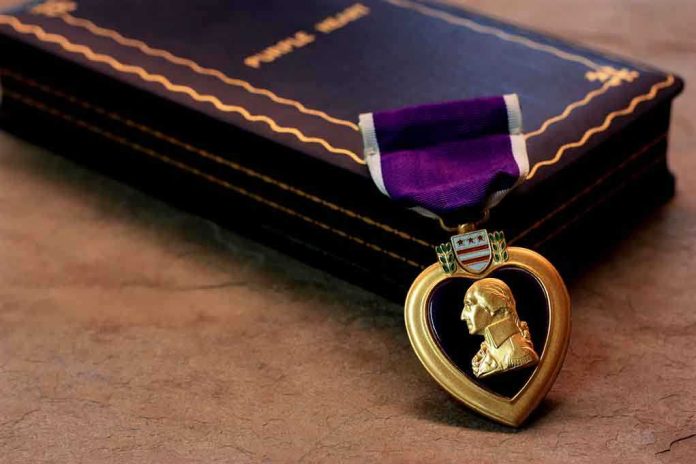
The Presidential Medal of Freedom is unusual among national honors: there is no statutory nomination pipeline, independent vetting board, or fixed rubric governing selections. By executive order, the president may confer it on “any person” whom he believes has made an especially meritorious contribution to the nation’s security, interests, or cultural life—language broad enough to encompass war heroes, artists, scientists, athletes, philanthropists, and civic leaders. In practice, that breadth transforms the medal into a clean instrument of symbolic unilateral power; recipients reflect a president’s own hierarchy of achievement. Congress’s nonpartisan research arm describes the process plainly: wide presidential latitude, no formal procedure.
Because the legal mechanism is permissive, meaning accrues from the chooser as much as the chosen. Every administration uses the medal to define exemplary citizenship, but the emphasis shifts with each occupant of the Oval Office. Some lists lean toward arts and culture, others toward civil rights icons, still others toward military or law enforcement valor. Scholarly analyses of the medal’s first five decades find consistent evidence that selections map presidential priorities—ideological, personal, and rhetorical—as much as they map a neutral national consensus.
Why Giuliani fits the instrument presidents actually wield
Within that framework, Trump’s decision is coherent. The administration has consistently linked Medal of Freedom moments to narratives it wants to elevate—9/11 remembrance, law-and-order leadership, and public figures who represent resilience under pressure. Positioning Giuliani in that constellation emphasizes his mayoral achievements and crisis stewardship rather than later chapters of controversy. It also leverages the medal’s core design: a presidential platform to say, “this is the kind of service I honor,” without the constraints of an external jury.
Critics and admirers will continue to argue the balance of Giuliani’s long public life; the medal itself does not adjudicate those debates. What it does, unambiguously, is record a presidential judgment. Unlike statutory decorations with defined eligibility or campaign-specific citations, the Medal of Freedom absorbs complexity and still delivers a binary outcome—awarded or not—because its legal charter invites the president to see the whole and decide which part defines the legacy worth lifting up.
MEDAL OF FREEDOM: President Donald Trump on Tuesday awarded the Medal of Freedom, the nation’s highest civilian honor, to former New York Mayor Rudy Giuliani. https://t.co/TwiomK7UXh
— WPLG Local 10 News (@WPLGLocal10) November 25, 2026
Reception and the modern politics of honor
Modern presidents operate in a media environment that amplifies conflict, and the Medal of Freedom has become a reliable proxy fight over cultural authority: whose story of America is ascendant, whose heroes are canonical. That dynamic is not an aberration but a feature of the medal’s evolution since John F. Kennedy broadened its scope in 1963 and subsequent executive orders kept discretion wide. The more capacious the criteria, the more space for presidents to make meaning—and for audiences to contest it. Academic and congressional analyses converge on that through-line: the medal is broad by design, and its selections inevitably telegraph a presidency’s animating ideals.
What to watch: legacies, lists, and the long view
Honors take on their richest significance in retrospect, when lists are read as narratives across years rather than as single-day events. Giuliani’s inclusion will be read alongside other honorees in this and prior Trump terms, and against the canon established by earlier administrations. For observers, the interpretive work is straightforward: compare who is elevated, what fields are emphasized, which episodes of American life are commemorated, and how often presidents reach for figures tied to their own political coalitions. That comparative lens—rooted in the medal’s discretionary DNA—reveals more about a presidency’s story of America than any one podium speech ever could.