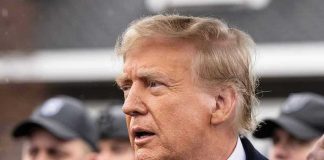
Trump’s warning to Iran—“they better not” retaliate or face “a force that has never been seen”—signals a high-stakes test of American deterrence after days of U.S.-Israeli strikes.
Story Snapshot
- U.S. and Israeli forces launched large-scale strikes on Iranian military, nuclear, and government-linked targets around February 28, 2026, as President Trump framed the campaign as eliminating threats to America and allies.
- Trump used Truth Social to warn Tehran against counterattacks and to urge Iranians to rise up against their rulers, while Israel’s Benjamin Netanyahu echoed regime-change language.
- Iran responded with missiles and drones aimed at Israel and multiple U.S. basing hubs across the Gulf region, while Tehran invoked self-defense claims under UN Charter Article 51.
- The UN Security Council moved toward an emergency session amid sharp divisions, with China and Russia backing Iran’s complaint and Western voices pushing de-escalation and talks.
Trump’s Deterrence Message After the Strikes
President Donald Trump addressed the strikes as a deliberate effort to dismantle Iran’s nuclear program, ballistic missile capabilities, naval capacity, and proxy support networks. Trump’s public messaging centered on deterrence: he warned Tehran not to counterattack and threatened overwhelming retaliation if it did. Trump also urged Iranians to overthrow their government, an escalation in political intent that goes beyond traditional military signaling.
Israeli Prime Minister Benjamin Netanyahu aligned closely with the U.S. approach, describing Iran’s diplomacy as hollow and amplifying calls for political change in Tehran. The available reporting describes the operation as larger in scope than earlier 2025 episodes, with leadership and command-and-control nodes among the targets. Some claims—such as the status of Supreme Leader Ali Khamenei—remain unconfirmed in the underlying reports and should be treated as unresolved.
From “Breakthrough” Diplomacy Talk to Bombing in Days
Iran publicly suggested a nuclear deal was within reach if diplomacy remained the priority, and Oman signaled possible mediation progress days before the strikes. U.S. demands, as characterized in the research, focused on full dismantlement of Iran’s nuclear program rather than partial limits or temporary pauses. When talks failed to produce that outcome by late February, the strikes began, with U.S. officials describing an operational timeline measured in days rather than hours.
For conservatives who watched years of weak enforcement, cash incentives, and “process over results” foreign policy, this timeline matters: it reflects an approach built around leverage instead of concessions. The research ties the 2026 campaign to earlier “maximum pressure” tools—sanctions, IRGC designation, and prior military action in 2025—suggesting the administration is trying to deny Tehran the time and space that negotiations can sometimes provide.
Iran’s Retaliation and the Risk to U.S. Forces
Iran’s response, according to the reporting summarized here, included missiles and drones aimed not only at Israel but also at U.S. military footprints across multiple Gulf locations, including Bahrain, Jordan, Kuwait, Qatar, Saudi Arabia, and the UAE. This is the part of the story that directly concerns American families: a wider target set increases the chance of U.S. casualties, miscalculation, and spillover beyond the immediate Israel-Iran theater.
The research also cites reports of significant civilian harm, including a claim of more than 60 student deaths connected to a strike on a school in Minab attributed to Iranian state media. That specific detail is flagged as needing independent verification, underscoring a basic wartime reality: early casualty reporting is often politicized, incomplete, or both. Even so, civilian protection remains a central credibility issue for any sustained campaign.
The UN Security Council Splits Along Familiar Lines
Iran sought UN Security Council action, while China and Russia reportedly backed Tehran’s push for an emergency meeting. UN Secretary-General António Guterres criticized escalation, and European statements urged renewed talks while also criticizing Iran’s retaliatory strikes. The diplomatic picture is not just theater; it shapes whether partners cooperate on enforcement, interdictions, and economic measures that can either tighten pressure on Tehran or give it relief through loopholes.
Trump Warns Iran 'THEY BETTER NOT' Counter Attack Or 'WE WILL HIT THEM WITH A FORCE THAT HAS NEVER BEEN SEEN!' https://t.co/8cU0bm6GFV
— Mediaite (@Mediaite) March 1, 2026
For a constitutionalist, America-first audience, the key point is that international bodies will debate process while Iran’s regime, its missile infrastructure, and its proxy networks remain the practical security variables. The research indicates U.S. objectives are framed as threat elimination and deterrence, not open-ended nation building. Whether that holds depends on how long operations continue, how Iran calibrates retaliation, and whether diplomatic channels can constrain escalation without rewarding the very behavior the strikes were meant to stop.
Sources:
Emergency meeting on the military escalation in the Middle East