
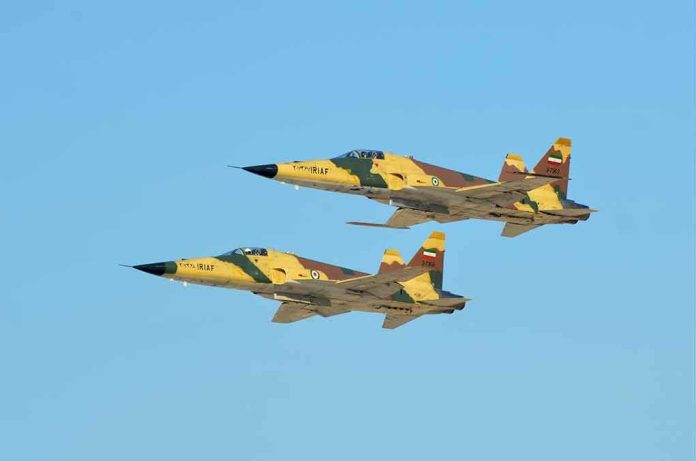
F-16s fired flares as they rushed to push a stray plane out of a World Cup no-fly zone while President Trump was nearby.
Story Snapshot
- NORAD said F-16s intercepted a small plane that broke flight limits near New York during World Cup security.
- Pilots used flares to get the pilot’s attention, then guided the aircraft away from restricted airspace.
- Temporary flight limits around major events are common and often see accidental violations.
- Security teams had warned of strict airspace controls over MetLife Stadium for the final.
Restricted Airspace Breach Near MetLife Stadium
North American Aerospace Defense Command said F-16 fighter jets intercepted a general aviation aircraft that violated a Federal Aviation Administration temporary flight restriction at about 4:18 p.m. Eastern Daylight Time on July 17, 2026, over New York. The interception happened as security ramped up around the World Cup final at MetLife Stadium. The airspace limits were part of a layered plan for the match and for President Trump’s attendance. NORAD confirmed the interception in public statements carried by multiple outlets.
News reports said the F-16 pilots used flares to alert the civilian pilot before guiding the aircraft out of the restricted zone. Flares create bright light that gets a pilot’s attention and are a standard safety tool during intercepts. The reports did not note injuries or damage. Officials did not immediately identify the aircraft or pilot. The incident matched pregame warnings that security teams would enforce a strict no-fly zone above the venue and surrounding area that week.
Why Military Jets Respond To These Violations
Temporary flight restrictions are routine around big events and visits by top officials. The Federal Aviation Administration posts notices, but some private pilots still stray into the area. When that happens, North American Aerospace Defense Command scrambles fighters to make contact, signal the pilot, and escort the plane out. Flares can be used in daylight when radios fail or pilots miss calls. NBC News and others previewed these exact steps before the final as part of the security plan.
These intercepts happen more often than many think. Past trips by President Trump have seen several small planes wander into no-fly zones, leading to quick military responses. One weekend near Bedminster saw more than ten violations, with fighters intercepting several aircraft and monitoring others. Officials usually call these errors and not planned threats. The focus is to fix the mistake fast and keep people on the ground and in the air safe while the event continues smoothly.
Security Stakes And Shared Public Frustrations
World Cup organizers and security teams faced a hard job: protect a huge crowd, keep airspace safe, and avoid panic. North American Aerospace Defense Command trained for weeks to cover that risk with fighters on alert and clear rules. The fast intercept showed the system worked as designed. Yet many Americans still feel the government often fumbles basics, from border control to public safety. Incidents like this can fuel doubts about planning, alerts to pilots, and simple coordination across agencies.
NORAD Fighter Jets Intercept Multiple Aircraft Infringing on Restricted U.S. Airspace
Airspace violations in the skies above President Donald Trump kept the North American Aerospace Defense Command busy on Sunday.Trump was in New Jersey to attend the World Cup final, which…
— 🇺🇸⭐️OUR-VOICES⭐️🇺🇸 (@iswho) July 20, 2026
People across the political spectrum share concerns about elite mismanagement and mixed priorities. Conservatives point to past weak enforcement and slow responses. Liberals warn about overreach and the fairness of emergency rules. This airspace breach sits in the middle. On one hand, rules were clear and enforced. On the other, repeated violations suggest the system still lets simple errors slip through. Clear notices, better pilot outreach, and steady, transparent updates can reduce both risk and public distrust.
What We Still Do Not Know
Officials have not released the aircraft type, the pilot’s name, or the reason for the violation. Reports did not note criminal charges or penalties at this time. Without those details, it remains unclear whether the pilot missed notices, had a radio issue, or made a poor choice. What is clear is that fighters escorted the aircraft away and the event continued. Future updates from North American Aerospace Defense Command or the Federal Aviation Administration may fill in those gaps.
Sources:
youtube.com, dailybaku.az, newsweek.com