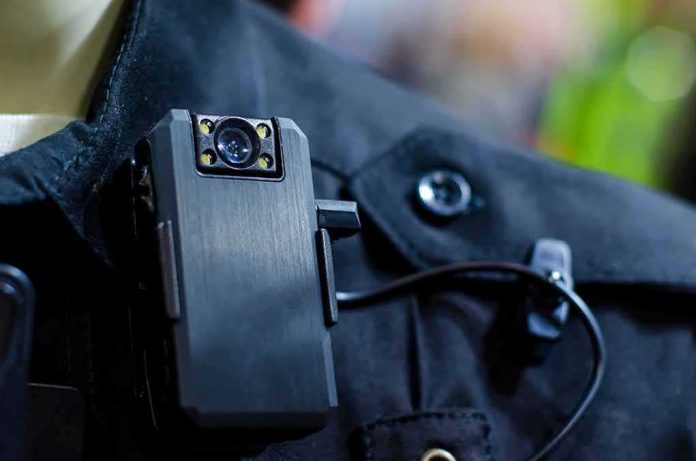
Federal body cameras pulled back the curtain on a New York factory raid—and the footage now drives the fight over what agents could lawfully do and what they did anyway.
Story Snapshot
- Body-camera video shows federal agents arresting 57 workers during a factory raid.
- Policies say body cameras apply to executing search or seizure warrants and other enforcement actions.
- Defense filings claim agents went beyond the warrants’ limits on detentions and arrests.
- A local editorial cites a judge’s ruling that agents exceeded an administrative warrant’s scope.
What The Cameras Captured Inside The Factory
Body-camera recordings from the Cayuga County operation show hours of action on a factory floor. Agents from several federal offices moved workers into groups, made decisions about who could leave, and debated which files to seize. The video records 57 arrests and back-and-forth over when to release United States citizens and lawful employees. The pictures do not argue; they document. That makes the real dispute simple: how far did the warrants reach, and did agents cross that line?
Defense filings say the search did not start until after many detentions and arrests. They point to the body-camera files and affidavits to claim agents flipped the order—people first, evidence later. If true, that invites suppression fights and credibility hits in court. It also explains why both sides now cling to the same videos: one to justify choices under pressure, the other to show those choices broke the rules.
What The Warrants Allowed—And What They Didn’t
Reporting says investigators had two warrants tied to the factory probe. One allowed seizure of records and electronics linked to possible illegal hiring. The other allowed consensual interviews of employees. The terms barred pressure on workers to speak and limited arrests to cases with probable cause that a worker was undocumented, according to the warrant language and a judge’s guidance cited in coverage. That standard sets a clear bar: suspicion alone would not cut it.
A local editorial board later described a 27-page ruling from a federal judge who found agents overstepped the bounds of the administrative warrant. The piece quotes the judge as stating that neither the administrative warrant nor a later criminal warrant gave authority to detain or arrest any person on the scene. Editorial pages are not court records, but the quoted language, if accurate, maps to the defense theory. It also raises a practical question for future raids: which tool—the administrative or criminal track—fits each step inside a live workplace?
Policy Says Cameras Roll—And The Agency Controls The Release
Immigration and Customs Enforcement policy states body cameras cover core field work, including executing or trying to execute search or seizure warrants, at-large arrests, and brief investigative stops. That means raids like this one fall under a formal documentation regime. The Department of Homeland Security privacy assessment explains that any outside release runs through the Office of Information Governance and Privacy, and through records and privacy review channels. The system treats footage as evidence, but also as a record the agency controls.
From a conservative view grounded in law and order, this balance makes sense. Cameras protect agents from false claims and protect the public from government overreach. But the release rules must not become a shield for selective disclosure. If a judge finds the scope was exceeded, agencies should fix training and warrant design, not hide the tape. Clear lines, clear records, and quick accountability keep both the mission and the Constitution intact.
What Happens Next—And Why It Matters
Expect more litigation over what the footage proves versus what policy permits. Prosecutors will argue probable cause supported each arrest. Defense lawyers will aim to suppress statements and evidence tied to on-site detentions. Judges will study the warrants, the timing, and the on-camera commands. Meanwhile, Immigration and Customs Enforcement leadership will face pressure to tighten briefings before entry, clarify who can detain, who can question, and when a scene-control hold turns into an unlawful arrest.
The country needs effective workplace enforcement that punishes illegal hiring and respects due process. Cameras help, but only if agencies pair them with tight warrant strategy and fast, fair transparency. This raid’s video did its job: it showed what happened. Now the system must do its job: match actions to lawful authority, correct what fell short, and preserve the tools that protect both public safety and civil liberty.
Sources:
ice.gov, youtube.com, immigrantnews.pro