
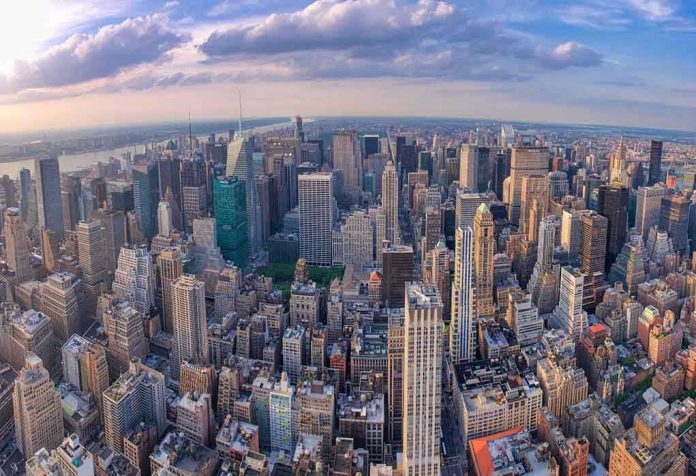
America’s working families now need nearly $159,000 a year in New York just to live “comfortably,” exposing how federal failures and elite policies have crushed the dream of prosperity through hard work alone.
Story Highlights
- New York tops the list at $158,954 for single adults, far exceeding national median incomes and highlighting coastal affordability crises.
- Texas cities like San Antonio ($83,242) offer relief, drawing migrants fleeing high-cost Democrat strongholds.
- Median household incomes cover only 25-63% of required salaries in many metros, fueling bipartisan frustration with government mismanagement.
- Housing costs drive 70% of variances, underscoring failed renewable energy pushes and inflation from past overspending.
- Sun Belt migration accelerates as families seek America First affordability amid deep state economic sabotage.
2026 Salary Thresholds Reveal Stark Divides
SmartAsset’s 2026 study calculates salaries needed for “comfortable” living across 99 U.S. metro areas using the 50/30/20 rule: 50% for necessities like housing and food, 30% for discretionary spending, and 20% for savings. New York requires $158,954 for single adults, reclaiming the top spot from San Jose at $158,080. San Antonio, Texas, ranks lowest at $83,242. These figures incorporate MIT cost-of-living data, reflecting Q4 2025 inflation in shelter costs up 5-7%.
Coastal Elites vs. Heartland Reality
Coastal hubs like New York and California dominate high-end lists due to housing consuming 40-60% of budgets, a direct legacy of globalist policies and restrictive zoning that stifled supply. National median household income hovers at $83,000, yet large cities demand $85,000-plus for singles. In Frisco, Texas, median incomes cover 63% of family thresholds—the highest alignment—proving conservative governance delivers tangible relief from woke-driven inflation.
Post-2020 inflation surged housing 30-50% in high-cost areas, exacerbated by pandemic-era spending sprees and renewable mandates that spiked energy prices. Tech layoffs and high interest rates widened gaps, pushing single-adult needs up 10-15% year-over-year in top cities.
Migration Trends Signal Government Betrayal
Families of four face even steeper hurdles, with required salaries doubling in pricey metros as two working adults struggle against median shortfalls. Sun Belt cities like McKinney, Texas (54% coverage) attract job seekers escaping urban traps. This exodus boosts Texas and Oklahoma economies while exposing blue-state overvaluation, urging Americans to reject big-government interventions like rent control that only enrich elites.
Urban millennials and Gen-Z in New York and California cover less than 50% of thresholds, delaying families and widening divides. HR firms now tailor remote policies to these realities, while finance apps surge in popularity.
This Is The Salary Needed To Live Comfortably In US Cities https://t.co/nd4Iq5uXzq
— zerohedge (@zerohedge) May 2, 2026
Bipartisan Call for Limited Government
Both conservatives frustrated by illegal immigration and overspending, and liberals decrying inequality, agree: Washington elites prioritize reelection over fixing affordability. The 50/30/20 rule, rooted in Elizabeth Warren’s framework but applied here objectively, shows “comfortable” living exceeds MIT’s bare-minimum living wage by 50-100%. Housing drives 70% of metro variances, demanding deregulation over handouts.
Critics argue the study overstates needs by including wants, yet defenders highlight realistic savings goals amid uncertain retirements. Consistent methodology across SmartAsset’s annual reports, backed by MIT’s gold-standard data, underscores unsustainable trends in Democrat-led cities.
Sources:
Salary Needed to Live Comfortably in U.S. Cities (2026 Edition)
Salary Needed to Live Comfortably in U.S. Cities (2025 Edition)