When a top terrorism official accuses a close ally of secretly steering America into war, it taps straight into the fear that voters on both left and right already share: that someone else is really driving U.S. policy from the shadows.
Story Snapshot
- National Counterterrorism Center director Joe Kent resigned, alleging Israel and its American supporters pushed the United States into war with Iran.
- Critics say his claims echo older “hidden hand” narratives that can slide into antisemitism and distract from Washington’s own choices.
- The record shows an energetic Israel lobby, but not clear proof it “controls” United States foreign policy.
- The clash highlights how secrecy and mistrust fuel conspiracy thinking about war, elites, and who really runs the government.
Joe Kent’s Resignation And The Claim Of Israeli Control
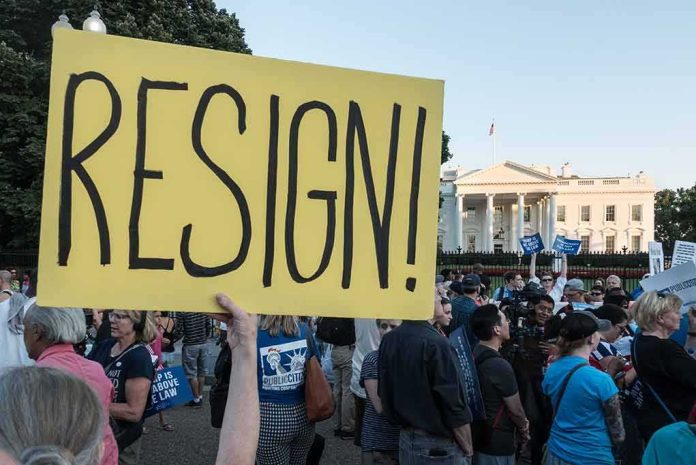
Joe Kent, director of the National Counterterrorism Center, abruptly resigned over President Donald Trump’s war in Iran, saying he could “not in good conscience” support a conflict he believed Iran did not provoke.[3] In his resignation letter, Kent asserted that the United States entered the war “due to pressure from Israel and its powerful American lobby” and a misinformation campaign from senior Israeli officials and media allies that tricked Trump into believing Iran posed an imminent threat.[3]
Contemporaneous reporting described Kent’s accusations as baseless and conspiratorial, stressing that he presented no documentary evidence that Israel or its supporters dictated the Iran decision.[3] The White House publicly rejected his account and insisted Trump had compelling intelligence about Iranian threats, though the underlying materials remain classified. Kent’s critics argue that, without internal records, his charge that outside actors “manufactured” the war amounts to an allegation of near-total foreign control over United States policy, not just normal lobbying or alliance pressure.
What We Actually Know About The Israel Lobby’s Influence
Debate over the “Israel lobby” predates this presidency by decades, with academics and journalists documenting a dense network of advocacy groups, donors, and think tanks that work to keep United States policy closely aligned with Israeli interests.[1] Even skeptical analysts who believe these groups enjoy outsized access generally draw a line between influence and control, noting that United States officials still make final decisions based on domestic politics, strategic calculations, and their own beliefs.[1][2] Kent’s claim jumps from influence straight to control.
Commentary responding to Kent’s letter argues that blaming Israel lets Washington off the hook for its own appetite for military action in the Middle East. Analysts point out that the same foreign policy establishment, defense industry interests, and partisan incentives that supported previous interventions were deeply involved in the Iran debate as well.[2] On this view, Israel and its supporters are part of the story but not puppet masters, and focusing solely on them can obscure the responsibility of presidents, lawmakers, and national security bureaucracies that chose escalation.
Secrecy, Mistrust, And Why Conspiracy Narratives Thrive
Public anger over the Iraq war, shifting intelligence stories, and classified decision-making have left many Americans convinced that they are rarely told the full truth about war.[2] When a senior official like Kent resigns and hints that key threat claims were exaggerated or politically shaped, it naturally resonates with citizens who already suspect that entrenched elites, not voters, steer national security policy. The lack of timely document releases or transparent hearings feeds the sense that something important is being hidden.
Oh, so the name Joe Kent means nothing to you? Suddenly you care about military service? The reality is Massie stood with the people, whereas Gallrein’s campaign was artificially manufactured. A massive $32 million to $35 million influx from pro-Israel and pro-Trump expenditures…
— Patty Marie (@SoonergirlinTX) May 22, 2026
At the same time, scholars warn that broad claims that “every president was pressured by the Israelis” risk turning legitimate scrutiny of lobbying into a blanket theory that a single foreign ally and its supporters run the United States government.[1][2] That narrative can slide into blaming one group for choices made by many powerful institutions here at home. For citizens across the spectrum who feel betrayed by both parties, the healthier demand is not for scapegoats but for full disclosure: who met with whom, what intelligence was shown, and why leaders chose war over alternatives.
Sources:
[1] Web – Israel lobby in the United States – Wikipedia
[2] Web – Sure, Let’s Talk About the Israel Lobby Again
[3] Web – Joe Kent resigns from top counterterrorism post, citing conspiracies …