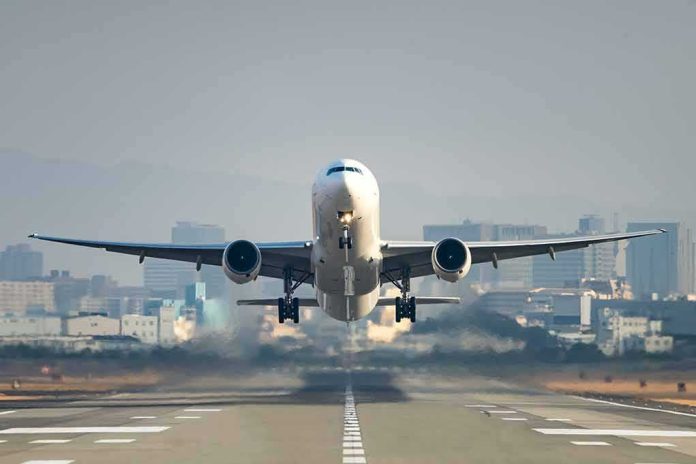
A sudden plunge of 100 feet by an aircraft has been attributed to an unusual cosmic event, raising questions about aviation safety.
Story Highlights
- A passenger plane experienced a sudden 100-foot drop mid-air.
- Cosmic rays from space are believed to have interfered with the aircraft’s systems.
- This incident raises concerns about the vulnerability of air travel to cosmic phenomena.
- The aviation industry is reevaluating safety protocols to address cosmic interference.
Cosmic Rays: A New Threat to Aviation Safety?
A passenger airplane recently experienced a dramatic 100-foot drop while flying, reportedly due to interference from cosmic rays. This incident has sparked significant concern in the aviation industry about the potential for space phenomena to disrupt flight systems. The cosmic rays, high-energy particles from space, are believed to have temporarily interfered with the aircraft’s avionics, leading to the sudden loss of altitude.
While cosmic rays are not new, their impact on modern aircraft systems is increasingly under scrutiny. The aviation sector has long understood the potential for such rays to affect electronics, but this incident underscores the need for heightened vigilance. Airlines and regulators are now tasked with developing robust strategies to mitigate the risks posed by these cosmic threats to ensure passenger safety.
Implications for Passenger Safety and Aviation Protocols
The incident has prompted a reevaluation of current aviation safety protocols. Experts are calling for more comprehensive studies into how cosmic rays interact with aircraft systems and what measures can be implemented to prevent similar occurrences. Potential solutions range from enhancing shielding on critical avionics to developing new software capable of detecting and counteracting cosmic interference in real-time.
As airlines strive to maintain the highest safety standards, this incident serves as a reminder of the constant need for innovation and adaptation in the face of new technological and environmental challenges. Ensuring passenger safety continues to be the foremost priority, and addressing the threats posed by cosmic phenomena is now a critical focus for the aviation industry.
Future Prospects and Industry Response
In response to the incident, aviation industry leaders are collaborating with scientific communities to better understand the nature and frequency of cosmic ray events. This partnership aims to develop effective countermeasures and improve aircraft resilience against such occurrences. While the probability of a cosmic ray causing significant disruption is relatively low, the potential consequences necessitate a proactive approach to risk management.
As the industry adapts to these new realities, passengers can take comfort in knowing that safety advancements are continuously being implemented. This commitment to safety ensures that air travel remains one of the safest modes of transportation, even in the face of cosmic challenges.
Sources:
How Cosmic Rays Grounded Thousands of Aircraft