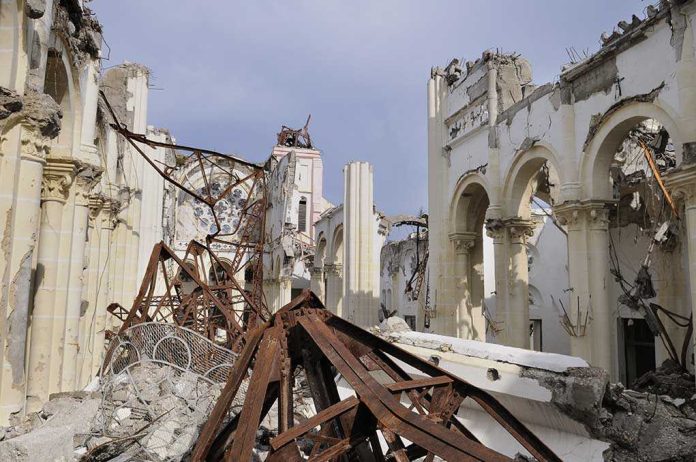
Venezuela’s twin earthquakes exposed a deadly gap between official counts and what survivors on the ground say is a far larger human toll.
Story Snapshot
- Official death tolls rose in steps while independent trackers list tens of thousands missing.
- Journalists reported “a practical total absence of the state” in early rescue hours.
- People trapped under rubble sent texts for help as aid lagged and networks failed.
- United Nations-linked updates later cited more than one thousand dead as data evolved.
Conflicting Death Tolls And A Race Against Time
Venezuelan officials released changing fatality numbers in the first days after the quakes. Acting President Delcy Rodríguez first reported 32 deaths on June 24. Senior officials raised the toll to 188, then about 235 within a day. Independent trackers claimed tens of thousands were unaccounted for, far beyond state figures, though their full methods were not public. The mismatch raised hard questions. It also echoed past disasters in the country where counts stayed low while grief grew.
The United States Geological Survey modeling warned that deaths could reach the thousands to tens of thousands, based on shaking, building stock, and exposure. That projection did not prove a final count. But it showed why early official numbers in the low hundreds seemed unlikely to hold. As days passed, international situation reports cited more than one thousand deaths, reflecting ongoing discoveries and updates from the ground. The evolving tallies suggest a moving target, not a settled truth.
On-The-Ground Reports Describe Thin State Presence
A Caracas-based journalist described “a practical total absence of the state” in early rescue efforts. He said aid from abroad arrived about two days after the quakes, while locals and church groups dug with bare hands. Survivors said people trapped under rubble managed to send texts to loved ones, pleading for help that did not come fast enough. Power cuts and broken cell towers cut contact across big areas, making it harder to call in teams or track who was alive and where.
Civil groups, neighbors, and schools organized food, water, and basic medical care as hospitals filled. These ad hoc teams did what they could with simple tools and grit. Their work saved lives, but it also showed how fragile the state response was in those vital first 48 hours. In disasters, minutes matter. When government coordination lags, chaos grows. Families drift from site to site, begging for backhoes or dogs, while officials release partial numbers that offer little comfort.
Why The Numbers Diverge — And What Must Happen Next
Officials often defend slow, stepwise counts. They say teams must confirm identities and register deaths, which takes time. That is true in any disaster. But Venezuela’s history of contested tolls and weak institutions fuels doubt today. Early counts jumped from dozens to hundreds, then higher as international partners joined searches. The gap with the opposition’s missing tracker remains wide, and that tracker’s methods are not fully public, which limits verification. Both sides owe the public clear data.
Miracle in Venezuela:
A toddler (reported as 2-3 years old) was pulled alive from the rubble six days after devastating twin earthquakes struck the country.
Jordanian rescue teams used cameras to locate and safely extract the boy from a collapsed building in La Guaira.
He… pic.twitter.com/6oUsFZAMdb
— Strategem360 (@strategem360) July 1, 2026
Here is what would help now. First, release a transparent log of rescue calls, site visits, and outcomes by region and date. Second, publish a daily list of the located, the dead, and the still missing, with a clear process to remove duplicate names. Third, invite an independent audit led by the International Federation of Red Cross and Red Crescent Societies and the World Health Organization to compare hospital records, morgue entries, and field reports. These steps would cut rumor and focus resources where lives can still be saved.
What This Means For Americans And Our Allies
American readers know this pattern. When the state hoards information, citizens lose trust. When numbers do not match what people see, anger grows. The United States can help without writing blank checks. Tie aid to transparency, open data, and free access for independent teams. Push for satellite imagery sharing and public mapping of collapse zones. Back citizen responders with gear through trusted non-government groups. Demand that every dollar moves fast to food, water, power, and heavy rescue — not to political theater.
The Bottom Line: Lives First, Politics Last
The first duty in a mass-casualty disaster is simple: tell the truth, move fast, and save who can be saved. Venezuela’s quakes shattered homes and families. The numbers still move, but the need is fixed and urgent. Independent reports show citizens filling gaps while waiting on the state. United States Geological Survey modeling and later situation updates show the toll is far higher than day-one claims. The world should press for clarity and action now — because every hour lost costs lives.
Sources:
batimes.com.ar, cnn.com, ualrpublicradio.org, facebook.com, thenewhumanitarian.org