
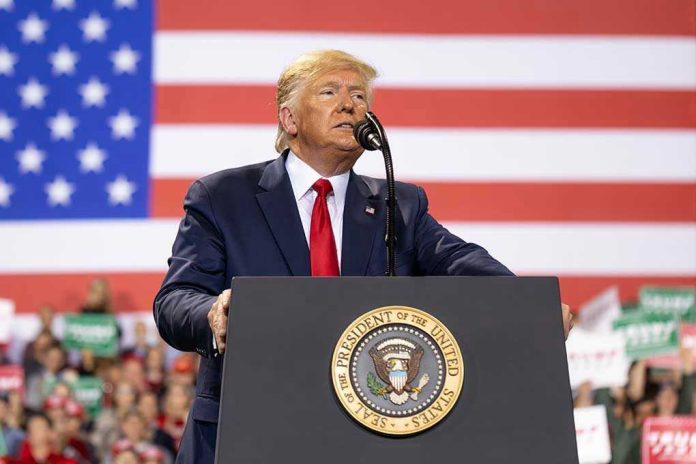
President Trump’s blunt “totally unacceptable” verdict on Iran’s counter-offer signals that Washington won’t trade away nuclear leverage just to get a paper ceasefire.
Quick Take
- President Trump rejected Iran’s response to a U.S. peace proposal, posting on Truth Social that he didn’t like it and called it “totally unacceptable.”
- Iran delivered its counter-proposal through Pakistani mediators, prioritizing an immediate end to hostilities and maritime security in the Strait of Hormuz while deferring nuclear issues.
- The U.S. proposal, as described in reporting, aimed to end the war first and then move into talks covering Iran’s nuclear program, sanctions relief, and shipping.
- With a naval blockade, Hormuz disruptions, and a fragile ceasefire backdrop, the standoff keeps energy and security risks elevated even if major fighting has slowed.
Trump’s “Unacceptable” Post Hardens the Negotiating Line
President Donald Trump posted on May 10, 2026 that Iran’s reply to a U.S. peace proposal was “totally unacceptable,” a message that immediately became the public headline for what had been indirect diplomacy. Reporting indicates the Iranian response was routed through Pakistani mediation rather than direct talks. With no new detailed White House readout beyond Trump’s post, the negotiation posture is being telegraphed primarily through public statements and media accounts.
Trump’s reaction matters because it frames the central disagreement as more than sequencing. If the U.S. side believes Tehran is trying to lock in an end to fighting without addressing the nuclear file, then accepting that structure could weaken future enforcement. Conservatives who have watched past deals rely on trust and international “guarantees” will recognize why a president might refuse terms that pause pressure first and argue details later.
Iran’s Counter-Offer Focuses on Ceasefire First, Nuclear Later
Accounts of Iran’s response describe a package centered on an immediate end to hostilities across multiple fronts, including Lebanon, along with guarantees for maritime traffic through the Strait of Hormuz and a lifting of the U.S. naval blockade. The same reporting indicates Iran pushed nuclear issues out of the initial phase. Iran’s leadership has also publicly rejected the idea that negotiation equals surrender, signaling that Tehran wants relief and security commitments upfront before it discusses the issues Washington says must be addressed.
That sequencing dispute is not academic, because it determines what each side gives up first. The U.S. position described in coverage emphasizes formally ending the war and then moving into negotiations about nuclear constraints, sanctions relief, and shipping rules. Iran’s approach, as reported, seeks immediate de-escalation and economic breathing room while leaving the most contentious subject for later. With trust low after decades of conflict and broken expectations on both sides, the order of steps becomes the deal.
How the War and Blockade Set the Stakes for Americans at Home
The diplomacy is unfolding in the shadow of a war that began after U.S. and Israeli strikes on Feb. 28, 2026, followed by Iranian retaliation that included attacks on U.S. naval assets in some reporting. The U.S. then enforced a naval blockade on Iranian ports while Iran moved to disrupt the Strait of Hormuz, a key global energy chokepoint. Oil price volatility has been a central worry, and for U.S. families still sensitive to inflation, energy shocks can quickly spill into transportation and grocery costs.
Security risks extend beyond prices. Reporting has described threats toward allied warships in the area and a fragile ceasefire environment that could unravel with a single miscalculation. The U.S. travel ban on Iranians mentioned in coverage also reflects how quickly foreign crises can translate into domestic policy and political conflict. This is where voters on both right and left often agree on one frustration: Washington’s institutions tend to lurch from crisis to crisis without a durable strategy the public can understand.
What to Watch: Mediation, Messaging, and the “Deep State” Trust Gap
Pakistan and Qatar have been cited as key channels in the back-and-forth, including meetings involving U.S. officials as the talks moved. That reliance on intermediaries can help avoid immediate escalation, but it also produces information gaps and competing narratives—especially when the most consequential message is delivered via a presidential social media post. For Americans already skeptical of elite decision-making, limited transparency feeds suspicion and makes it harder to separate verified facts from factional spin.
The practical next test is whether negotiators can align on enforceable steps that prevent Iran from using a ceasefire as a shield while avoiding an open-ended conflict that drags on U.S. forces and budgets. Reporting still leaves key details unclear, including the precise terms of the U.S. offer and the full text of Iran’s response. Until those specifics are public, the strongest conclusion is narrow: the gap is about leverage, timing, and verification—not slogans.
Sources available for this update include major U.S. and U.K. outlets’ live coverage of the May 10 exchange and ongoing war developments. YouTube clips and other social posts can show what was said, but they don’t substitute for written terms of any proposal. Readers should expect rapid changes as mediators shuttle messages and as military conditions around Hormuz and regional fronts shift hour to hour.
Sources:
https://www.foxnews.com/live-news/iran-trump-hormuz-peace-proposal-may-10
https://www.cbsnews.com/live-updates/iran-war-trump-us-attacks-qeshm-island-ceasefire/