A White House Medal of Honor ceremony put Army hero Major Nicholas Dockery back in the spotlight, but the public record still shows a paperwork mismatch that deserves attention.
Quick Take
- The White House said President Trump will award Major Nicholas Dockery the Medal of Honor for combat heroism in Afghanistan.
- Congress passed the Nicholas Dockery Medal of Honor Act, which authorized the award.
- The accessible military record still shows a Silver Star citation tied to the same October 2, 2012 battle.
- The story raises a fair question: what changed between the Silver Star record and the Medal of Honor push?
White House Ceremony Puts Dockery in the National Spotlight
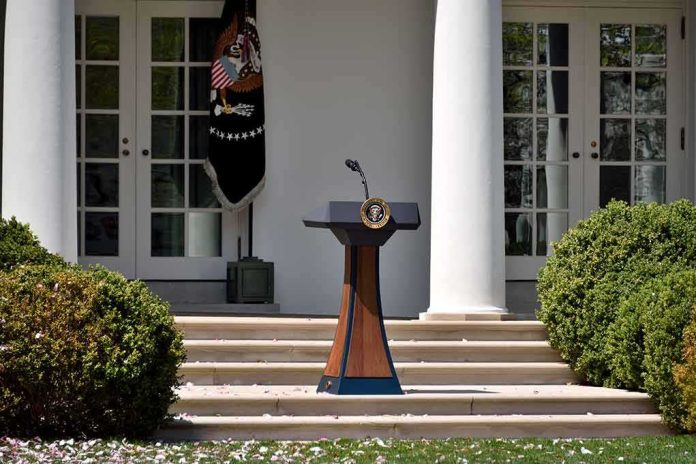
The White House ceremony presented Dockery as a man who fought through a brutal ambush in eastern Afghanistan and saved fellow soldiers under fire. According to the ceremony record, his platoon faced a large Taliban attack on October 2, 2012, and Dockery rescued wounded troops, gave lifesaving aid, marked enemy positions for air support, and stayed until the end of the fight [4]. That is the kind of battlefield story Americans respect because it reflects courage, duty, and sacrifice.
Reuters also reported the ceremony and repeated the same basic account of Dockery’s conduct during the ambush. The report said he was recognized for valor after helping wounded soldiers, treating a downed sergeant, and guiding air support while under heavy fire [5]. For readers who want a simple answer, the public-facing story is clear: the Trump administration treated Dockery as a genuine war hero and moved to honor him at the highest level.
Congress Moved to Authorize the Award
The Medal of Honor did not appear out of thin air. Congress passed the Nicholas Dockery Medal of Honor Act to let the president award the decoration, and House press statements from both sponsors said the bill cleared the chamber [2][3]. That matters because it shows this was not just ceremony theater. It was also a formal legislative step, which gives the award extra weight in the eyes of supporters who want recognition for military valor to be treated seriously.
Supporters also pointed to Dockery’s broader service record and public recognition from military institutions and the National Medal of Honor Museum. Those sources describe his bravery in strong terms and frame his actions as selfless leadership under fire [8]. For many conservatives, that kind of recognition fits a basic principle: the country should honor warriors who put themselves at risk to save Americans, not bury them under bureaucracy or political second-guessing.
The Public Record Still Shows a Citation Mismatch
Here is the main point that cannot be ignored. The publicly visible Military Times Hall of Valor record for Dockery identifies a Silver Star award for the October 2, 2012 action, not a Medal of Honor citation [1]. The same record describes him as leading his platoon under enemy fire, rallying remaining soldiers, and marking his position for helicopter gunships. That is serious heroism, but it also means the available record set does not fully show how the award moved from Silver Star language to the higher Medal of Honor level.
That gap does not prove anything improper. It does mean readers should not confuse an announced honor with the underlying award packet. The sources provided here do not include the full citation recommendation, after-action report, or witness statements from the platoon [1][2][3][4]. Without those documents, the public can honor the man and still ask a fair question: was the higher award supported by the full military record, or mostly by later ceremony language?
Why This Story Matters Beyond One Soldier
This case also shows how fast the media can turn a complex military awards process into a simple hero narrative. Once the White House, Congress, and major outlets repeat the same storyline, many Americans stop asking about the paper trail. That is a problem, because the Medal of Honor is supposed to reflect the highest standard of proof and the highest standard of courage [2][13][14]. When the process is not fully transparent, trust depends on careful verification, not just applause.
President Donald Trump awarded the Medal of Honor at a White House ceremony Thursday to Major James Capers, Jr., U.S. Marine Corps (Retired), Colonel John W. Ripley, U.S. Marine Corps (Posthumous), and Major Nicholas Dockery, U.S. Army (Retired). https://t.co/yI4ItgATmp
— FOX 5 NY (@fox5ny) June 19, 2026
For a country tired of government spin, this story cuts both ways. Dockery’s battlefield conduct sounds brave enough to earn respect on its own. At the same time, the public record still leaves open questions about the exact award history and the step from Silver Star to Medal of Honor [1][2][3]. Americans can honor real heroism while still demanding clean records, clear citations, and no shortcuts when the nation’s highest military award is on the line.
Sources:
[1] YouTube – Trump Awards Medal of Honor to Army Hero Who Saved His Platoon Under …
[2] Web – Nicholas Dockery – Hall of Valor: Medal of Honor, Silver Star, U.S. …
[3] Web – Congressman Baird’s Bill to Award the Medal of Honor to Nicholas …
[4] Web – House Passes Medal of Honor Bill for Major Dockery – Victoria Spartz
[5] Web – Major Nicholas Dockery will be awarded the Medal of Honor. A life …
[8] Web – Congress approved the Medal of Honor for Major Nicholas Dockery …
[13] Web – Medal of Honor | U.S. Department of War
[14] Web – Medal of Honor history – National Cemetery Administration