
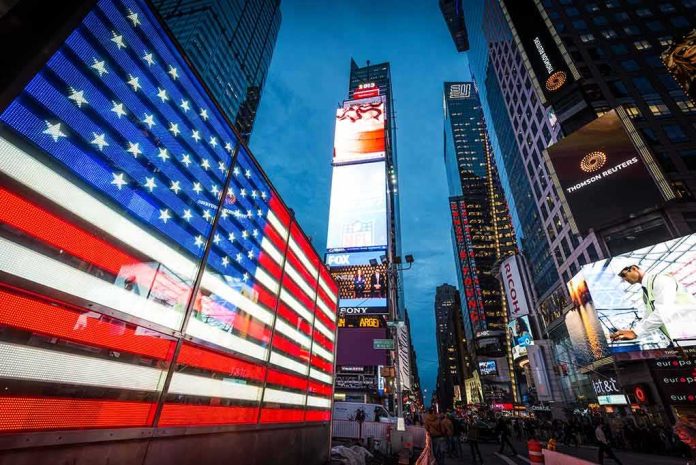
As America turns 250, big brands are slapping flags on ads while many Americans feel less proud than ever—and the clash says a lot about who companies really answer to.
Story Snapshot
- Major brands are rolling out patriotic America250 campaigns, but often in cautious, “feel-good” form that avoids hard issues.
- Two rival government efforts—nonpartisan America250 and Trump-linked Freedom 250—create political risk for any brand that chooses a side.
- Polls show national pride at record lows, so some Americans see brand patriotism as marketing spin, not real respect for the country.
- Both left and right suspect that elites and corporations are using America’s birthday more to sell than to serve the public.
Two Competing Birthday Parties for America
Federal leaders set up two different structures to plan the 250th anniversary, and that split matters for brands. In 2016, Congress created the United States Semiquincentennial Commission and backed it with a nonprofit called America250.org to run nonpartisan, nationwide events. This commission has bipartisan members from both parties and a huge congressional caucus meant to show that the birthday belongs to everyone, not just one side.
Later, President Donald Trump signed an order in January 2025 creating the White House Task Force on Celebrating America’s 250th Birthday, branded as Freedom 250. That task force sits inside the federal government, partners with agencies, and runs big shows such as a “Great American State Fair,” Freedom Trucks, and high-profile events on the National Mall. In 2025, federal staff were told to use Freedom 250 as the main brand for many national celebrations, shifting money and attention away from America250.
How Brands Are Showing Up—and Playing It Safe
Marketing trade reports say many companies are leaning into America250 with special products, charity tie-ins, and storytelling about the nation’s history. These campaigns highlight themes like “coming together,” local communities, and everyday workers, but they rarely mention Freedom 250 or Trump by name. Industry advice tells businesses to treat the 250th mostly like a seasonal opportunity—similar to the Fourth of July but stretched over a year—and to focus on safe symbols such as flags, food, and family rather than tough policy fights.
Some brands partner directly with America250 or tourism groups to promote travel and heritage sites, tying patriotism to spending and tourism instead of deeper debate about what is going right or wrong with the country. Guides aim to help companies gain “brand visibility” from the anniversary while steering clear of the harsh political divide that has hurt other “cause” campaigns in recent years. In practice, this means glossy ads and limited charity support, but few signs that brands are willing to challenge powerful interests or speak to the frustrations many Americans feel about the federal government and economic inequality.
Freedom 250: Patriotism or Political Brand?
Freedom 250 events are far more closely tied to Trump and the current administration, which makes them riskier for companies that want to look neutral. News coverage shows Freedom 250 as a White House-connected nonprofit working with agencies and big corporate partners such as energy, tech, and defense firms. Critics, including House Democrats, accuse Trump of “hijacking” the anniversary and turning it into a campaign-style rally and donor vehicle rather than a public celebration.
Reports describe artist dropouts, small or thinning crowds, and donor offers that promise special access to Trump for very large contributions, feeding the view that the event serves elites more than everyday citizens. When people already worry that government officials and wealthy donors run the show, brands that tie themselves to Freedom 250 can look like part of that same insider network. Many companies appear to be keeping their patriotic marketing tied to America250 or generic “250 years of America” language, a sign that they see the political risk and would rather sell products than defend a controversial event.
Public Pride Is Low—and Suspicion Is High
Polls ahead of the 250th birthday show that extreme pride in being American has fallen to quarter-century lows. One survey found only about one-third of Americans say they feel “extremely proud,” with almost half saying they are only a little proud or not proud at all. Other reports show that national pride has dropped sharply among Democrats and younger adults, while Republicans remain more likely to say they are proud of the country.
Media pieces describe Americans as “red, white and worn out,” noting that many believe the nation’s best days are behind it and that the divide between haves and have-nots keeps growing. People on both the left and the right are frustrated by high costs of living, immigration fights, “woke” cultural battles, and a sense that Washington cares more about donors than workers. In that climate, patriotic brand campaigns can feel hollow. When companies celebrate America’s birthday mainly through clever ads and limited charity, many consumers see it as another way for elites to cash in on a milestone without fixing the deeper problems.
Brands, Elites, and Who the Celebration Is Really For
Coverage of patriotic marketing around America250 notes that brands are split on how far to go with national themes. Older shoppers tend to respond better to flag-heavy campaigns, but younger ones are more skeptical and quick to punish messages that feel fake or political. Corporate strategists warn that tying a logo too closely to Freedom 250 or partisan talking points can backfire, so many companies stay in a narrow lane of nostalgia and safe pride instead of speaking to anger about corruption or government failure.
This choice reinforces a pattern many Americans already suspect: big brands and political insiders talk about unity and history while sidestepping the hard work of fixing broken systems. America’s 250th birthday could have been a moment when government, business, and citizens came together to tackle issues like debt, health costs, and the shrinking middle class. Instead, the picture that emerges from the research is a clash of branded celebrations—Freedom 250 vs. America250, corporate campaigns vs. public frustration—where the loudest voices belong to elites, and ordinary Americans are mostly invited to watch, spend, and move on.
Sources:
theatlantic.com, americanoversight.org, whitehouse.gov, america250.org, facebook.com, youtube.com, npr.org, campaignlive.com, marketingdive.com, thebrandusa.com, proimprint.com, modernretail.co, instagram.com, colonialflag.com, usnews.com, ap.org, newsweek.com, deseret.com, mediapost.com