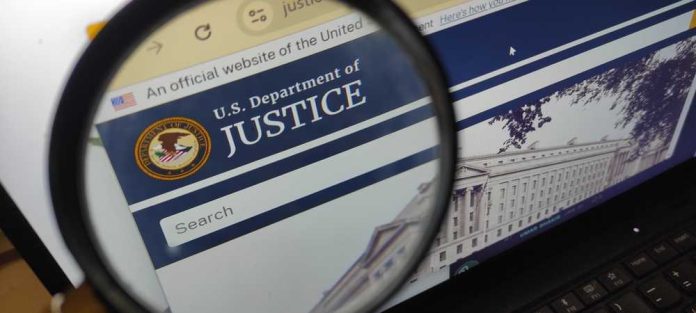
Washington quietly ended a flawed China spy-hunting program that harmed American universities, but now some of the same tactics are coming back under a new name.
Story Snapshot
- The Department of Justice’s China Initiative heavily targeted Chinese heritage scientists and many cases collapsed in court.
- President Biden’s administration shut down the program in 2022 after civil rights, science, and academic groups called it racial profiling.
- Real Chinese economic espionage remains a serious threat, and the government is shifting to new tools that still worry Asian Americans.
- Congressional efforts to revive the initiative show how both parties struggle to balance security and civil rights in higher education.
How the China Initiative Turned Universities Into Battlegrounds
In 2018, the Department of Justice launched the China Initiative to stop economic espionage and intellectual property theft tied to the Chinese government. The program quickly pulled American universities into the fight, focusing on scientists and researchers with ties to Chinese institutions. Over time, its focus drifted from clear spying cases to “research integrity” issues, like incomplete disclosure of foreign affiliations on grant forms and contracts. That shift turned routine paperwork problems into potential criminal cases and sent a chill through campus labs.
Critics say the program ended up criminalizing “China-ness” more than catching spies. A review of 77 China Initiative cases found 148 defendants, about 90 percent of them of Chinese heritage, yet only a small share were convicted of espionage-related crimes. Many academic cases focused on minor disclosure errors or vague “nexus to China” claims rather than solid proof of national security harm. For many Asian American scholars, the message felt clear: their ancestry made them suspect, no matter their loyalty or work.
Why Biden Shut the Program Down — and What Changed
Pressure to end the China Initiative grew fast as more cases against researchers fell apart or were tossed by judges. The American Society for Biochemistry and Molecular Biology noted that the Department of Justice brought 23 cases against federally funded scientists and “many” collapsed, damaging careers and trust in science. More than 2,400 faculty at over 200 universities signed letters urging Attorney General Merrick Garland to shut the initiative down, warning it was hurting research and pushing talent away from the United States.
In February 2022, Assistant Attorney General Matthew Olsen announced the end of the China Initiative, citing concerns about racial profiling, wasted resources, and a chilling effect on collaboration. Civil rights groups, including Amnesty International and Asian American advocates, argued the program had formalized xenophobic prejudice under a national security label. The Department of Justice said it would keep pursuing nation-state threats but without a branded program that seemed to single out China and Chinese heritage people. On paper, that looked like a win for both academic freedom and equal treatment under the law.
The Espionage Threat Is Real — And Tactics Are Quietly Returning
Ending the China Initiative did not end Chinese government spying or intellectual property theft. The Department of Justice’s own year-in-review noted several economic espionage cases, with guilty pleas and convictions, showing that some prosecutions did catch real theft of trade secrets for Beijing’s benefit. The problem is not fake; foreign governments do target American labs and companies. Many conservatives see the closure of the initiative as proof that Washington cares more about political correctness than defending American innovation and jobs.
Yet instead of restarting the original program, the government is now turning to different tools. Legal analysts report that the Department of Justice has revived China Initiative-style tactics by using the False Claims Act against universities, securing settlements with major schools like Stanford and Ohio State for failing to disclose foreign ties. That means the focus has shifted from jailing individual scientists to punishing institutions that fall short on transparency. For critics, this looks like the same suspicious lens on anything “China-related,” just aimed at campuses rather than people’s freedom.
Congress, Civil Rights Groups, and the Deepening Trust Gap
Recently, some members of Congress pushed language in a spending bill that would have ordered the Department of Justice to resurrect the China Initiative. After strong opposition from civil rights groups and Asian American advocates, House leaders dropped the effort. Their argument was simple: reviving a program widely seen as profiling scientists by ethnicity would be a “dangerous step back” for civil rights and would again drive talent out of the country. That fight shows how deeply split Washington is over how to handle China-linked threats on campus.
Congress is moving to rebuild something it killed two years ago. The original China Initiative ran from 2018 to 2022, got accused of ethnic profiling of Chinese-American scientists, and collapsed under the weight of prosecutions that fell apart in court. Now the House wants a…
— Foreign Interference Research Center (@ForIntOrg) July 4, 2026
For many Americans on both the right and the left, this story fits a bigger pattern. They see a federal government that swings between overreach and retreat, often hurting regular citizens while failing to solve core problems like foreign spying, research security, and fairness in the justice system. Asian Americans point to a long history of being treated as “perpetual foreigners,” from Japanese American incarceration to modern surveillance of Chinese American scientists. When national security fears rise, civil liberties often fall, and elites in both parties seem slow to learn from past mistakes.
Sources:
thegatewaypundit.com, npr.org, brennancenter.org, asbmb.org, apajusticetaskforce.org, wilmerhale.com, justice.gov, stopaapihate.org, jstor.org