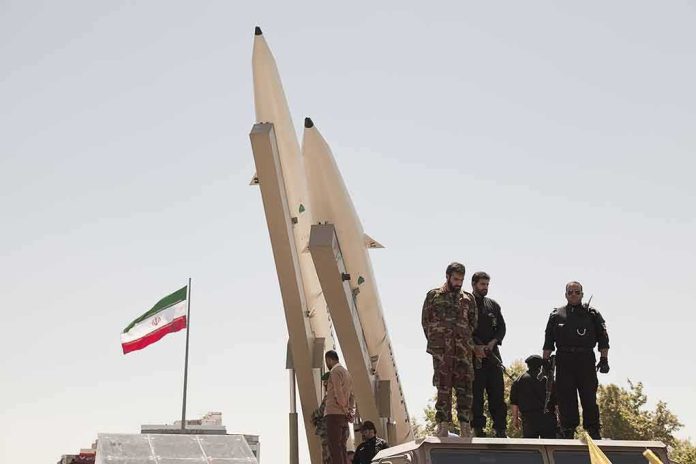
Iran’s Islamic Revolutionary Guard Corps is built for jihad and exporting revolution, not compromise, according to multiple expert and institutional analyses.
Story Snapshot
- Analysts say the Guard’s mission is to spread Iran’s revolution, not act like a normal army.
- Recruiting and training demand loyalty to clerical rule and “jihad in the path of God”.
- Experts debate whether the Guard’s actions are driven more by hard ideology or regime survival.
- U.S. policy choices hinge on whether leaders treat the Guard as a negotiator or a true believer.
What The Guard Is Designed To Do
Analysts describe the Islamic Revolutionary Guard Corps as an ideological force embedded in Iran’s system since 1979. Reports state the Guard’s task is not border defense but advancing a revolutionary project across the region. The mission includes “jihad in God’s way,” framed as extending clerical rule and Islamic law, beyond Iran’s borders. This formal mandate sets the Guard apart from a normal military and shapes how it chooses partners, targets, and tools.
Research ties the Guard’s purpose to the doctrine of clerical rule known as velayat-e faqih. This doctrine gives a senior cleric supreme authority and defines loyalty for Guard members. Studies say this belief guides the Guard’s long-term goals and day-to-day choices, from propaganda to support for proxy militias. The aim, these sources argue, is to protect the clerical regime at home and carry the revolution into neighboring states through organized struggle.
How Ideology Is Taught And Enforced
Multiple studies say entry and promotion inside the Guard depend on demonstrated faith in the revolution and the supreme leader. Training materials and rules cited by researchers highlight a duty to wage comprehensive struggle in God’s path and to avoid rival political loyalties. This system builds a shared worldview among officers and rank-and-file. It also links personal pride, career success, and even identity to service for the revolution and readiness for sacrifice.
Analysts further report that the Guard’s education programs emphasize the righteousness of warriors of Islam and the moral duty to resist enemies of the revolution. This narrative sets conflict as a test of faith and frames opponents as threats to Islam, not just to the state. That lens can narrow the space for classic bargaining because it treats compromise as weakness or even betrayal. It also helps explain why the Guard supports armed groups abroad that mirror its doctrine.
Ideology Versus Pragmatism: The Policy Split
Experts do not agree on one simple model for all Guard behavior. Some argue the Guard is first a revolutionary actor driven by doctrine. Others stress regime survival, deterrence, and leverage. They note that even ideologues make tactical deals when it fits long-term goals. This split matters for policy. If ideology dominates, talks may buy time but not change the mission. If survival needs dominate, pressure and incentives may shape outcomes.
The end of the Islamic Republic will not only benefit the West and the non-Muslim civilized world, but also the Sunni and Shia Arab neighbors who have themselves been victims of the sectarian wars and the Ayatollahs' sponsorship of both Shia and Sunni Islamist terrorists. These… https://t.co/rLZmkgzFQi
— Cyrus S 🇺🇸 (@CyrusShares) July 27, 2026
For Americans on both the right and the left, this raises a hard question: What does “negotiation” mean with a force built for struggle? Voters who see Washington as weak or captured by elites worry that wishful thinking invites danger. Others fear endless conflict drains the middle class at home. The record described by these sources points to a sober middle path: set clear goals, align tools to those goals, and do not confuse temporary pauses with a change in the Guard’s core mission.
Sources:
youtube.com, institute.global, en.wikipedia.org, washingtoninstitute.org, assets.ctfassets.net, apps.dtic.mil, cfr.org