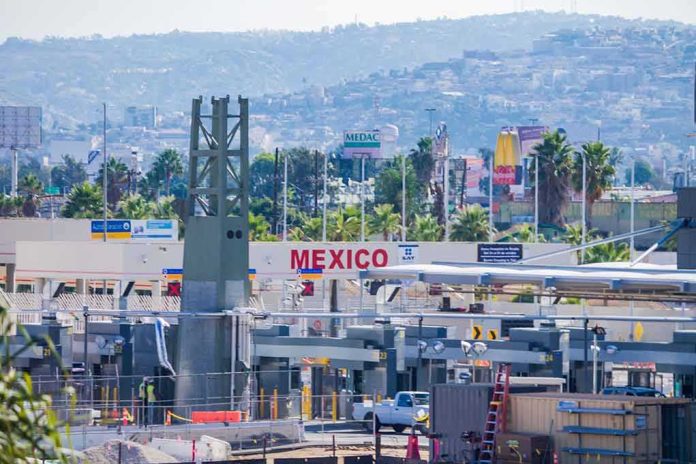
The label “foreign terrorist organization” carries real legal teeth in the United States — it triggers criminal exposure for anyone who does business with the designated group, freezes assets, and opens a path to prosecutions that ordinary drug-trafficking statutes don’t reach. But teeth are not the same as fear, and the growing body of evidence from analysts who watch cartel behavior up close suggests Mexico’s criminal organizations have responded to designation not by standing down, but by reorganizing.
Key Points
- President Trump’s January 2025 executive order set in motion the formal FTO designation of major Mexican cartels, a first-of-its-kind use of terrorism law against organized crime groups.
- The designation carries genuine legal weight: material-support prosecutions, asset freezes, and sweeping compliance risk for U.S. banks and companies.
- Named experts — including a former State Department counterterrorism chief — argue the label adds little to enforcement already available under existing narcotics and racketeering law.
- A 2025 tactical analysis concludes the designations produced “adaptive restructuring” among cartels rather than measurable disruption of their operations.
- The same enforcement model has since expanded to Venezuela’s Cartel de los Soles, tying the domestic cartel fight to a much larger regional military posture.
How the Designation Actually Works
On his first full day back in office, President Trump signed Executive Order 14157, directing the Secretary of State to recommend, within 14 days and in consultation with Treasury, DOJ, DHS, and the Director of National Intelligence, which cartels should be designated as Foreign Terrorist Organizations or Specially Designated Global Terrorists. Secretary of State Marco Rubio acted on February 6, 2025, and the designations took effect February 20 when published in the Federal Register, formally naming Cártel de Sinaloa, CJNG, Cártel del Noreste, La Nueva Familia Michoacana, Cártel de Golfo, Cárteles Unidos, and the Venezuelan and Salvadoran gangs Tren de Aragua and MS-13. The list has since grown to more than twenty Latin American and Caribbean groups.
The mechanism matters more than the label itself. Under 18 U.S.C. § 2339B, knowingly providing “material support or resources” to a designated FTO becomes a federal crime carrying penalties up to life in prison if a death results. The Treasury Department’s Office of Foreign Assets Control gains authority to freeze U.S.-controlled assets tied to the group, and any American bank, exporter, or logistics firm doing business anywhere near a designated cartel’s supply chain now carries civil and criminal exposure it did not carry before. That is a meaningful expansion of the government’s toolkit — it moves cartel enforcement out of the narrow lane of drug conspiracy statutes and into the far broader lane historically reserved for al-Qaeda financiers and Hezbollah fronts.
Why Terrorism Law, Rather Than Ordinary Crime Law
The distinction lawyers draw is instructive: FTOs are defined by pursuing political objectives, while transnational criminal organizations are, by definition, profit-driven and largely indifferent to ideology. Cartels fit awkwardly into that frame — they corrupt, extort, and kill, but they do not seek to overthrow governments or advance a political program in the way Hezbollah or ISIS does. Policymakers reach for the terrorism designation anyway because it widens enforcement beyond arrests and drug seizures into sanctions, banking restrictions, and immigration consequences that ordinary criminal statutes don’t touch. That is precisely why the tool has been debated, on and off, since at least 2019, when the same idea surfaced under different circumstances and drew similar skepticism from Mexican officials and U.S. counterterrorism veterans alike.
The Case That the Label Is Working
Supporters of the policy point to concrete, verifiable action: this is not a rhetorical gesture but a signed executive order followed by an actual Federal Register publication, actual named organizations, and actual prosecutions under material-support statutes that carry harsher penalties than standard trafficking charges. Treasury has since layered additional sanctions onto designated groups, including action against Cártel del Noreste’s network around the Laredo port of entry. Companies operating near the border have restructured compliance programs, and law firms across the country have issued client alerts warning that even indirect financial contact with a designated cartel now carries Anti-Terrorism Act litigation risk. By that measure, the designation has already changed corporate and financial behavior — even if it hasn’t yet changed cartel behavior.
Where the Evidence Cuts the Other Way
The more specific and better-sourced critique comes from people who have actually run this kind of policy. Jason Blazakis, who once headed the State Department’s own Office of Counterterrorism, said flatly that applying the FTO label to drug cartels “would provide no meaningful benefit, and could do much harm”. Rice University’s Baker Institute reached a similar conclusion, warning the designation would have “limited impact on the mayhem” cartels cause while damaging U.S.-Mexico trade and security cooperation. A former Mexican ambassador to the United States told CBC News the approach was “likely to be ineffective in addressing the problem of violent criminal gangs”, and a California-based deportation officer put it more bluntly to Fox News: cartel support networks reach so deep into Mexican institutions that the groups “would be able to withstand a long protracted fight” against far greater pressure than a terrorism label applies.
The most consequential counter-evidence is empirical rather than rhetorical. A 2025 tactical analysis of cartel violence concluded that the primary effect of the designations was not restriction of cartel activity but “adaptive restructuring” — fragmentation, growing reliance on proxies, and the spread of insurgent-style tactics. Its authors state directly that available data does not show the FTO designation meaningfully or durably reducing cartel activity. A separate Mexican-perspective analysis published the same year is more measured but reaches a compatible conclusion: no drastic violent reaction followed designation, but no one can attribute shifts in trafficking or violence to the label alone — the real leverage, if any exists, comes from the sanctions, banking restrictions, and intelligence operations layered on top of it, not the label itself.
WH primary — Shield of the Americas event
Video: https://t.co/4fYw62TF1k**1. The Frame**
**What people think this is about:** A major new hemispheric alliance led by President Trump to crush cartels, stop fentanyl, secure resources, and push back foreign…
— GrumpyNews, emotionally clean news. (@GrumpyNews_) September 22, 2026
What This Means Going Forward
The honest reading of the record is neither “the policy is theater” nor “the policy is crushing the cartels” — it’s that the designation reshuffled legal exposure for banks, exporters, and prosecutors while cartels themselves adjusted their organizational structure rather than their appetite for violence. That pattern has since repeated at larger scale: the administration extended the same FTO framework to Venezuela’s Cartel de los