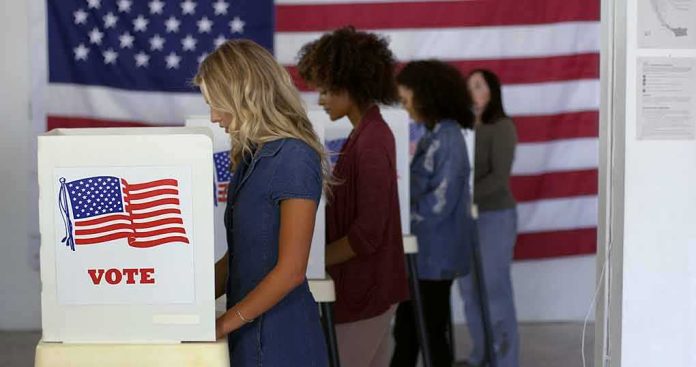
As the Senate stalls on the SAVE America Act, one prominent conservative voice is now urging Republicans to kill their own filibuster rule to force a nationwide voter ID and citizenship-proof mandate through Congress.
Story Snapshot
- Senator Ron Johnson is urging Republicans to abolish the Senate filibuster so they can pass the SAVE America Act, a bill that would require proof of citizenship to register and photo ID to vote in federal elections.
- The Senate has already voted 51–48 to begin debate on the bill, but the measure still faces a 60-vote hurdle to end debate and move to a final vote.
- Supporters say the bill is needed to stop noncitizens from voting and protect election integrity, while critics warn it would block or delay millions of eligible Americans from registering and voting.
- The fight over this bill has turned into a much bigger battle over who controls federal election rules and whether the Senate’s minority can still slow or block sweeping national changes.
What the SAVE America Act Would Do to Federal Elections
The SAVE America Act is a federal bill that would rewrite how Americans register and vote in national elections. The bill would require every person to show documentary proof of United States citizenship, such as a birth certificate or passport, when they register to vote in federal races. It would also require voters to present an accepted photo identification to cast a ballot in federal elections, including when voting by mail, making these rules the same across all states.
The bill bars states from processing any registration for a federal election if the applicant does not present citizenship documents, and it threatens officials with penalties if they accept or process registrations without that proof. Supporters argue these strict rules are needed because they believe current state systems do not reliably stop noncitizens from getting on the rolls. Critics respond that citizenship is already required to register and that existing safeguards make illegal voting rare, so the bill solves a problem they say barely exists.
Why Ending the Filibuster Is Now Part of the Voting Fight
The Senate filibuster is a procedure that allows a minority of senators to delay or block a vote by keeping debate open, which means most major bills now need 60 votes to reach a final vote. The Senate recently voted 51–48 to start debate on the SAVE America Act, a step that only needed a simple majority, but that vote did not guarantee passage because the bill still must clear the 60-vote barrier to end debate. This gap between starting debate and passing a bill is why the filibuster has become the key battleground in this fight.
Senator Ron Johnson has argued in an opinion piece and interviews that the filibuster is blocking “critical legislation” like the SAVE America Act and that Republicans should move now to end it, before Democrats decide to do the same for their own agenda. He says voters want action to protect elections and that letting a Senate minority stop those changes shows a broken system that no longer follows simple majority rule. On the other side, some conservatives and institutionalists call eliminating the filibuster a “power grab” and warn it would remove an important check that keeps whichever party is in control from locking in rules for its own benefit.
Supporters See Election Protection; Critics See Voter Suppression
Backers of the SAVE America Act frame it as a way to “safeguard American voter eligibility” by making sure only citizens can vote in federal elections and by requiring voter ID everywhere. They argue that tightening rules responds to widespread public concern about voter fraud and gives people more confidence that elections are fair and secure. For many conservative voters who already feel the system is tilted by elites and lax enforcement, the bill looks like a long-delayed defense of basic rules they assumed were already in place.
PRIMARY RISK for 2028! What are the odds of current Senators losing their PRIMARY @SenateGOP
if they don't suspend recess and pass The SAVE America Act by any means necessary including removing the filibuster. I did copy the "by any means necessary" from@MarshaBlackburn…— Summers Ridge Outdoors (@SummRidge) July 30, 2026
Opponents, including many election experts and civil rights groups, say the bill would “fundamentally change” registration by forcing millions of eligible citizens to track down in-person proof of citizenship even when they already appear in trusted government records. They warn that this would hit older voters, low-income workers, and people who moved often or lost documents, who might struggle to meet the new paperwork demands. Some warn that national voter ID and citizenship-proof rules shift power away from states, deepen mistrust, and fit a pattern where both parties use election laws to protect themselves rather than to serve voters.
What This Battle Reveals About Trust in Government
The showdown over the SAVE America Act and the filibuster taps into a deeper frustration shared by many Americans on both the right and the left. People who feel Washington is controlled by a small group of insiders see a Senate rule that lets forty-one senators block change as proof that the system is rigged to protect those already in power. At the same time, people who fear rapid, partisan changes see the push to nuke the filibuster as another move to let a slim majority rewrite election rules in ways that could lock in their control.
Conservatives who worry about illegal immigration, rising costs, and weak borders often see strict voting rules as basic common sense, while liberals concerned about inequality and discrimination see those same rules as tools that can quietly push some citizens out of the process. The fight over this bill shows how both sides fear the federal government is serving party leaders instead of regular voters. Whether the SAVE America Act passes through normal votes, a filibuster change, or not at all, the struggle is a reminder that arguments over “election integrity” and “voter suppression” are also arguments over who the system really works for.
Sources:
redstate.com, theguardian.com, usatoday.com, whitehouse.gov, congress.gov, naco.org, ronjohnson.senate.gov, newsmax.com, brennancenter.org, bipartisanpolicy.org, voterparticipation.org, theconversation.com, npr.org, youtube.com, warner.senate.gov, lwv.org, democracydocket.com, nonprofitvote.org, americanprogress.org, foley.wsu.edu, cnn.com, ballotpedia.org, thehill.com, rstreet.org