
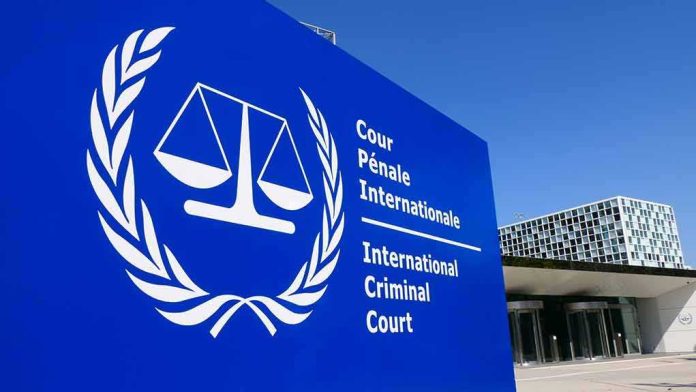
President Trump’s administration has sanctioned the International Criminal Court and moved to choke off its reach over U.S. and allied citizens.
Story Highlights
- The White House formally imposed asset blocks and visa bans on International Criminal Court officials.
- U.S. leaders argue the Court cannot claim power over Americans or Israelis because neither nation joined it.
- The Court’s Palestine probe rests on a disputed territorial theory that the U.S. and Israel reject.
- The International Criminal Court and United Nations leaders denounced the sanctions as an attack on judicial independence.
Sanctions Order Turns Policy Into Action
The White House issued a sanctions order on February 6, 2025, targeting International Criminal Court officials, employees, agents, and their immediate family members. The action blocks property in the United States and suspends entry into the country. The order warns of “tangible and significant consequences” for those linked to the Court’s alleged overreach. This step converts long-standing U.S. objections into concrete penalties with legal force, not just rhetoric or press statements.
Administration officials framed the move as a defense of U.S. sovereignty and the Constitution. They argue that Americans never consented to the Court’s rules. They also say allied nations like Israel face the same problem. Supporters of the sanctions contend that unelected global bodies should not sit in judgment over U.S. troops or elected leaders. They point to clear limits on treaties we did not join and the duty to protect those who serve our country.
Jurisdiction Fight Centers On Palestine Rulings
The International Criminal Court claims power over conduct on Palestinian territory, even when suspects are not from a member country. Pre-Trial Chamber rulings describe Palestine as a state party for Court purposes and say jurisdiction reaches Gaza, the West Bank, and East Jerusalem. The chamber stated that this is territorial jurisdiction, not based on nationality. This is the core legal clash: the United States and Israel dispute that foundation and reject the Court’s reach.
Israel formally contested the Court’s moves through filings that sought to withdraw arrest warrants and pause the probe. The Court recorded those efforts and then declined to suspend the investigation under the available statute. That outcome does not end the dispute. It shows the courtroom route did not stop the process. The U.S. response now leans on sanctions, making the fight less about briefs and more about real-world leverage and limits.
Supporters Say Sanctions Defend Sovereignty; Critics Call It A Threat To Courts
Backers of the sanctions argue that the United States must guard its people from outside control. They stress that our nation never accepted the Rome Statute, so its rules cannot bind Americans. They also say the Court’s theory lets non-elected global actors second-guess U.S. military and policy choices. In their view, visa bans and asset blocks are fair tools to stop mission creep and to defend service members who followed U.S. law and orders.
The International Criminal Court called the sanctions a “flagrant attack” on the independence of a treaty-based court. Court leaders said they will keep working with “independence and impartiality,” based on law and evidence. They argue that measures against judges and staff undermine the rule of law by pressuring those who apply it. United Nations officials echoed that line, urging states to support the Court’s independence in the face of U.S. pressure.
What This Means For Americans, Allies, And The Rulebook
The sanctions increase the cost for Court officials who pursue probes that touch U.S. or Israeli nationals. Travel to America can be blocked. Money and property linked to U.S. reach can be frozen. These steps raise the stakes for a court that depends on global travel, funding, and cooperation. Whether they cripple the Court is unclear, but they make clear the United States will not accept claims against its people without consent or a treaty we signed.
RUBIO WARNS ICC: Secretary of State Marco Rubio issued a stark ultimatum as the Trump administration slapped sweeping new sanctions on the International Criminal Court over what it alleges are politically motivated prosecutions of Americans and Israelis. pic.twitter.com/22DWblrSGZ
— NEWSMAX (@NEWSMAX) October 11, 2026
The legal fight will likely continue in filings and public statements. The Court cites prior rulings to defend its path on Palestine. The United States and Israel attack that same ground as flawed and dangerous to sovereignty. For readers who value the Constitution, the message is simple. Our government is using lawful tools to shield Americans from foreign control. That stand will face global pushback, but it answers a basic duty: defend our people and our laws.
Sources:
cbsnews.com, whitehouse.gov, icc-cpi.int, news.un.org