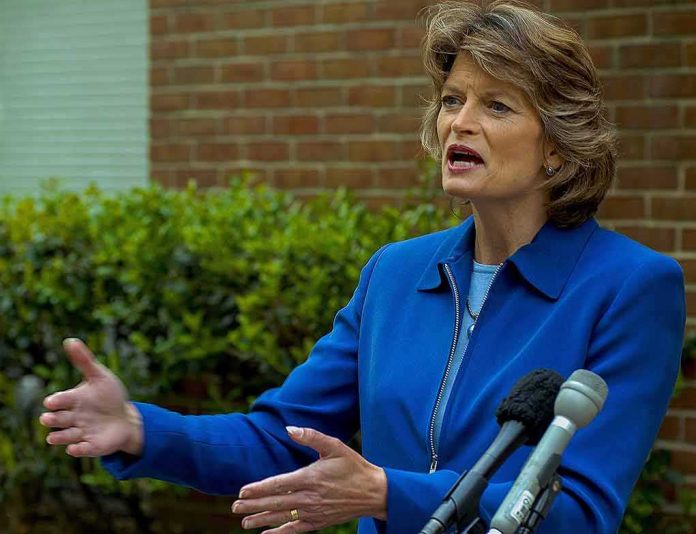
Lisa Murkowski’s refusal to back Todd Blanche shows again that President Trump cannot assume every Republican senator will fall in line.
Quick Take
- Murkowski said she will oppose Blanche’s nomination for attorney general.
- She said she lacks confidence Blanche would check the Trump administration’s worst impulses.
- She also pointed to concerns about the Justice Department becoming more political.
- Her vote matters because Republicans hold only a slim Senate majority.
Murkowski Draws a Line on the Justice Department
Senator Lisa Murkowski said Friday that she will vote against Todd Blanche’s nomination to lead the Justice Department. She said the country needs an attorney general who can check the worst impulses of the Trump administration, and she said she does not trust Blanche to do that. Her decision came after the Senate Judiciary Committee advanced the nomination on a narrow vote, keeping the fight over the post alive.
Murkowski’s statement fits a pattern that has defined much of her relationship with President Trump. She voted to convict him in his second impeachment trial, helped restrain his war powers on Iran, and later cast a pivotal vote for his spending bill after winning a carveout for Alaska. That mix makes her one of the few Republicans willing to break with Trump when she thinks the issue reaches beyond party loyalty.
Why Her Vote Carries Weight
Blanche’s path was already tight because Republicans have little room to lose votes. NBC News reported that, with one GOP holdout already opposed and Democrats expected to vote no, a third Republican opponent would have blocked the nomination. Murkowski’s public break therefore did more than register disagreement. It forced the White House and Senate leaders to keep counting votes in a chamber where every defection can reshape the outcome.
Her criticism also goes to a deeper concern that has followed several Trump-era nominees: whether the Justice Department will act as an independent law-enforcement body or as a political tool. Murkowski said she was worried Blanche would not check the administration’s worst impulses. Other reporting said she was also concerned about the administration’s proposed fund for people tied to January 6, showing that her objection was about institutions, not just one person.
A Familiar Trump-Era Split in the GOP
Murkowski has built a reputation as a Republican who will sometimes back Trump and sometimes resist him, depending on the issue. She has supported his domestic agenda when it suited Alaska, but she has also crossed him on core questions of power and conduct. That makes her stance politically useful for her and frustrating for Trump allies, because it reminds voters that a Senate majority does not always mean total discipline.
The U.S. Senate voted 50–49 early Saturday morning, August 8, 2026, to confirm Todd Blanche as the next Attorney General of the United States. The narrow confirmation saw all Democrats oppose the pick alongside two Republican senators, Susan Collins and Lisa Murkowski vote. pic.twitter.com/Q76VUdnECo
— America Fuck Yeah (@ploof_bobby) August 10, 2026
The broader story is not just about one nominee. It is about the uneasy balance inside today’s Republican Party, where some senators still want to defend institutional limits even as the White House pushes hard to consolidate control. Murkowski’s statement shows that the old Senate habit of independent judgment has not disappeared, even in a Congress where party leaders often expect loyalty first and debate later.
Sources:
redstate.com, npr.org, pbs.org, yahoo.com, bbc.com, facebook.com