Campaign rallies are not generic spectacles; they are precision tools for turnout and message discipline, and President Trump’s Vandalia, Ohio event was a textbook example of how a White House deploys a popular standard-bearer to fortify down-ballot allies and frame local economic issues—like the footprint of data centers—inside a national stakes argument about growth, energy, and China.
At a Glance
- President Trump headlined a midterm rally in Vandalia, Ohio, to boost Republican candidates in tightly contested statewide races.
- The event’s mechanics—location, timing, program—fit a rally-as-turnout operation more than persuasion-first retail politics.
- Trump’s case mixed national economic messaging with an Ohio-specific defense of data centers as growth infrastructure that should not be pushed to China.
- Political science literature and past-cycle evidence suggest such rallies can lift local enthusiasm and turnout, though effects are typically short-lived.
What Happened: A President on the Ground to Lift the Ticket
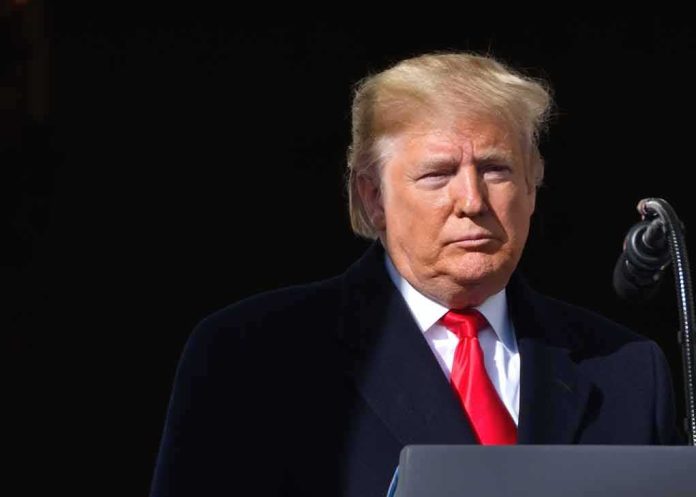
President Trump appeared at the Butler–Vandalia Student Activity Center in Vandalia, just north of Dayton, for a scheduled midterm rally backing Ohio Republicans, including Sen. Jon Husted and gubernatorial contender Vivek Ramaswamy. The Republican National Committee listed the event with time, venue, and run-of-show details; local outlets and national political desks carried the stop live and framed it as part of a broader campaign push in the homestretch before Election Day. The rally blended familiar Trump stump themes—border security, tariffs, inflation, and partisan contrasts—with Ohio-centric notes about industrial reinvestment, utility costs, and the state’s infrastructure mix, including data centers.
The stated objective was straightforward: energize reliable partisans, consolidate late-deciding Republicans, and sharpen the salience of issues where the party believes it holds an advantage. In competitive environments—especially Senate and gubernatorial contests decided on narrow margins—this kind of late-stage presidential rally serves as a turnout accelerant as much as a persuasion attempt.
Mechanics: How Rally Politics Actually Works
Modern campaign organizations use rallies as signaling and mobilization devices. The location telegraphs priority geography; the guest list and endorsements validate a slate; the speech content tests and amplifies messages that internal data show will mobilize core voters. Empirical research on rallies across cycles finds that Trump’s in particular tend to produce localized, short-duration boosts—modest increases in self-reported intention to vote among Republicans and leaning Republicans, and small, measurable turnout bumps at the county level—effects that decay over days and weeks rather than transform national sentiment.
That limited but real effect is precisely the point late in a campaign: stack small advantages in a handful of places, and you can win a statewide race. The Vandalia stop fit that pattern. The venue sits inside a media market that reaches key suburban and small-metro voters; the timing, roughly a month out, coincided with voter registration deadlines and the start of early voting windows, when a mobilization shove can convert attention into banked ballots.
The Ohio Frame: Data Centers, Energy, and Industrial Capacity
A notable thread in Trump’s Ohio argument was the defense of data center build-outs as strategic infrastructure—capital-intensive facilities that anchor cloud services, AI workloads, and enterprise computing—and his warning that if the U.S. turns these projects away, capacity and jobs will migrate to China. The friction point in Ohio, as elsewhere, is the three-way tension among rapid load growth from new compute campuses, local electricity rates, and land use on the urban fringe. Rally speakers knitted that into a broader economic pitch: keep industrial investment at home, manage grid costs sensibly, and leverage policy to keep the compute economy onshore rather than offshored to strategic competitors.
Mechanistically, that argument rests on two realities. First, data centers are now baseline infrastructure for the services consumers and businesses expect; where they locate is shaped by power availability, latency to end users, tax structure, and permitting. Second, siting decisions are mobile: if localities impose hard constraints—on interconnection queues, industrial zoning, or cost recovery—builders will choose other states or countries. Trump’s framing places China at the far end of that substitution curve to underscore the geopolitical stakes of compute capacity, echoing his broader tariffs-and-onshoring economic thesis that dominated his remarks in Ohio and elsewhere.
Why Vandalia: Geography, Slate, and Message Density
Choosing the Dayton metro for a statewide push accomplishes several tasks at once. It reaches exurban and small-city voters central to GOP coalitions; it’s logistically suited for a large venue and live coverage; and it lets allied candidates share a stage before their own earned-media hits and fundraising cycles. The program in Vandalia delivered that: a packed slate of Ohio Republicans, a message set tightly aligned to their races, and national media coverage that extended the event’s shelf life beyond the gym floor.
The Senate race loomed large. Trump’s backing of Husted sharpened contrasts on immigration, energy, and the cost of living—issues Republicans believe mobilize their base and peel off undecided right-leaning voters. Layering in the data center argument let the ticket claim both near-term consumer protection (concerns about rates) and long-term competitiveness (keep compute and jobs in-state), without ceding ground on growth. That strategic pairing—kitchen-table costs and macroeconomic primacy—was the throughline of the night.
What The Evidence Says About Impact
Set aside the theatrics and focus on effect size. The best-identified studies of rally impacts indicate two repeatable patterns. First, there are transient but statistically detectable increases in support and turnout where rallies occur, especially among strong and leaning partisans predisposed to mobilize if prompted. Second, those gains fade quickly; rallies do not, by themselves, realign electorates. For Trump events specifically, researchers find short-lived lifts in support and intention to vote, with turnout bumps concentrated in the immediate geography of the stop.
Translate that to Ohio: Vandalia likely produced a measurable, local nudge—earned media plus on-the-ground enthusiasm that, if paired with an organized absentee and early-vote chase program, can convert marginal sympathizers into actual voters. Campaigns that stack a dozen of these nudges across a state can change the margin; campaigns that treat rallies as ends in themselves rarely do.
Trump touts ‘golden age’ at Ohio rally, urges voters to deliver GOP midterm wins ~ https://t.co/pBcakPnr1u #FoxNews
— MikeKirby (@mikekirbyone) October 4, 2026
The Broader Stakes: Compute, China, and the Next Industrial Policy Fight
Trump’s warning about data centers “going to China” if the U.S. turns them away is a blunt expression of a larger industrial-policy contest. The last decade saw semiconductors, batteries, and advanced manufacturing pulled into an overt economic-security frame; compute infrastructure is entering the same frame as AI workload growth strains grids and incentives tilt site selection. States that streamline interconnection, backstop new flexible generation, and craft rate structures that insulate residential customers while welcoming industrial load will capture outsized investment. States that default to blanket moratoria or punitive cost recovery will see projects slip away—to other U.S. regions or, in some segments, abroad. The Vandalia message made that a retail political argument, not just a utility commission docket.
Bottom Line
Viewed through the lens of campaign mechanics and industrial policy, the Vandalia rally did exactly what it was designed to do. It concentrated attention and enthusiasm in vote-rich territory for embattled allies, translated complex infrastructure questions—data centers, power, rates—into a clear growth-versus-offshoring choice, and used the president’s brand to convert message into mobilization. The academic literature suggests the effects will be local and time-bound; the campaign bet is that, stitched together across Ohio’s map, they will be enough.
Sources:
thegatewaypundit.com, nbcnews.com, fox19.com, events.gop.com, washingtonexaminer.com, daytondailynews.com, cincinnati.com, wcpo.com, newspressnow.com, fox10tv.com, wdtn.com, wlwt.com, oudaily.com