When Catholic worship borrows the language and symbols of an indigenous cosmos, the question is not whether cultures may meet, but how to keep the act of Christian worship intelligibly Christian; the Pucallpa controversy in Peru is a textbook case of why that line matters and why it is hard to draw.
The Short Version
- The Pucallpa papal Mass visibly integrated Amazonian cultural forms—vessel-shaped chalice, river-evoking paten, and Shipibo-inspired vestments—by design, not by accident.
- Organizers framed these elements as inculturation: a dialogue in which the Gospel meets and elevates local culture without equating symbols or endorsing other worship.
- Critics seized on a reported welcome hymn invoking “mothers of the forest and the water,” alleging a syncretistic drift reminiscent of the 2019 Pachamama dispute.
- The public record substantiates the event’s Amazonian accents and the Church’s intent; it does not, so far, decisively document that a pagan invocation entered the liturgy proper.
What Actually Happened in Pucallpa
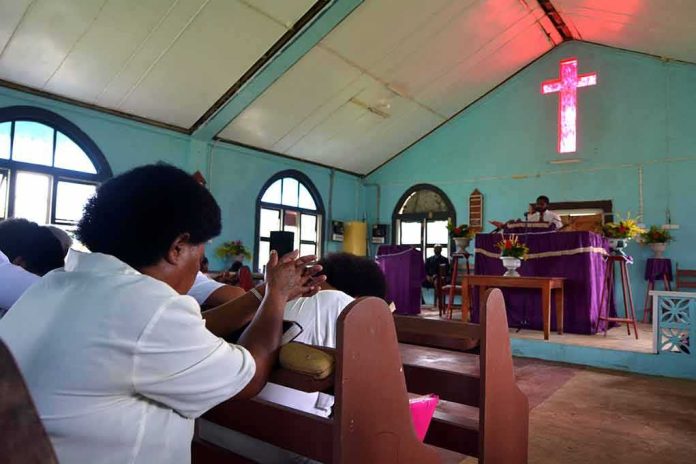
At the November 15 celebration in Pucallpa, the Church presented a Eucharist marked by Amazonian identity. Planning materials described a chalice modeled on a traditional Amazonian vessel, a paten evoking converging rivers, and vestments inspired by Shipibo kené patterns—deliberate signals that the local Church stood before God with its own history and craft in hand. Public agencies and Catholic outlets alike reported traditional dances and songs as part of the papal welcome around the Mass, situating the gathering within a broader cultural presentation that preceded and surrounded the strictly liturgical action. In parallel, the Pope’s official address during the journey emphasized honoring ancestral knowledge while rooting an alternative social vision in the Gospel—a concise summary of the Church’s stated inculturation posture in the Amazon.
That is the uncontested backbone: a Roman Rite Mass, visibly dressed in local symbols, framed by cultural performances, and explained by organizers as a theological dialogue with indigenous memory. This is not novelty for its own sake; it is the Church’s long-running attempt to express the one faith in many tongues and textures.
The Charge of Syncretism: What the Evidence Shows and What It Does Not
The sharpest criticism focused on a reported welcome hymn whose quoted verse invoked “mothers of the forest and the water,” interpreted by critics as a reference to Amazonian spirits such as Sachamama, and publicized as a “pagan hymn” that opened the papal Mass. The allegation adds biographical color by naming a priest-composer who, according to the same outlet, described personal experimentation with ayahuasca in shamanic settings. Taken together, the portrait is meant to suggest an intentional theological importation of non-Christian entities into a papal Eucharist.
Two distinctions are essential. First, the public record from Church and civic sources clearly supports the presence of Amazonian cultural performances and handcrafted symbolic objects in proximity to the Mass; it does not supply a primary audio, official score, or authorized translation of the contested hymn that would allow a definitive textual and ritual classification. Second, nothing in the record shows that the Order of Mass, Eucharistic Prayer, or sacramental form was altered; even strong critics concede their conclusion—that the liturgy was compromised—rests on interpretation of symbolism and lyrics, not on a change to the rite itself.
Inculturation: The Logic, the Guardrails, the Friction
Inculturation is not decorative multiculturalism; it is the Church’s theological judgment that the Gospel, once planted, bears fruit within a people’s forms without endorsing their pre-Christian worship. Organizers voiced precisely this aim in Pucallpa: kené patterns “in dialogue” with the cross, not as equals but as meeting points; signs that express a people’s history and spirituality while receiving the Gospel’s inner form. The Pope’s teaching tracked this line: value languages and ancestral knowledge; build a social vision rooted in Christ and respectful of wisdom already present in the people. Properly executed, inculturation translates the one mystery into local idiom while guarding the specificity of Christian confession—who is worshiped, by what act, using which sacramental signs.
The friction arises where symbols are polyvalent. A vessel can be cultural craft and valid chalice. A pattern can be visual art and, to some, a cosmological map. A lyric can be metaphor to a composer, invocation to a hearer. Without clear catechesis and disciplined liturgical boundaries, the resulting ambiguity invites exactly the polarization Pucallpa drew: advocates hear welcome, critics hear syncretism. That is why process matters—text approvals, rubrical clarity about what is inside the rite versus around it, and explicit theological explanations when borrowing language that names natural powers or ancestral “mothers.”
Where Reasonable Disagreement Lives
On the facts supported by named sources, two positions can be held in good faith. One, consistent with organizer statements, holds that the cultural elements were signs of a people brought to the altar, not strange gods smuggled into the sanctuary; that traditional dances and songs belonged to the welcome and procession, not to the liturgy’s consecratory core; and that the homily and prayers anchored the action in Catholic worship centered on Christ.
The other, voiced by critics, argues that certain phrases—“mothers of the forest and the water,” in particular—function as religious invocations in local cosmologies and therefore should be excluded from any liturgical context, lest hearers understandably conclude that the Church names and honors rival spirits. This concern is not trivial; words shape worship. Yet, to move from concern to verdict, a reliable text and context are required—what was sung, when, by whom, and under what authorization—none of which is conclusively established in the public primary record cited by either side.
How to Do This Well: Practical Criteria for Future Celebrations
Clarity protects charity. When planning liturgies in contexts rich with pre-Christian mythic language, authorities should insist on: authenticated texts and translations for all sung or spoken vernacular elements; catechetical notes that explain how a borrowed image is being reinterpreted within Christian confession; visible rubrical boundaries separating cultural welcome from the liturgy itself; and episcopal approval files that document theological review. These are not bureaucratic niceties. They are how the Church avoids weaponized ambiguity while honoring peoples she longs to evangelize.
What It Means Going Forward
Pucallpa will not be the last flashpoint. The Amazon remains a pastoral frontier where ecological devastation, cultural survival, and evangelization meet. The Church’s own synodal process has already wrestled with these tensions and will keep doing so. The surest path is also the oldest: preach the Gospel plainly; admit the beauty and truth present in a people’s history; and, when speaking within the liturgy, name only the One to whom the sacrifice is offered. If that discipline is kept, local color will enrich rather than eclipse the universal form. If it is not, the argument will be lost in symbols before it begins.
Sources:
fides.org, thelettersfromleo.com, lifesitenews.com, vatican.va