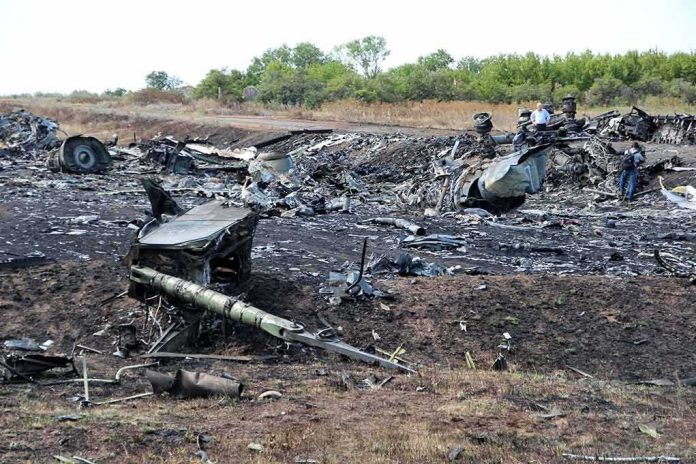
When an airplane vanishes over rugged country, the first facts that matter are simple and solemn: was it found, where, and did anyone survive. In the Grand Canyon case, authorities answered all three — a Piper Comanche with three aboard crashed near the North Rim’s Basin area, and there were no survivors.
At a Glance
- National Park Service teams located a Piper Comanche wreckage and debris field near the Grand Canyon’s North Rim after an overnight search; all three aboard were killed.
- The search leveraged state aircraft flying with infrared and night-vision equipment before NPS ground teams homed in on the site.
- The National Transportation Safety Board is leading the investigation into cause; FAA and NPS are supporting.
- Authorities identified the Basin area near the North Rim as the last known location and discovery site; names were initially withheld pending notifications.
What Happened: A narrow, established record
The National Park Service (NPS) received a missing-aircraft report late on November 15 from the Grand Canyon Regional Communications Center. By mid-morning November 16, park personnel located wreckage and a debris field in the Basin area on the North Rim. NPS stated plainly that there were no survivors. Multiple contemporaneous reports, drawing from official statements, identified the aircraft as a Piper Comanche carrying three people. Those are the settled facts: aircraft type, three fatalities, remote North Rim location, and a precise discovery window after an overnight search. The NTSB is now the lead agency on cause, as federal law requires for civil aviation accidents.
Two timeline details in early reporting varied — an FAA-cited estimate placed the accident around early evening Sunday, while park records emphasize the late-night missing-aircraft report and next-morning discovery. Such small discrepancies are ordinary in the first 24 hours; they do not alter the bottom line here, which rests on the NPS recovery at a defined site with a confirmed fatal outcome. Cause, identities, and flight purpose were not released at the time of initial reporting.
Search and recovery in remote terrain
Grand Canyon’s North Rim is unforgiving to rescuers: sparse roads, high elevation, steep drainages, and few vantage points. Overnight, the Arizona Department of Public Safety flew search patterns using forward-looking infrared (FLIR) and night-vision systems to detect heat signatures or reflective debris. These sensors can cue ground teams but rarely solve the final meters; NPS units ultimately located the debris field by mid-morning. Interagency choreography is standard for the canyon — state air assets extend reach and persistence at night; park teams close in by day.
Why does the search method matter? In aviation accidents away from towns or highways, technology narrows the box but terrain dictates the pace. A quick find improves scene security and evidence preservation for investigators. Here, the handoff from state aerial sensing to NPS field location provided both speed and fidelity, which aids the NTSB’s initial documentation phase even before a formal preliminary report posts.
What investigation looks like — and what it doesn’t
The NTSB’s mandate is straightforward: establish the sequence of events and determine probable cause. That process proceeds in phases. On scene, investigators document perishable evidence — wreckage distribution, structural breaks, engine and propeller signatures, control continuity, and impact marks. They gather radar or ADS-B tracks, weather data, maintenance and pilot records, and any communications. The preliminary report, typically released within weeks, is a factual synopsis, not an analysis or cause finding; the Board repeatedly cautions media and the public not to treat preliminaries as explanatory. Final reports with probable cause often arrive 18–24 months later.
In small-aircraft accidents, the pathway to cause is rarely singular. Weather, terrain, human factors, and mechanical state can interact. Investigators pair physical evidence — for example, whether propeller blades show rotational scoring versus a clean break — with performance models and maintenance logs. In mountainous regions like the Grand Canyon, density altitude, wind shear along rims, and visual illusions across broken topography can all feature in the analysis; so can compliance with airspace restrictions and route planning. None of that speculation substitutes for the docket that will eventually assemble the hard record.
The Grand Canyon as an aviation environment
Grand Canyon National Park is not just an iconic vista; it is tightly managed airspace. Decades of tourism flying and a handful of high-profile accidents shaped today’s rules for routes, altitudes, and noise abatement. Air tour operators fly under specialized regulations, while noncommercial general aviation still transits the broader region under standard parts of the Federal Aviation Regulations. The North Rim’s Basin area sits amid complex terrain and variable weather; seasonal closures of visitor facilities do not simplify the aeronautical picture. Pilots must reconcile scenic temptations with conservative margins — speed, altitude, and a plan to avoid box canyons that outclimb single-engine performance.
Equipment and recency matter. A Piper Comanche is a capable single-engine, retractable-gear aircraft whose performance varies markedly with weight, field elevation, and temperature. Even well-maintained airframes demand discipline in mountainous flight: lean for density altitude, plan escape routes, respect wind flowing over ridges. Whether any of these generic mountain-flying considerations are relevant here will be for the NTSB to say after it marries wreckage evidence with trajectory and weather data.
Reporting discipline: fix the facts, wait on the why
Serious accidents generate a natural hunger for “why” within hours, but the reliable public record is usually narrow at first. Here, the record supports a clear summary: a Piper Comanche with three aboard crashed near the North Rim’s Basin area; NPS found the wreckage the next morning; there were no survivors; the NTSB is investigating with FAA and park support. That is not a cop-out — it is fidelity to how complex accident investigations are meant to work. The Board’s media guidance is unambiguous: preliminaries are for facts gathered on scene; analysis and probable cause arrive later, after specialist teams have integrated operations, structures, powerplant, human factors, and meteorology.
That discipline matters because early narratives harden quickly and are often wrong in detail. Investigators, by contrast, must test every tempting story line — sudden weather, disorientation, fuel state, control failure — against data. The result is less cinematic but more useful: a chain of evidence that equips pilots, mechanics, and regulators to prevent recurrence.
THREE DEAD IN PIPER COMANCHE CRASH ON GRAND CANYON NORTH RIM
A small single engine Piper PA-24 Comanche crashed on the remote North Rim of Grand Canyon National Park on the evening of November 15, killing all three people aboard.
The Federal Aviation Administration reported the…
— Sami Nathaniel (@NathanielSami) November 17, 2026
What to watch next
From here, expect three official milestones. First, the NTSB preliminary report will post — typically a few pages that lock in basic facts: aircraft registration, pilot certificate levels, environmental conditions, and a concise scene description. Second, as notifications conclude, local authorities or the Board will release identities, which will permit public cross-reference to ownership and maintenance records. Third, many months from now, the final report will assign probable cause and contributing factors. Each step will replace conjecture with documentation and move this tragedy from headline to understood event — which is how safety improves.
Sources:
azdailysun.com, fox10phoenix.com, themirror.com, abc15.com, ntsb.gov