Florida investigators say a state license examiner helped unqualified and undocumented applicants get 60 licenses, triggering 360 felony charges.
Story Highlights
- Florida Highway Patrol arrested a driver’s-license examiner on 360 felony counts tied to 60 licenses.
- Investigators say testing rules were bypassed and fake residency papers were accepted.
- Florida officials revoked all licenses they identified as fraudulently issued.
- Case spotlights insider fraud risks and the need for strict ID and testing safeguards.
Arrest Tied to 60 Allegedly Fraudulent Licenses
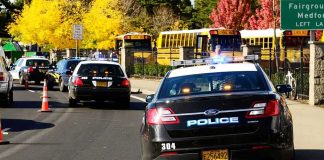
Florida Highway Patrol troopers arrested Lynnette Stitt Williams, a driver’s license examiner in Pembroke Pines, on 360 felony counts linked to 60 allegedly fraudulent licensing transactions. Court records and local reporting state the charges include unlawful issuance, forgery, criminal use of a public record or false information, and official misconduct. The charge total reflects six separate offenses applied to each of the 60 transactions, creating a transaction-based case. Authorities booked Williams on November 16 following a focused probe of her work station.
Investigators say applicants who did not qualify still obtained licenses after key steps were skipped or falsified. Reports describe accepted fake utility bills and bypassed retesting, which would have been needed in some cases. Authorities say unqualified applicants included people in the country illegally. The pattern flagged by investigators centered on 60 transactions they deemed suspect and later tied to the 360-count filing. At a subsequent hearing, records showed no public plea entered yet.
State Response: Licenses Revoked and Safeguards Cited
Florida officials moved to revoke all licenses identified as fraudulently issued in the case. The state’s chief financial officer announced the revocations and reinforced that Florida bars licenses for people who cannot prove lawful status. The state previously tightened rules and even invalidated certain out-of-state cards issued only to undocumented immigrants. The action here underscores that Florida will cancel credentials that slip through if later found to be unlawful or improperly issued.
Florida’s driver services agency outlines strict document and testing rules designed to block ineligible applicants. Required records include proof of identity, lawful status, Social Security number, and two proofs of Florida residency. Examiners must also score written and road tests, with results entered into official systems. The agency educates customers on fraud risks and instructs staff to flag suspect documents. These policy guardrails help prevent the exact type of scheme alleged in this case.
How the Charges Stack and Why It Matters for Safety
Prosecutors built the case around each credential issued, multiplying counts by offense category. That approach signals a focus on the integrity of every license in the system, not just on an employee’s single act. A state license is a legal identity document and a gate to driving on public roads. Bypassing residency checks or driving tests endangers families and erodes trust in the rule of law. When an insider breaks those rules, the damage spreads fast.
The alleged bypass of testing rules cuts straight to road safety. Road tests measure real skill. Written exams test knowledge of signs and safe choices. When an unqualified driver gets a pass, everyone nearby pays the risk. Florida’s quick revocations remove bad credentials from traffic stops and insurance claims. That protects lawful drivers who follow the rules and pay their premiums. It also backs police, who need reliable records when they pull someone over.
Pattern of Insider Licensing Fraud and National Context
Cases around the country show insider licensing fraud is a repeat public-integrity problem. In California, a former motor-vehicle examiner admitted joining a scheme to alter records so applicants appeared to pass tests. That case involved bribes and falsified exam results for regular and commercial licenses. The United States Department of Justice described how conspirators used access to state systems to push through unearned credentials. The Florida case follows a similar alleged pattern of insider abuse.
A Florida DMV examiner was arrested Monday on 360 felony counts for handing out driver’s licenses to illegal aliens in Broward County. Lynnette Stitt Williams worked at the Pembroke Pines office for nearly 20 years. Investigators say applicants paid First Driving School Corp. a…
— Paul A. Szypula 🇺🇸 (@Bubblebathgirl) November 18, 2026
Florida’s firm line on licenses for undocumented immigrants sets it apart from many states. Lawmakers and Governor Ron DeSantis tightened rules in 2023 and beyond to stop misuse of out-of-state cards created for undocumented residents. That policy aims to deter illegal immigration incentives and reduce fraud risks. The current case shows why enforcement still matters at the counter level. Tough laws help, but vigilant staff and audits stop insider schemes before they spread.
What Comes Next: Due Process and System Cleanup
Prosecutors will press a detailed, document-heavy case built on transaction records, system logs, and applicant files. Defense counsel will have the chance to challenge each element in court. While the court process plays out, the state has already pulled the suspect licenses. That immediate cleanup limits harm to road safety and public records. For citizens, the takeaway is simple: strong laws and strong enforcement must work together, or one insider can crack the whole system.
Sources:
pjmedia.com, nbcmiami.com, floridatoday.com, cbs12.com, yahoo.com, enewspaper.latimes.com, ecollections.law.fiu.edu