
The hard truth in every interest-rate cap debate is not whether borrowers would like to pay less—of course they would—but who loses access when lenders can no longer price for risk, and what replaces the credit that disappears.
At a Glance
- President Trump has endorsed a one-year, 10% ceiling on credit card APRs; it would require congressional action and marks a rare, specific commitment on retail credit pricing.
- A cap that far below current market rates would sharply compress risk-based pricing; credible analyses foresee tighter underwriting, lower limits, higher fees, and curtailed rewards.
- The fault line is distributional: revolvers who keep access would pay less, but many near-prime and subprime borrowers could lose lines or face steep nonrate charges.
- History and industry mechanics suggest large, sudden caps shift costs rather than eliminate them; design details—scope, duration, carve-outs—determine who pays.
What a 10% cap is trying to fix—and what it would actually touch
Trump’s proposal targets a highly visible pocketbook pressure: credit card APRs that average in the low 20s on accounts charged interest, with many borrowers facing 24% or more. For a typical revolver, the arithmetic is not abstract. On a $5,000 balance, monthly interest near 24% is about $100; at 10%, it falls to roughly $41—a savings on the order of $700 per year if balances and payments are unchanged. The appeal is obvious. But capping an APR is not the same as lowering the total cost of credit. Card pricing is a bundle: interest rate, annual fee, late and penalty fees, promotional financing, and—crucially—rewards funded by interchange and interest margins. Compress the APR far below risk and cost, and issuers rebalance the bundle or ration credit. That is not a moral defense of high rates; it is the operating model of unsecured, revolving credit.
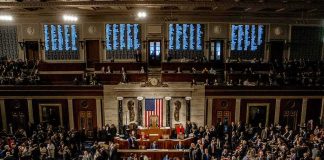
It also matters that a federal cap would require Congress. Independent fact-checking and mainstream analysis agree that the White House cannot unilaterally impose a statutory, across-the-board 10% ceiling; any program of that scale runs through legislation, and fast enactment is unlikely in normal order. This is an important practical constraint: if a cap comes, it will come with legislative design choices, exceptions, and transition rules that significantly alter outcomes.
How we got here: the legal and market architecture behind today’s card rates
Since 1978, when the Supreme Court held in Marquette that nationally chartered banks may “export” the interest rate allowed by their home state to borrowers nationwide, the geography of card issuing—and the economics of card APRs—changed decisively. National issuers domiciled in permissive states can charge the rate allowed at home, not the borrower’s local ceiling, which effectively sidelined more restrictive state usury limits for general-purpose cards. That ruling, coupled with the growth of interchange-funded rewards and risk-based underwriting, produced the modern card market: unsecured lines priced to expected loss, servicing cost, funding cost, and a substantial cross-subsidy from revolvers to transactors who harvest rewards. Any federal cap that sits well below many borrowers’ risk-implied rates therefore doesn’t just trim margins; it rewrites that cross-subsidy and the underwriting frontier.
History also counsels caution about blunt ceilings. Caps that bind tightly tend to contract formal credit to higher-risk households, with access shifting to more expensive or opaque channels—pay-in-full-only cards, “buy now, pay later,” or nonbank lenders—unless policymakers backfill with targeted alternatives. Empirical work across eras and products finds the same pattern: when price can’t clear risk, quantity does.
The warning from critics: rationing, higher fees, fewer rewards
The sharpest pushback to a 10% cap has focused on scale and proximity to current rates. A ceiling that low would bind not just at the margin but across much of the portfolio, especially for near-prime and subprime accounts. Analyses from academic and industry-aligned economists converge on the likely adjustments: tighter underwriting, line decreases, higher annual and late fees, and reduced rewards and promotional offers, with cancellations concentrated among weaker credit tiers. In one widely cited summary, a Heritage Foundation economist warned that as many as three-fourths of cardholders could lose accounts or face drastic line cuts, with fees rising and rewards retrenched; the magnitude is debatable, but the mechanisms he cites mirror standard issuer responses when interest revenue is capped relative to expected loss.
Importantly, these projections are not hand-waving about industry discomfort. They are the expected consequences of binding below-risk caps in unsecured credit: if an account’s expected loss and cost stack to more than 10%, the APR cannot cover it, so issuers either remove the risk from the book, add nonrate charges, require collateral, or reallocate benefits to low-loss customers. Modeling that uses Federal Reserve household survey data similarly estimates that a large share—up to two-thirds—of habitual revolvers could see credit lines curtailed or eliminated under a 10% ceiling unless offsetting fees rise or costs fall dramatically.
What relief looks like if a cap lands—and who would bear the trade-offs
For borrowers who keep their lines and revolve balances, a 10% cap is real relief: lower finance charges drop immediately to the minimum-payment line, freeing cash flow that can accelerate amortization or cushion household budgets. But two distributional shifts follow. First, rewards would likely be rationed to the cleanest credit and highest spend, because interest margins no longer subsidize broad, generous programs; “free” points are funded somewhere. Second, transactors—the roughly half of cardholders who pay in full—could see more annual fees and thinner promotions, because interchange alone rarely sustains today’s rich benefits without help from revolver interest. The total cost of credit does not vanish; its form changes, and its incidence moves.
There is also substitution. Constrained borrowers do not stop needing liquidity. If card credit tightens, they pivot: installment loans, payday-like alternatives where legal, merchant-financed BNPL, or informal sources. Some of these channels are cheaper for specific purchases; many are not, especially when late or penalty structures bite. Good policy design anticipates that migration and either provides safer substitutes or narrows the cap’s scope to avoid blunt-force rationing.
CHART: The average US credit card rate on accounts charged interest was 22.36% in the third quarter, just below the 2024 record of 23.37%, per the Federal Reserve.
Trump said Saturday he would work with Democrats on a 10% cap. pic.twitter.com/uFxbzcYqAm
— Trading Away (@tradingawayJBA) November 24, 2026
If Congress pursues a cap anyway: design choices that matter
Policy architecture can temper the downside risks. A one-year cap could be paired with: (1) scope limits—apply only to legacy balances above a threshold or to interest charged on fees and penalties, where pricing is least defensible; (2) a floating ceiling—index the cap to a short-term benchmark plus a fixed spread, preserving risk-pricing headroom as funding costs move; (3) safe harbors—permit higher capped rates on clearly defined higher-risk tiers in exchange for tighter disclosures and hardship protocols; (4) fee guardrails—cap late and penalty fees during the cap window to prevent simple re-labeling of finance charge as fee; and (5) a transition ramp—phase-in over quarters so issuers can re-underwrite rather than mass-close accounts. None of these eliminate trade-offs, but they replace a cliff with a slope. Congressional research staff have already outlined the key mechanics and historical experience; lawmakers do not need to legislate blind.
Bottom line: relief is easy to promise and hard to engineer
A 10% ceiling is a simple, vivid promise that addresses a real pain point. Implemented as a hard stop far below market-implied risk, it would almost certainly buy lower interest costs for some by pushing many others off the platform or into higher nonrate charges. That is not cynicism; it is how unsecured credit equilibrates under binding price controls, and our post-Marquette architecture magnifies the effect. If Congress chooses this path, the durable way to help revolvers is not just to cap an APR for a season, but to rewrite the product calculus: curb fee gaming, fortify amortization paths, guard against re-labeling, and build safer substitutes for households that underwriting will inevitably shed. Otherwise, the promise shrinks to a brief reprieve that reshuffles costs without reducing them.
Sources:
townhall.com, thoughtcatalog.com, congress.gov, bpi.com, reason.com, cnbc.com, api.politifact.com, foxbusiness.com