
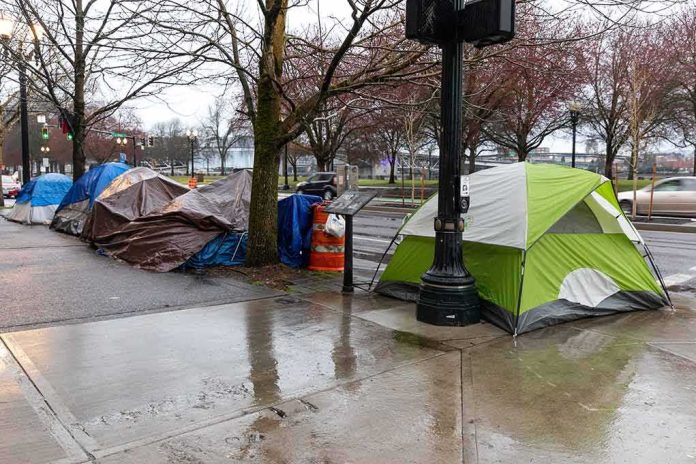
As Atlanta celebrates the World Cup, city workers quietly tossed homeless people’s tents, medicine, and IDs into the trash just steps from the stadium.
Story Snapshot
- City crews threw away tents, medication, and identification from homeless residents near a World Cup site.
- Officials say the cleanup is part of a housing-first push and routine safety work, not a crackdown.
- Advocates and residents see a painful pattern of “cleaning up” poverty for global events.
- The clash shows how both parties talk about helping the vulnerable while the system still pushes them out of sight.
What Happened Near Atlanta’s World Cup Zone
Officials in Atlanta, one of the 2026 World Cup host cities, ordered city workers to clear a park area near a key tournament site where about 15 homeless people had been living in tents for months. During the operation, staff threw away tents, medication, identification cards, and other personal items that belonged to those residents. A city spokesperson later described the activity as “routine park maintenance,” saying crews were enforcing park rules and addressing safety concerns as crowds arrived for matches.
People living in the camp told reporters they returned to find their shelters gone and vital items missing. Some said they lost prescription medicine they needed to manage chronic health conditions, along with ID documents that are critical for getting a job, housing, or benefits. Advocates for the homeless argued that the city’s approach did not respect basic human dignity, pointing out that throwing away life-saving medication and identification makes it even harder for people to escape the streets.
How This Ties Into Atlanta’s World Cup Homelessness Strategy
This park sweep did not happen in a vacuum; it sits inside a larger city effort tied directly to the World Cup. Mayor Andre Dickens and the nonprofit Partners for Home launched a housing-first program called Atlanta Rising, which aims to move unsheltered people into long-term housing with support services. The first phase, Downtown Rising, focuses on neighborhoods around the stadium and tournament fan zones, and the city says it has already housed more than 400 people in new units before the games began.
City leaders and Partners for Home’s chief executive officer say encampment removals near downtown are meant to protect health and safety, not just clean up the city’s image. They argue that large sidewalk and park camps can be dangerous, exposing residents and nearby workers to crime, extreme weather, and disease. Supporters of the plan point to new “rapid-response” housing units built in the months before the World Cup and claim Atlanta is trying to be a model for treating homeless people as neighbors, not criminals. Still, the tent and medication removals near the stadium raise hard questions about how these policies play out on the ground.
A Familiar Pattern Around Big Events
The clash in Atlanta echoes what has happened many times before when big sporting events come to town. During the 1996 Olympics in Atlanta, reports say police removed thousands of homeless people from downtown streets and sent many to a special detention center built for the Games. National research shows that cities across the United States often step up sweeps of homeless encampments before major events, focusing less on long-term solutions and more on clearing visible poverty from key areas.
Public health experts warn that forced encampment removals can seriously harm people’s health. When camps are swept, people lose medicine, medical devices, and contact with outreach teams, while being pushed into less safe areas farther from services. The American Public Health Association notes that such sweeps increase stress, spread disease, and make overdoses and mental health crises more likely. These harms fall on the same group of citizens both parties claim they want to help, fueling anger among voters who feel government cares more about TV images than human lives.
Why This Hits a Nerve Across the Political Spectrum
For many conservatives and liberals watching the World Cup, this story cuts deep because it matches their shared fear that elites run government for show, not for people. Older conservatives who are tired of disorder and crime see city leaders brag about “housing-first” plans while vulnerable residents still have their tents and medicine tossed aside. Older liberals who worry about inequality and discrimination see the same government spending heavily on games and stadium zones while pushing the poorest out of sight to keep tourists comfortable.
🔴 Atlanta discards homeless people's belongings near World Cup venue
City employees threw out tents, medication, identification documents and other possessions of about 15 unhoused people at Freedom Park on July 1, less than a mile from a World Cup watch party venue. The sweep… pic.twitter.com/t2eX5VdIlY
— NewsTongue (@NewsTongueX) July 12, 2026
Both sides know homelessness did not appear overnight. Studies trace it to decades of bad policy, including mental health cuts, housing costs that outpace wages, and gentrification that prices working people out of city cores. When a global event arrives, those long-term failures suddenly become a public-relations problem, and the quick fix is often a sweep instead of a solution. That mix of big promises, flashy projects, and painful on-the-ground tactics is exactly why so many Americans now believe the federal and local governments serve powerful interests first and struggling citizens last.
Sources:
independent.co.uk, ajc.com, atlantaciviccircle.org, reuters.com, apnews.com, instagram.com, reddit.com, apha.org, pbs.org, endhomelessness.org, popcenter.asu.edu, ncbi.nlm.nih.gov