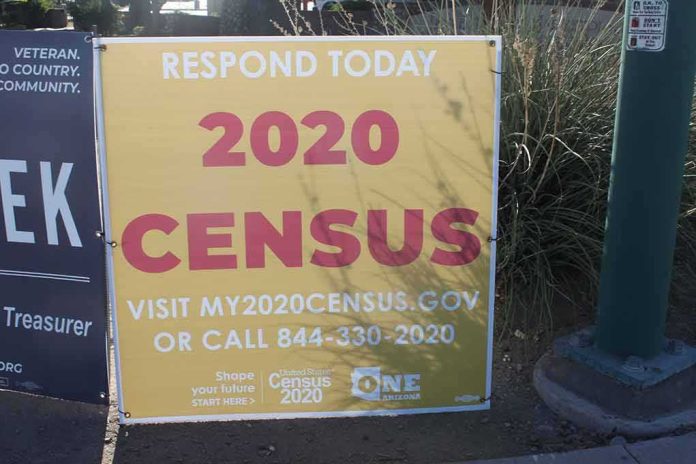
The fight over who is counted for congressional apportionment is not a marginal bookkeeping tweak; it is a bid to redraw political power by redefining who qualifies as part of the nation’s resident population. In 2026, the U.S. Conference of Catholic Bishops (USCCB) formally urged the Commerce Department to withdraw a proposed 2030 Census rule that would exclude undocumented immigrants and other non–lawful permanent residents from the apportionment base. The bishops cast their intervention in constitutional and ethical terms: representation in the House has long been apportioned by counting persons who usually reside here, citizen and noncitizen alike.
The Short Version
- The USCCB filed a public comment opposing a proposal to limit the 2030 apportionment base to citizens and lawful permanent residents, urging withdrawal of the change.
- Federal practice has historically apportioned House seats using total resident population, including noncitizens with a usual residence in the United States.
- The proposal would omit undocumented immigrants and could also exclude many lawfully present noncitizens without green cards, such as students and temporary workers.
- Supporters of continuity cite constitutional text, the 1790 “usual residence” rule, and congressional materials stating there is no citizenship requirement for being counted.
What the bishops opposed, and why it matters
On October 22, 2026, the USCCB submitted a formal comment urging the Department of Commerce to withdraw a proposed change for the 2030 Census apportionment rules. The proposal, as described in contemporaneous reporting and analysis, would count only U.S. citizens and lawful permanent residents (LPRs) in the population used to divide the 435 House seats among the states. Undocumented immigrants would be excluded—and, depending on the final rule’s definitions, many lawfully present noncitizens without LPR status could be excluded as well, including international students and temporary workers. The bishops argued the approach conflicts with equal human dignity and would depart from legal precedent governing how the apportionment population is defined.
The stakes are not abstract. The apportionment base determines how many House seats each state receives. For more than a century, that base has been the total resident population—the people who live and sleep most of the time in each state—regardless of citizenship, paired with specific inclusions for certain overseas federal employees. That is how the Census Bureau describes it, and how apportionment has been executed across decennial cycles, including 2020. Changing who qualifies as a “resident” for apportionment would reshape political representation across states with large noncitizen populations and reframe a settled practice as a contested legal category rather than a demographic fact.
The legal and historical spine: “persons,” “usual residence,” and apportionment
Two anchors hold up the status quo. First, apportionment follows a headcount of “persons,” not voters, and that headcount has not required citizenship. That proposition is reflected in congressional materials explicitly stating there is no citizenship requirement to be counted for census and reapportionment purposes. Second, the “usual residence” rule—where people live and sleep most of the time—has governed the census since the first Census Act in 1790 and has been applied consistently to include all residents, citizens and noncitizens alike. The Census Bureau’s apportionment FAQs and briefs reiterate this contemporary practice, aligning it with the long historical arc of decennial enumeration.
Against that backdrop, the 2030 proposal represents a narrowing, not a mere technical clarification. Analyses of the draft criteria indicate the change would carve out broad categories of noncitizens, not only those lacking lawful status. That breadth is why the bishops, whatever one thinks of their theological framing, positioned their objection as a rule-of-counting question with constitutional implications, not an immigration policy preference.
Mechanics: how a residency rule becomes representation
Mechanistically, the census enumerates population; the Commerce Secretary transmits counts; and the apportionment formula (the method of equal proportions) assigns 435 House seats across the 50 states. If a rule redefines “who counts” by legal status, the inputs shift. States with substantial populations of noncitizens lacking LPR status would lose headcount for apportionment; states with fewer such residents would gain relative weight. The Census Bureau’s public materials specify that, under established practice, the apportionment population includes citizens and noncitizens present at their usual residence. Narrowing that scope would be a policy reversal with foreseeable distributional effects, even if precise seat changes require modeling beyond the scope of the bishops’ filing.
The bishops’ comment, as reported, argued that excluding people who physically live in U.S. communities severs apportionment from the lived reality of representation: roads, schools, hospitals, and local political offices serve populations as they exist, not as filtered by immigration paperwork. While their filing blended moral language with constitutional norms, the core claim tracks the federal government’s own longstanding explication of apportionment inputs.
How the proposal widens beyond “undocumented only”
Public-facing descriptions of the 2030 draft emphasized undocumented immigrants, but the proposal’s focus on citizenship and LPR status appears, on interpretation, to sweep in other noncitizens who are lawfully present but not permanent residents—students on F visas, skilled workers on H-1B, exchange visitors, parolees, asylum applicants awaiting adjudication. The breadth matters because it converts a debate often framed as “illegal immigration” into a definitional contest over whether large, identifiable, lawfully present populations count toward apportionment at all. That is a different, and larger, break from current practice.
This scope also clarifies why religious and civic organizations, not just immigration advocates, entered the docket: apportionment rules cascade into state-level representation and planning. Reducing the resident base where people actually live would, by design, shrink political weight in precisely those communities where these populations are concentrated. The bishops’ letter, quoted in coverage, argued that such exclusion effectively denies that these residents are persons for apportionment—an ethical formulation paired to a practical outcome.
Catholic Bishops Object to Plan to Exclude Noncitizens From 2030 Census
— Lois Levine Fishman (@FishmanLevine) October 28, 2026
Where the record is strongest—and where it is thinner
The evidentiary spine is robust on two points. First, that the proposal would exclude undocumented immigrants from the apportionment base, with potential spillover to many non-LPR noncitizens; second, that this would depart from the Census Bureau’s longstanding definition of the apportionment population as the total resident population, citizen and noncitizen. Both propositions are well supported by the Congressional Research Service and Census Bureau materials, and by contemporaneous reporting on the rulemaking. Congressional materials likewise affirm there is no citizenship prerequisite to be counted for reapportionment.
The record is thinner on quantification—the exact seat shifts and fiscal spillovers by state—and on the administrative docketing details of the USCCB’s full submission. Those gaps do not change what the bishops did or the policy’s direction of travel; they simply mark where further technical analysis and official document retrieval would deepen the public record.
What it means going forward
If the rule were to advance in its described form, its practical effect would be to realign the constitutional measure of representation away from de facto communities toward a legal-status filter. That would make the 2030 apportionment turn on a novel administrative definition rather than the inherited resident-population rule that has anchored every apportionment in living memory. The bishops’ intervention situates that pivot within a broader constitutional and civic frame: whether representation is tied to where people live—or to which documents they hold. On the factual record assembled here, their objection aligns with how the federal government itself has long explained apportionment, even as the moral language they use reflects their vocation.
Sources:
lifesitenews.com, congress.gov, nysun.com, pano.org, ncronline.org, catholicworldreport.com, census.gov