
When broadcast law drifts from guardrail to cudgel, editors do not need a formal order to flinch; ambiguity, backed by the possibility of enforcement, is enough to move journalism off the air and into the algorithm.
The Short Version
- Kimmel said his ABC show shifted a James Talarico interview from broadcast to YouTube due to FCC pressure tied to candidate “equal time.”
- Networks had recent reason to worry: the FCC confirmed inquiries and an enforcement review related to other Talarico appearances on ABC programming.
- CBS framed its own decision to post—not air—a Talarico segment as risk management, not prohibition, highlighting how self-censorship works under regulatory uncertainty.
- The crux is structural: a gray zone between bona fide news and talk entertainment that the FCC narrowed in 2026, chilling editorial choices on broadcast while pushing political conversation online.
What actually happened: a broadcast segment moved, and why that matters
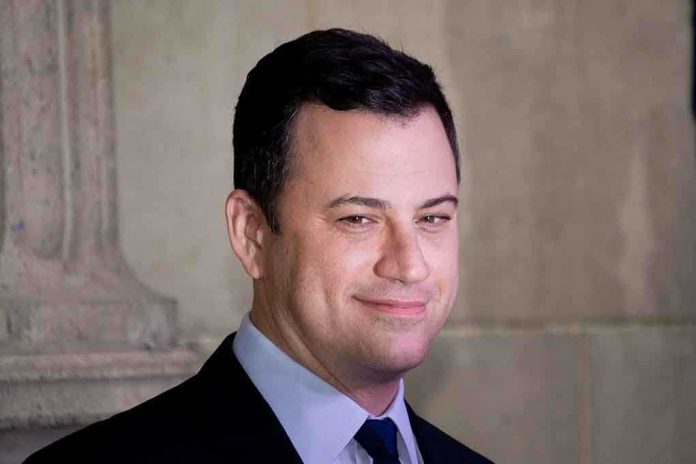
Jimmy Kimmel told his audience that an interview with Texas Senate candidate James Talarico would not run on ABC’s airwaves because of pressure from the FCC—threats he described as directed at him, the show, ABC, and its affiliates over guest bookings the government “doesn’t like.” He released the full interview on YouTube instead, saying the move was made out of respect for affiliates, particularly in Texas, who might face regulatory exposure if the program aired over broadcast. Major outlets summarized the decision consistently: the broadcast slot was abandoned because equal-time scrutiny could trigger enforcement or obligations ABC and its stations were unwilling to shoulder on short notice.
The Kimmel decision did not arrive in a vacuum. Months earlier, the FCC sent a letter of inquiry to ABC about a possible equal-time issue after Talarico appeared on The View; FCC leadership later confirmed an enforcement review tied to that episode. Those steps, modest on paper, became dispositive in corporate risk calculus. CNN reported the ABC inquiry directly influenced CBS deliberations about a planned Talarico interview on The Late Show; CBS, after legal guidance, also chose YouTube over broadcast. The pattern is clear: no explicit ban, but enough official friction to push editors off licensed spectrum and onto platforms beyond FCC jurisdiction.
The mechanism: how equal-time law chills without an explicit “no”
The equal-time rule is a narrow slice of the Communications Act. If a station gives “use” of its facilities to one legally qualified candidate, it must offer comparable time to others for the same office, with exemptions for bona fide news programming. In practice, modern talk formats—daytime panels, late-night interviews—have lived comfortably under that news umbrella for years. The comfort ended in January 2026. The FCC’s Media Bureau told broadcasters that candidate interviews on talk programs might not qualify for the exemption and would receive more review, effectively narrowing the safe harbor. That adjustment did not rewrite the statute; it reframed how line attorneys at networks should read their exposure. When counsel hears “more review expected,” producers hear “don’t roll this tape live”.
Risk is asymmetric. Air one interview and you could face equal-time demands from multiple rivals; refuse and you look partisan; comply badly and your license is at stake. The consequence is not theoretical. The FCC confirmed a live enforcement review attached to a recent Talarico appearance. From a lawyer’s perspective, that is the opposite of a green light. Even if a program could eventually prevail on the bona fide news exemption, the process—intake letters, document pulls, oppositions—creates cost. That cost is precisely what favors preemptive migration to YouTube, where equal-time does not apply because the rule governs broadcast licensees, not online platforms.
Where the disagreement lies: compulsion versus choice
Two narratives have emerged. One is direct pressure: Kimmel asserts that the FCC, aligned with the White House, threatened ABC and its affiliates over the show’s editorial bookings, prompting a defensive shift online. The other is compliance: CBS emphasized it was not prohibited from airing its Talarico interview; it simply received legal guidance that equal-time could be triggered for other candidates and selected an alternative distribution to manage that risk. Both can be true—and together they describe the textbook dynamics of regulatory chill. There is no order stamped “CENSORSHIP”; there is a credible prospect of enforcement that smart lawyers advise their clients to avoid, which yields the same public result.
To be clear about evidence: we have a confirmed letter of inquiry to ABC, an acknowledged enforcement review tied to The View, and detailed self-reporting from Kimmel and network representatives about why subsequent segments were moved online. What we do not have in the public record are the internal memoranda or FCC staff guidance sent to ABC and CBS concerning the Kimmel booking, or a directive compelling removal. That absence does not negate pressure; it defines its form. It is the difference between law on the books and law in the room where decisions are made.
How we got here: a shifting line between “news” and everything else
Historically, broadcasters relied on a 2006 era understanding—cemented during high-profile political guest turns on entertainment programs—that talk shows could qualify as bona fide news and thus avoid equal-time triggers. The January 2026 public notice unsettled that bargain. Once the exemption is in question, the calculus flips. Every candidate booking becomes a matrix: is the guest legally qualified on a ballot in a market served by our affiliates; how many opponents are similarly qualified; can equal-time be accommodated without distorting programming schedules; what is the station group’s appetite for enforcement correspondence in an election year. One letter of inquiry, promptly publicized, answers that last question for many executives: not much.
This is not “speech doesn’t get out.” It is “speech goes elsewhere.” Kimmel published the Talarico interview on YouTube, where it reached an audience multiples larger than an average late-night rating. But distribution substitution is not neutral. Broadcast remains the only mass medium conditioned on viewpoint-neutral licensure, with universal reach in every TV household and a civic tradition of candidate access rules calibrated to that reach. When editorial discretion on that medium yields to compliance heuristics, public discourse shifts to platforms governed by different incentives—algorithmic ranking, advertiser suitability checklists, and privately enforced rules that voters do not vote on.
Consequences for editors, stations, and audiences
For editors: build a candidacy map far earlier in the booking cycle. If a guest is even plausibly “qualified” in your footprint, budget time and money for equal-time accommodations—or craft the segment to fit squarely within the bona fide news rubric, with documentary intent and balance you can defend on the record. For station groups and affiliates: demand written clarity. When the agency narrows or reinterprets exemptions, ask for concrete criteria, not vibes and after-the-fact second guessing. Sunlight over guidance-by-press-hit reduces the gray zone where chill thrives. For audiences: understand that “it’s on YouTube anyway” is not the same as “the rule is harmless.” The medium shapes who sees political conversation by default; migrating off broadcast in an election year changes that default in ways that matter.
Finally, for regulators: if equal-time enforcement is the goal, articulate a stable test for bona fide news that accounts for modern formats. If editorial independence is the constitutional backstop, resist rhetoric that paints disfavored bookings as hoaxes or scofflaw gambits; such signals reverberate through legal departments and yield predictable, if deniable, suppression effects. Stability and specificity are the friend of both the statute and the First Amendment.
FALSE.
"Kimmel and ABC treated the current equal-time guidance plus ongoing FCC scrutiny of the network as enough reason to keep the Talarico interview off broadcast TV. The FCC did not issue a public “air him and we pull the show” ultimatum for this guest."
Did you miss the…
— Steve McRae 😈A-Holy Pope of Agnosticism😇🇺🇸 (@SteveMcRae_) September 11, 2026
What to watch next
Three documents would settle most of the hard questions. First, the FCC’s correspondence with ABC and CBS surrounding the Talarico bookings, including any staff analyses of equal-time exposure for affiliates. Second, the networks’ internal legal memos that translated those signals into programming choices. Third, a transparent, prospective standard from the FCC clarifying when talk formats qualify as bona fide news. Until those surface, the incentive structure will keep rewarding the path Kimmel and CBS took—moving political speech off the licensed air and into the feeds.
Sources:
foxnews.com, variety.com, aljazeera.com, reason.com, wsj.com, usatoday.com, cnn.com, pbs.org