The fight over birthright citizenship now turns on a sharper question than most headlines admit: not just what “subject to the jurisdiction” means, but whether a President’s declaration of “invasion” can transform that phrase—and with it, the Constitution’s guarantee for children born on U.S. soil.
At a Glance
- Judge James Ho has articulated a theory that “invasion” determinations are executive prerogatives that courts should not second-guess, which—if coupled to the Fourteenth Amendment—could narrow birthright citizenship.
- The constitutional baseline remains United States v. Wong Kim Ark (1898), which anchored citizenship in birth on U.S. soil and ordinary civil jurisdiction, not parental status or ancestry.
- Civil-rights litigants argue the Fourteenth Amendment cannot be curtailed by executive order; only narrow, historically grounded exceptions (e.g., foreign diplomats) apply.
- The true dispute is institutional: can a national-security label reallocate power over citizenship rules from settled constitutional doctrine to presidential say-so?
The core claim: executive “invasion” power as a lever on citizenship
In recent opinions and commentary, Fifth Circuit Judge James Ho has sketched a constitutional pathway that, if adopted broadly, would have far-reaching consequences for birthright citizenship. The pathway runs in two steps. First, “Determining the existence of a state of invasion is a quintessentially executive prerogative—not a judicial one,” a framing under which judges would defer to a President’s invasion determination rather than review it de novo. Second, if an immigration surge could be deemed an “invasion,” then children born during such an emergency to “invading aliens,” in Ho’s conception, would fall outside the Citizenship Clause because they are not “subject to the jurisdiction” in the Fourteenth Amendment’s sense—an argument he links to a narrow historical exception tied to hostile military occupation.
As a matter of structure, this is an executive-power theory grafted onto citizenship law: collapse judicial review of the “invasion” predicate, then let that predicate reshape a constitutional status traditionally immune to policy oscillation. It is not a casual tweak. It would relocate the fulcrum of citizenship—from rule-bound, judicially elaborated meaning to an executive characterization of national peril.
The constitutional baseline: Wong Kim Ark and the meaning of “jurisdiction”
Any serious analysis begins—and largely ends—with United States v. Wong Kim Ark (1898). The Court held that a child born in San Francisco to Chinese subjects was a U.S. citizen, embracing the common-law rule of jus soli and reading “subject to the jurisdiction” to mean subject to American law and protection—ordinary civil authority, not perfection of allegiance or parental status. The majority acknowledged a narrow carve-out for children of foreign diplomats and persons born in territory under hostile military occupation, where the sovereign cannot practically exercise its laws or protection. That limited exception was tethered to the absence of sovereign control, not to immigration offenses or civil-law irregularities.
Across the twentieth century, executive and legislative practice tracked that baseline. The citizenship statute has long paralleled the Fourteenth Amendment’s rule, and administrations interpreted it to incorporate only the narrow, historically recognized exceptions—diplomatic immunity and the like—rather than an elasticity keyed to episodic security labels. In short: birth on U.S. soil plus ordinary U.S. jurisdiction equals citizenship; parentage and immigration status do not negate that equation.
The institutional dispute: can an “invasion” label change the source of law?
Judge Ho’s approach treats “invasion” as a switch that changes the applicable legal framework: flip it, and courts defer; with deference, the Presidency’s characterization supplies the premise for narrowing the Citizenship Clause’s reach. The counter-argument resists that reallocation at both joints. First, citizenship is a constitutional status—an individual right that cannot be trimmed by executive order. Civil-rights litigants have pressed that position in challenges to executive efforts to limit birthright citizenship, invoking Wong Kim Ark’s holding and the Fourteenth Amendment’s text as constraints beyond presidential discretion.
Second, the hostile-occupation exception in Wong Kim Ark cannot do the work the invasion theory asks of it. Undocumented migrants remain subject to U.S. law and are prosecuted, removed, fined, and otherwise regulated under federal statutes; that is the essence of jurisdiction. Analysts drawing on the case law emphasize that the occupation exception turns on a sovereign incapacity to apply its law—an enemy army governs the streets—whereas the United States exercises law over immigrants every day in immigration courts and criminal dockets. On that reading, the exception is a poor analog for modern border pressures.
The deference move: why it matters and where it strains
Executive-branch deference has a legitimate lineage in war powers and foreign affairs; courts often avoid second-guessing battlefield judgments or diplomatic recognitions. But deference runs thin when an executive label would directly displace a constitutional guarantee for a class of people. Citizenship is not a regulation to be relaxed under emergency statutes; it is the constitutional baseline from which other rights flow.
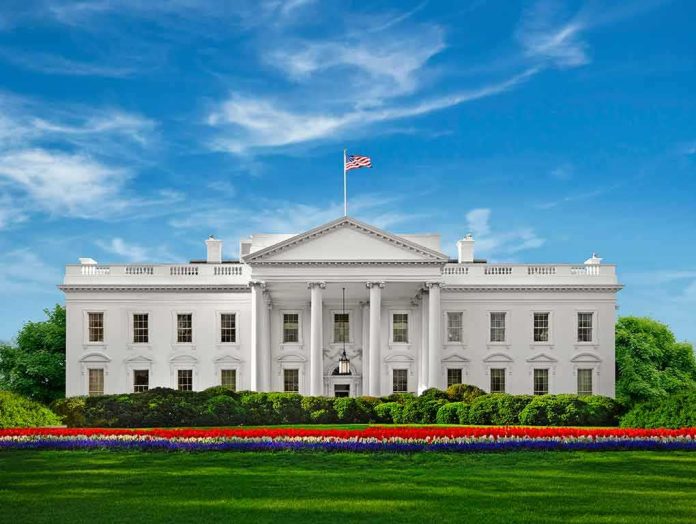
That is why the core disagreement is less about border policy than about separation of powers. If an invasion declaration were insulated from meaningful review, and if that declaration could redefine which newborns are “subject to the jurisdiction” of the United States, the Citizenship Clause would become contingent on presidential fact-finding. Rights would ebb and flow with the White House’s assessment of threat. Advocacy groups thus argue that the President cannot end or constrict birthright citizenship by executive edict; the claim is constitutional, not merely prudential.
Where the case law points today
On the existing record, the weight of doctrine and practice favors the Wong Kim Ark baseline. Courts and the Executive Branch for decades treated children born on U.S. soil—regardless of parental status—as citizens, subject only to narrow exceptions grounded in situations where U.S. law cannot reach the person at birth (diplomats, hostile occupation). That through-line is reflected both in the Supreme Court’s reasoning and in longstanding executive interpretations of the parallel citizenship statute.
Ho’s theory is not without an internal logic: if “invasion” determinations are executive and unreviewable, and if undocumented migration could be assimilated to invasion, then the hostile-occupation exception might be extended by analogy. But the analogy falters at the jurisdiction prong—our government exercises law over undocumented immigrants—and the deference move collides with the constitutional character of citizenship. Analysts who have mapped the terrain reach a simple conclusion: emergency labels do not transmute a constitutional rule into an executive policy choice.
The stakes going forward
Two consequences follow. First, litigation over any attempt to tie citizenship to a presidential invasion finding will rise or fall on the narrowest reading of Wong Kim Ark’s exceptions: does the government at birth lack the power to apply its law? If not, the exception does not fit. Second, courts will be forced to decide the threshold separation-of-powers question: can the President’s unreviewable determination supply the predicate for shrinking a constitutional class? Advocacy groups insist the answer is no, because the Citizenship Clause fixes status; it is not a wartime privilege the Executive can recalibrate.
In constitutional law, labels matter, but functions matter more. “Invasion” is a powerful word in the Commander in Chief’s lexicon. It is not, on the evidence that governs today, a master key to rewrite who is born an American.
5th Circuit Judge James Ho says a presidentially declared "invasion" overrides birthright citizenship, which he has long said is guaranteed by the 14th Amendment. https://t.co/2NJ4sxt2U6
— Jacob Sullum (@jacobsullum) October 30, 2026
Sources:
reason.com, ca5.uscourts.gov, supremecourt.gov, justsecurity.org, judicialactiongroup.com